
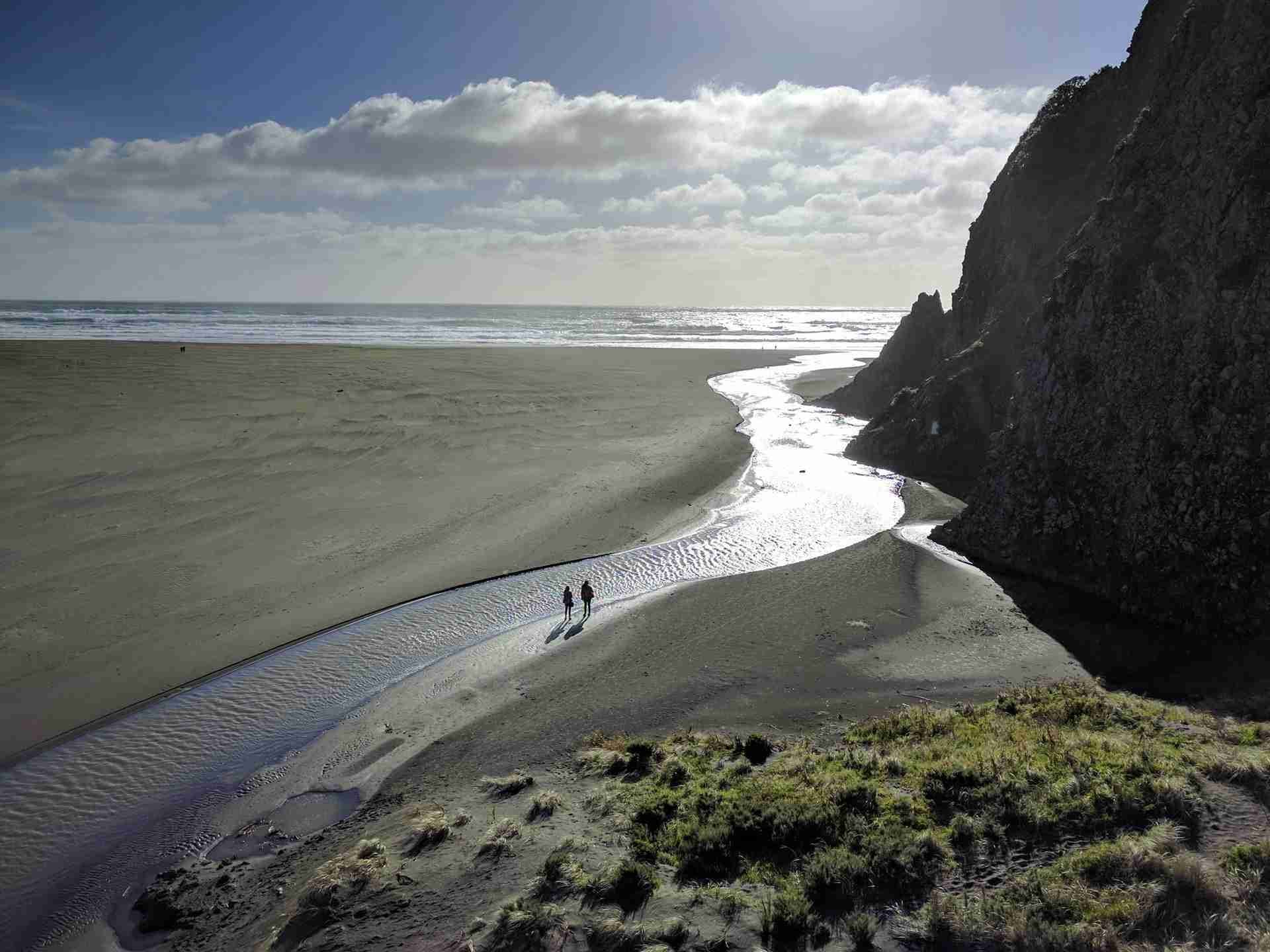
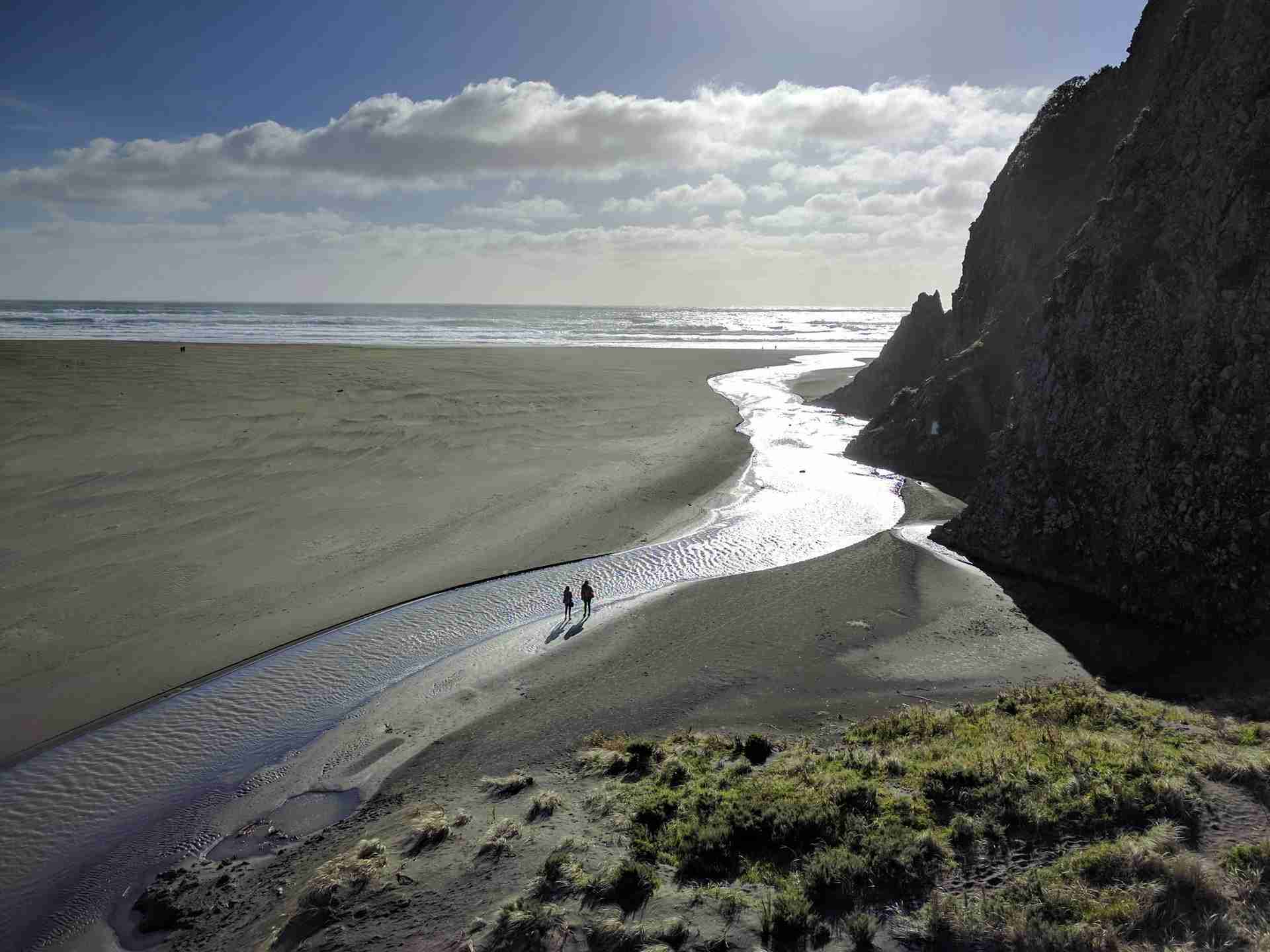
Karekare Beach, nestled on Auckland's remote west coast, is a place of elemental intensity—defined by its black volcanic sand, pounding surf, towering cliffs, and ever-changing skies. Just a short drive from Piha yet far less visited, this wild, cinematic beach has long captured the imagination of artists and filmmakers, including serving as a key location in The Piano. For photographers, Karekare offers one of the most powerful coastal landscapes in New Zealand, where dramatic weather, wide horizons, and raw textures combine to create scenes that shift with every gust of wind and wave surge. It's a destination where light, mood, and motion rule—and where patient observation yields deeply rewarding imagery.
Best Photography Opportunities
• Reflected Skies on the Tidal Flats
: At low tide, Karekare's vast beach transforms into a reflective mirror, where shallow pools of water spread across the smooth black sand. These tidal flats create perfect conditions for capturing dramatic cloudscapes, especially at sunset when the horizon glows with color and reflects in subtle gradients across the wet surface. A wide-angle lens (16–35mm) allows you to exaggerate the scale and lead the viewer into the distance with natural symmetry. Use a tripod and slow shutter speeds (1–3 seconds) to capture subtle motion in water or blur faint ripples across the sand. This is one of the most iconic compositions at Karekare, especially when framed with the distant Tasman Sea rolling in low.
• Te Ahua Point and the Southern Cliffs
: To the south of the beach, the massive cliffs of Te Ahua Point rise abruptly from the sea, their dark volcanic stone etched by time and weather. From mid-beach, you can photograph the cliffs silhouetted against the late afternoon sun or glowing in golden light just before dusk. Use a telephoto lens (70–200mm) to compress the cliff face against rolling surf, or a standard zoom (24–70mm) to frame it within the wider beachscape. On misty days, the cliffs take on a ghostly presence, receding into layers that are ideal for atmospheric black-and-white work. Including windswept grasses or dune textures in the foreground adds grounding contrast to the massive vertical presence of the cliffs.
• Dune Grasses and Windswept Textures
: Inland from the surf line, Karekare's dunes are shaped by strong coastal winds and covered in shifting patterns of sand and silver-green grasses. These areas are ideal for detail-oriented compositions that focus on line, texture, and contrast. Early morning light from the east casts long shadows across the dune ridges, highlighting curvature and giving depth to subtle patterns. A polarizer can enhance contrast and control reflection on the sand, while a medium focal length (35–85mm) allows you to isolate swirls, footprints, or plant formations. Overcast skies are excellent here too, allowing soft light to reveal texture without glare.
• The Watchman Rock Formation
: This towering monolith, located near the northern end of the beach, is one of Karekare's signature features. Rising like a sentinel from the sand, it offers multiple compositional options—framed against the sea, shot from a low angle with foreground reflections, or silhouetted against the setting sun. Use a wide lens for full environmental context or step back with a 70–200mm to compress its form against the sea or background cliffs. Evening is the best time to photograph The Watchman, especially when the sky catches color and its shadow stretches across the beach. On moody days, it becomes a powerful central subject for stark, minimalistic compositions.
: Just a five-minute walk inland from the car park lies Karekare Falls—a 30-meter cascade tucked into a fern-lined amphitheater of volcanic rock. It's a peaceful counterpoint to the beach's open drama and makes for a beautiful vertical composition, especially with a mid-range zoom (24–70mm). Use long exposures (1–4 seconds) to soften the water and emphasize the contrast between the falling stream and the rugged cliff behind. Early morning is best for even lighting before the sun filters through the foliage. Include the surrounding ferns or rocks for natural framing, or step further back to capture the entire cascade framed by the native bush.
Best Time to Visit
Karekare Beach is a location that thrives under varied light and weather conditions. While golden hour and sunset offer the richest light across the sand and cliffs, don't discount overcast or stormy days. The moody atmosphere created by incoming squalls and filtered skies plays perfectly with the beach's stark palette of black sand, white surf, and dark stone.
The best time for dramatic reflections is low tide during calm weather, particularly around sunset. Arrive an hour or more beforehand to scout tidal pools and position compositions before the light begins to shift. Morning sessions are quieter and more peaceful, with soft pastel tones and longer shadows that are ideal for textural compositions among the dunes or falls.
Karekare is also known for sudden changes in weather—clouds can clear in minutes, or roll in thick and fast from the Tasman Sea. Photographers should come prepared for dynamic skies and embrace the variability, as light breaking through clouds can transform an ordinary frame into something powerful. Autumn and spring often provide the most balanced conditions—stable weather, good light angles, and fewer crowds.
How to Get There
Karekare Beach is located on the west coast of Auckland's Waitākere Ranges, about 45 minutes from central Auckland by car. From Auckland, take State Highway 16 toward New Lynn, then follow signs for Piha via Scenic Drive and turn onto Karekare Road. This narrow, winding road descends through dense forest before arriving at the Karekare Beach car park.
From the parking area, a short trail leads directly to the beach. Another well-maintained path heads inland to Karekare Falls, passing through native bush and fern groves. Both routes are flat and easily walkable, though sand can be soft near the dunes. There is no access fee, and photography is permitted without restriction, though tripods and gear bags should be handled with care to avoid disturbing vegetation or wildlife.
There are no shops or facilities at the beach, so bring everything you need—including water, food, and weather protection. Cell service can be spotty, and conditions can shift quickly, especially during winter months.
Recommended Photography Gear
A wide-angle zoom (16–35mm) is critical for capturing Karekare's sweeping beachscapes, reflections, and dramatic skies. Pair this with a mid-range zoom (24–70mm) for more flexible compositions of cliffs, waterfalls, and beach detail. A longer lens (70–200mm) is valuable for isolating the Watchman rock, compressing the cliff line, or working with distant waves and sea mist.
A solid tripod is essential for long exposures and low-light work, especially for shooting tidal reflections or softening surf at twilight. A 6- or 10-stop ND filter allows for creative shutter control during the day, while a circular polarizer helps manage glare on wet sand and enhances sky contrast. A remote shutter or interval timer will reduce vibration for long exposures.
Because of the fine volcanic sand and constant wind, weather sealing and lens cloths are critical. Use a protective cover for your camera bag, and avoid lens changes in open air. Waterproof footwear is also useful when working near the tide or positioning for low angles at the falls.
Nearby Photography Locations
• Piha Beach
: Just 10 minutes north, Piha offers another dramatic west coast landscape, with Lion Rock at its center and a more expansive, surf-driven shoreline. The beach is particularly good for golden hour and long lens work with its active waves and shifting light.
: This coastal trail above Karekare provides elevated views of the cliffs and sea, ideal for sunset compositions and wide-angle vistas of the coastline. It's less trafficked than other viewpoints and rewards those willing to hike a short distance with panoramic shots.
: South of Karekare lies this wild, windswept area of dunes, limestone caves, and coastal marshes. It's excellent for moody, black-and-white landscapes or textural studies of driftwood, sea grass, and sand forms under changing weather.
• Kitekite Falls
: A multi-tiered waterfall located on the way to Piha, Kitekite Falls offers a layered cascade through native forest, best photographed in diffused light. It's a 45-minute round-trip hike and worth the detour for vertical compositions and lush, rainforest detail.
: Scenic Drive and the ridgelines around the Ranges offer dramatic lookout points over forested valleys and the Tasman Sea. These locations are ideal at sunrise or twilight when mist pools in the gullies and soft light touches the canopy.
Karekare Beach is a place where scale and solitude dominate the visual field—where every gust of wind reshapes the landscape, and the sea tells a different story with each passing hour. For photographers seeking elemental beauty and dynamic light, this west coast jewel delivers a rugged, cinematic canvas with infinite creative potential.
Comments
Loading comments…