
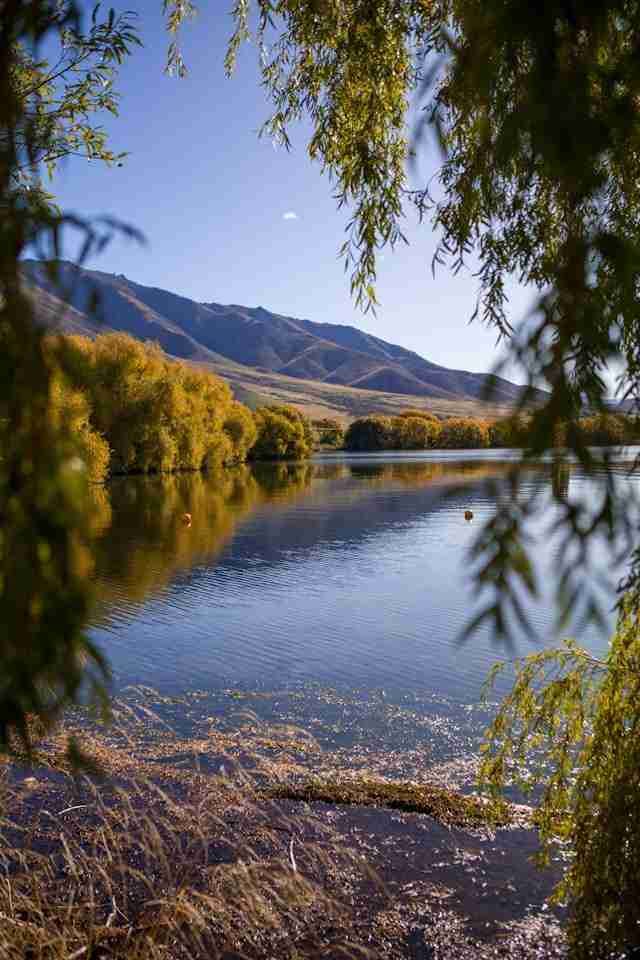
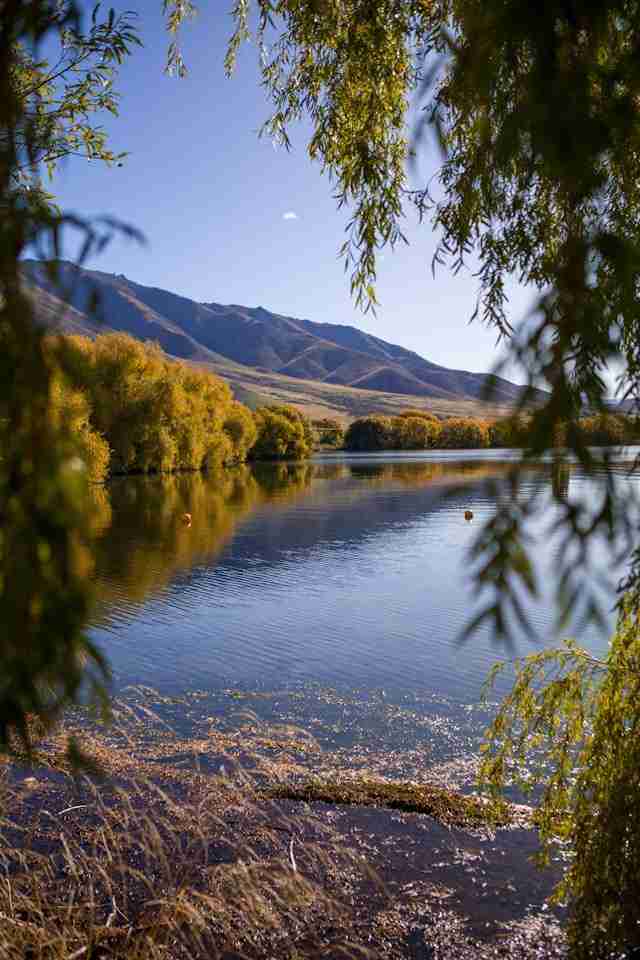
Set within the Waitaki Valley in New Zealand's South Island, Lake Aviemore is a quiet yet striking destination for landscape photographers drawn to clean light, bold form, and expansive composition. Unlike some of the more dramatic alpine lakes to the north, Lake Aviemore unfolds with a subtle grace: gentle foothills roll down to its clear waters, poplars rise in golden lines along the shoreline, and the Southern Alps stretch hazily in the distance. The lake is part of a chain of artificial reservoirs built along the Waitaki River, but its natural beauty feels untouched in the right light. With its open skies, reflective surface, and ever-shifting seasonal palette, Lake Aviemore offers the kind of controlled, elegant compositions that reward thoughtful framing and patient observation.
Best Photography Opportunities
Sunrise Reflections from the Western Shore
The stillness of Lake Aviemore in the early morning is one of its most reliable photographic gifts. From the western shore, you can shoot directly across the water as the first light hits the opposite bank. The foothills glow with soft color while the lake mirrors the sky, making this a perfect setup for symmetrical compositions. On windless mornings, even long exposures of several seconds will retain sharp reflection lines. A wide-angle lens is useful for including shoreline detail in the foreground, while a telephoto lens allows you to compress distant ridges and pick up subtle color transitions in the hills.
Autumn Rows of Poplars Along the Lake Edge
In late April and early May, the long lines of poplars that trace the edge of Lake Aviemore turn deep gold and orange, forming some of the strongest graphic elements in the region. These trees are planted in near-perfect rows, offering natural symmetry when viewed from across the lake or from the small pull-off points along the southern road. The best shots come from mid-morning to early afternoon, when the trees are side-lit and their color stands out against the cool blue of the water. Use a polarizer to deepen the sky and reduce glare, and consider shooting vertically to emphasize height and depth.
Storm Light and Layered Horizons from the Southern Foothills
Storms often build along the Southern Alps and move eastward over the Waitaki Valley, bringing dramatic light contrasts and moving cloud formations. From the foothills south of the lake, you can photograph the full sweep of Lake Aviemore with layered hills and changing sky overhead. These conditions are ideal for moodier landscape work with longer focal lengths. The best compositions occur when light breaks through from the west and grazes the hills and treetops, while darker skies still loom behind. This scene is dynamic and best shot handheld for flexibility unless you are set up early with a tripod to anticipate the light shift.
Minimalist Shoreline Compositions with Soft Water
Many sections of the lake have pebbled or grassy shores that make ideal foregrounds for minimalist compositions. In calm light, these spaces become beautifully abstract: a few rocks, a sliver of land, and the expanse of still water leading the eye to distant hills. These shots work well with long exposures in the one- to two-minute range, especially during the blue hour before sunrise or after sunset. Neutral density filters are essential here, along with a stable tripod and remote shutter release. Try framing with a low horizon and leaving negative space for a peaceful and spacious feel.
Night Sky and Astro-Landscapes from the Eastern Bank
Lake Aviemore sits far enough from major towns to allow for very clean skies, especially in the winter and early spring months. From the eastern shore, facing west or southwest, you can align the lake with the Milky Way arc or capture constellations reflected in the water when wind conditions allow. A wide, fast lens (such as a 14mm f/2.8) will help gather enough light for 20- to 30-second exposures. Foreground elements like trees or driftwood can be subtly lit with a warm handheld light for contrast. Be sure to scout locations before sunset for safety and setup.
Best Time to Visit
Lake Aviemore offers different photographic opportunities in every season, but autumn is arguably the most visually dynamic. From mid-April to early May, the rows of poplars along the shore are at their most vibrant, and morning mist often drifts over the water. Spring, from late September to November, brings fresh greens and occasional snow remaining on the high peaks in the distance, offering cool-toned scenes with rich contrast. Summer delivers long days and brilliant clarity, ideal for sunrise and sunset work, though the midday light can be harsh and less forgiving. Winter is quiet and stark, with lower lake levels and a greater chance for fog or clean skies for night photography.
Light is best at sunrise, when the lake is usually calm and light angles are soft and clean. Sunset can work well from elevated vantage points or when the lake reflects post-sunset color. Midday is less productive unless shooting under overcast skies, which can soften the contrast and bring out subtle tones in the landscape. Always check wind forecasts in advance, as even light breezes can disturb the lake surface and eliminate reflections.
How to Get There
Lake Aviemore is located in the Waitaki District of Canterbury on New Zealand's South Island. It is accessible via State Highway 83, which runs along the Waitaki Valley between Kurow and Otematata. The lake itself lies between Lake Benmore to the north and Lake Waitaki to the south, forming part of the broader hydroelectric network in the region.
There are several vehicle pull-off points and designated picnic areas along the road that follows the lake's southern edge. These access points are free and usually quiet, especially in the early morning and outside of summer holiday periods. For elevated views, unsealed back roads to the south and east climb into the foothills and offer overlooks with broad panoramic views. Be cautious on these roads in winter or after heavy rain, as conditions can become muddy and uneven.
Recommended Photography Gear
A wide-angle lens in the 16 to 35 millimeter range is essential for capturing full lake reflections, sky arcs, and spacious foreground compositions. A standard zoom (24 to 70 millimeters) will provide flexibility when shooting from roadside locations or including trees and shoreline features. A telephoto lens (70 to 200 millimeters or longer) is especially useful for compressing hills and clouds, isolating tree rows, or working with moody layered light from across the water.
A sturdy tripod is essential for long exposures and astro work, particularly in low wind but low light conditions. A circular polarizer will help control reflections and deepen sky color, while a six-stop or ten-stop neutral density filter is necessary for water smoothing during daylight hours. Bring a remote shutter release or use timer mode to reduce vibration. If you plan to shoot at night or in early morning, dress in layers and bring lens cloths to manage dew or condensation.
Nearby Photography Locations
Just north of Lake Aviemore, Lake Benmore offers more rugged and elevated terrain, with sweeping views of arms and bays that feel more remote. The lake's southern reaches near the Benmore Dam provide excellent high-elevation compositions, especially at sunrise when golden light spills down from the mountains.
Otematata Wetlands and Trails
Near the small township of Otematata, just west of Lake Aviemore, a series of wetland tracks offer wildlife and landscape photography in a more intimate setting. These locations are best in the early morning when light hits the reeds and waterbirds are active. Use a telephoto lens for birds or frame reflections in the calm channels.
To the south, Lake Waitaki is quieter and less developed, but offers open vistas, wide beaches, and excellent stargazing potential. The mood here is more desolate and minimal, ideal for black and white studies or abstract shoreline work. Shooting from the dam wall also provides strong graphic compositions.
Ahuriri River Valley
A short drive inland from Omarama, the Ahuriri Valley is a high-country landscape of braided rivers, grassy flats, and distant mountains. This area is ideal for midground-heavy compositions and expansive sky scenes. It is especially photogenic in winter and spring when the riverbeds reflect low-angle light.
Farther east, near Duntroon, the Elephant Rocks and surrounding limestone formations offer a completely different subject. Rolling pastureland punctuated with sculptural boulders creates a whimsical and surreal landscape, perfect for wide compositions under interesting skies.
Lake Aviemore rewards photographers who appreciate subtle form and pure light. It is not a location that shouts, but rather one that invites quiet attention to detail: the shape of a tree line, the balance of clouds and water, the way light pools in a curve of shoreline. Whether you are composing long exposures at dawn, capturing symmetry in fall foliage, or standing in the silence of a starlit night, this lake delivers calm, clean scenes that are both modern and timeless.
Comments
Loading comments…