
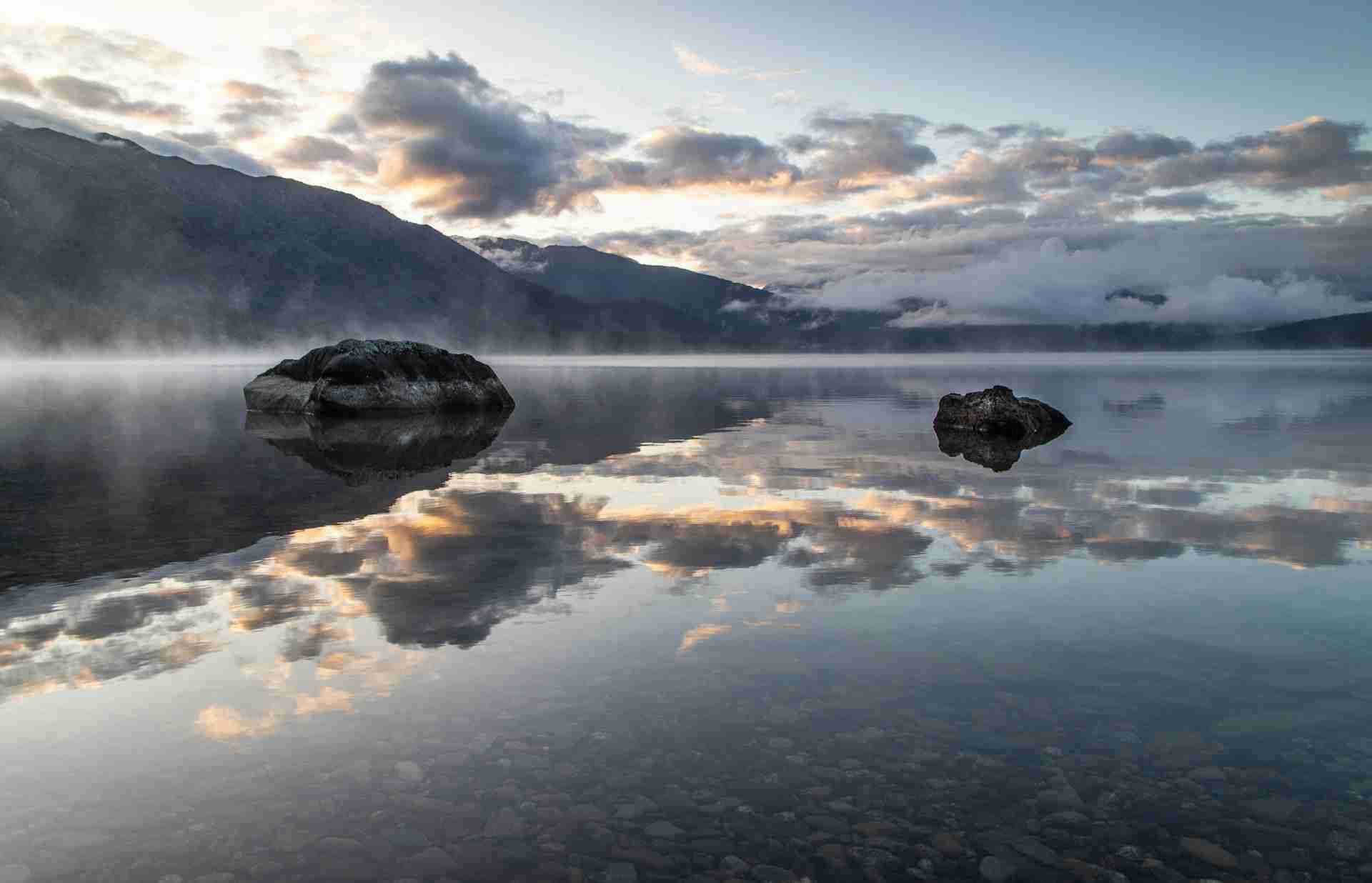
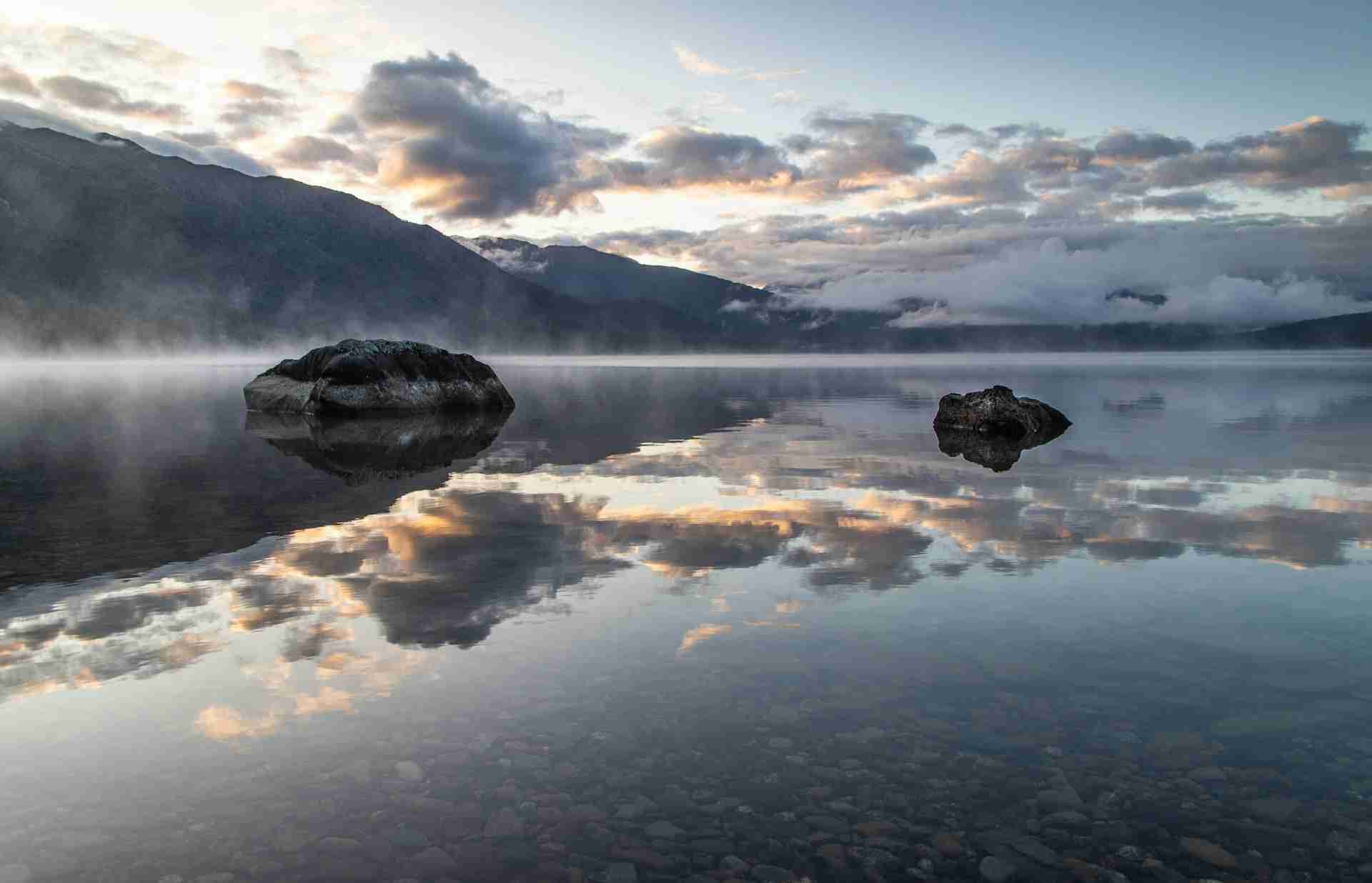
Tucked into the rainforest-covered hills near Hokitika on New Zealand's West Coast, Lake Kaniere is one of the South Island's hidden gems for landscape photography. Surrounded by dense native bush, mirror-flat waters, and the Southern Alps rising in the distance, the lake delivers a rare combination of dramatic scale and meditative calm. It's a location where the quality of light changes by the minute—mist rolling over tree-covered ridgelines one moment, shafts of sun piercing through the clouds the next. For photographers drawn to mood, texture, and natural symmetry, Lake Kaniere offers a deeply rewarding environment that invites both wide vistas and subtle studies of light and reflection.
Best Photography Opportunities
• Sunrise Reflections from Hans Bay
: Hans Bay, located on the lake's western edge, is one of the most accessible and compositionally rich areas for photographers. Arrive before dawn to find the water completely still, transforming the lake into a mirror that reflects every contour of the surrounding forest and hills. This spot offers ideal conditions for minimalist compositions—simple tree lines, soft pre-dawn color gradients, and nearly perfect symmetry between sky and lake. Use a wide-angle lens (16–35mm) to stretch the scene horizontally and frame driftwood, grasses, or shoreline stones in the foreground for added depth. Long exposures (10–30 seconds) during blue hour can soften any residual movement in the water and emphasize the tranquility of the scene.
• Native Forest and Water Edge Textures
: The lake's edges are densely vegetated with rimu, kahikatea, and tree ferns that come right down to the waterline. From the forest tracks and roadside pull-offs, you can explore quiet corners where roots, branches, and moss-covered rocks meet the lake. These locations are ideal for detail-rich, intimate landscapes. Use a mid-range zoom (24–70mm) to isolate curving trunks, textured bark, or foliage reflected in shallow water. Overcast conditions enhance saturation and reduce contrast, making it easier to render the subtle greens and earthy tones of the forest with clarity. Adding a circular polarizer helps cut surface reflections and reveal submerged detail in the lakebed.
• Jetty Compositions and Human Scale
: Several small jetties extend into the lake, including the popular one near Hans Bay. These provide strong leading lines for visual depth and create contrast between manmade structure and natural expanse. Shooting from the base of the jetty outward allows for centered, symmetrical compositions where the dock points into the mirrored sky or distant hills. Alternatively, use a model or silhouetted figure at the end of the jetty to add scale and narrative. These scenes are most effective during golden hour, when warm light reflects off the water, and during cloudy or moody conditions, when the jetty seems to lead into a void.
• East Shore Roadside Vistas
: The gravel road that runs along the eastern shoreline provides multiple informal pullover spots, each with different perspectives of the lake and its surrounding terrain. These elevated views look west across the full width of the water, with dense bush in the foreground and low mountains catching side light in the distance. A telephoto lens (70–200mm) lets you compress these layers—bush, water, and hills—into tightly framed compositions that emphasize tonal transitions. On misty mornings, this area is perfect for capturing atmospheres with low cloud banks hugging the tree line and soft light grazing the hilltops.
• Sunset Silhouettes and Glassy Twilight
: While sunrise is often the calmest time on the lake, sunsets at Lake Kaniere can be equally dramatic, particularly when clouds break late in the day and paint the sky with orange, purple, and pink. From the western end of the lake or the edge of the main campsite, you can shoot back across the water toward silhouetted trees or mountains. Long exposures during twilight create painterly gradients in both the sky and lake surface, especially when wind has died down. A tripod is essential here, along with a 6- or 10-stop ND filter if shooting before true twilight to stretch exposure times and smooth the water's surface into a mirror of shifting color.
Best Time to Visit
Lake Kaniere can be photographed year-round, but the most productive seasons for varied lighting and atmospheric conditions are spring and autumn. In spring (September to November), fresh foliage adds a vibrant palette of greens, and morning mist is common due to the combination of cool air and still water. Autumn (March to May) brings more stable weather patterns and the potential for golden-brown hues in the surrounding vegetation, along with crisp, clear light ideal for reflection photography.
The lake is at its most photogenic during calm weather, especially in the early morning (6:00–8:00 AM), when the surface is most likely to be completely still. Morning also brings layered mist and light fog that lift off the hills, adding texture and mystery to both wide and telephoto compositions. Evenings can produce vivid skies and are particularly good for photographing jetties and water-level compositions under soft light.
Cloudy and lightly overcast days are excellent for working within the forested edges of the lake. These conditions eliminate harsh contrast and allow for even exposure of foliage, roots, and shoreline detail. Avoid midday if possible, as direct overhead light tends to flatten both forest and water compositions unless you're focusing on specific high-contrast studies or using long exposure techniques.
How to Get There
Lake Kaniere is located approximately 19 kilometers southeast of Hokitika on New Zealand's West Coast. From Hokitika, follow Lake Kaniere Road through scenic farmland and into native forest; the drive takes about 25–30 minutes. The road is sealed up to Hans Bay, where a car park, toilets, and picnic area offer easy access to the western shore of the lake.
From Hans Bay, you can walk to the nearby jetty or explore the short forest tracks that lead along the water's edge. To access the east side of the lake, continue along the unsealed road that loops around the southern end. While passable by standard vehicles in dry weather, this road can become rough or slippery after rain—drive cautiously and avoid low-clearance cars during wet conditions.
There is no cost to access Lake Kaniere or its facilities, and photography is permitted throughout. Most locations are publicly accessible without restrictions, though always be respectful of vegetation and signage, particularly near campgrounds and private land boundaries.
Recommended Photography Gear
A wide-angle zoom (16–35mm) is essential for capturing reflections, jetty compositions, and expansive lake views, especially during dawn or dusk. Pair this with a mid-range zoom (24–70mm) for flexibility in tighter forest scenes or shoreline abstracts. For compressing layers of hills, mist, and forest across the lake, a telephoto (70–200mm) is highly effective—especially useful when working from the eastern pullouts or forest tracks with limited foreground space.
A solid tripod is indispensable for long exposure work at both sunrise and sunset. Combine it with a remote shutter or interval timer to minimize vibration. A circular polarizer is helpful when shooting along the shore to reduce glare from the water and bring out detail beneath the surface. A 6- or 10-stop ND filter enables longer exposures for smoothing water texture and enhancing sky color, particularly in low-contrast light.
Because the West Coast is known for its sudden weather changes, pack lens cloths, a weather cover for your camera bag, and moisture protection for your gear. Rubber boots or waterproof shoes are highly useful for shooting at the water's edge, where footing can be soft or muddy. A headlamp is also recommended for early morning sessions or when navigating trails before dawn or after sunset.
Nearby Photography Locations
: Located just a short drive past the southern end of Lake Kaniere, this narrow waterfall tumbles through moss-covered rocks and native bush. It's best shot after rainfall with a mid-range lens and tripod for long exposures under the canopy.
: A 40-minute drive from the lake, this striking location features turquoise waters and a suspension bridge set against vibrant green foliage. It's ideal for both wide landscape shots and more intimate river compositions, particularly on cloudy days.
: Closer to Hokitika, this lowland lake offers moody wetland reflections, forest-fringed shores, and calm waters ideal for long exposure work. It's quieter than Lake Kaniere and a good alternative for dawn sessions.
: Located near Hokitika, this elevated trail through mature native forest offers unique downward perspectives on the canopy and sweeping views of the Southern Alps. Best photographed with a mid-telephoto for pattern and depth studies.
: For a dramatic end to your day, head back to the coast to photograph the famous driftwood "Hokitika" sign against the Tasman Sea. Wide horizons, crashing surf, and colorful skies make this a classic West Coast evening spot.
Lake Kaniere is not just a scenic body of water—it's a dynamic, evolving canvas for photographers who value quiet light, textured layers, and the patient pursuit of perfect reflections. From soft dawn mist to late-day clarity, this inland lake rewards deep exploration and careful observation with images that feel both expansive and intimate.
Comments
Loading comments…