
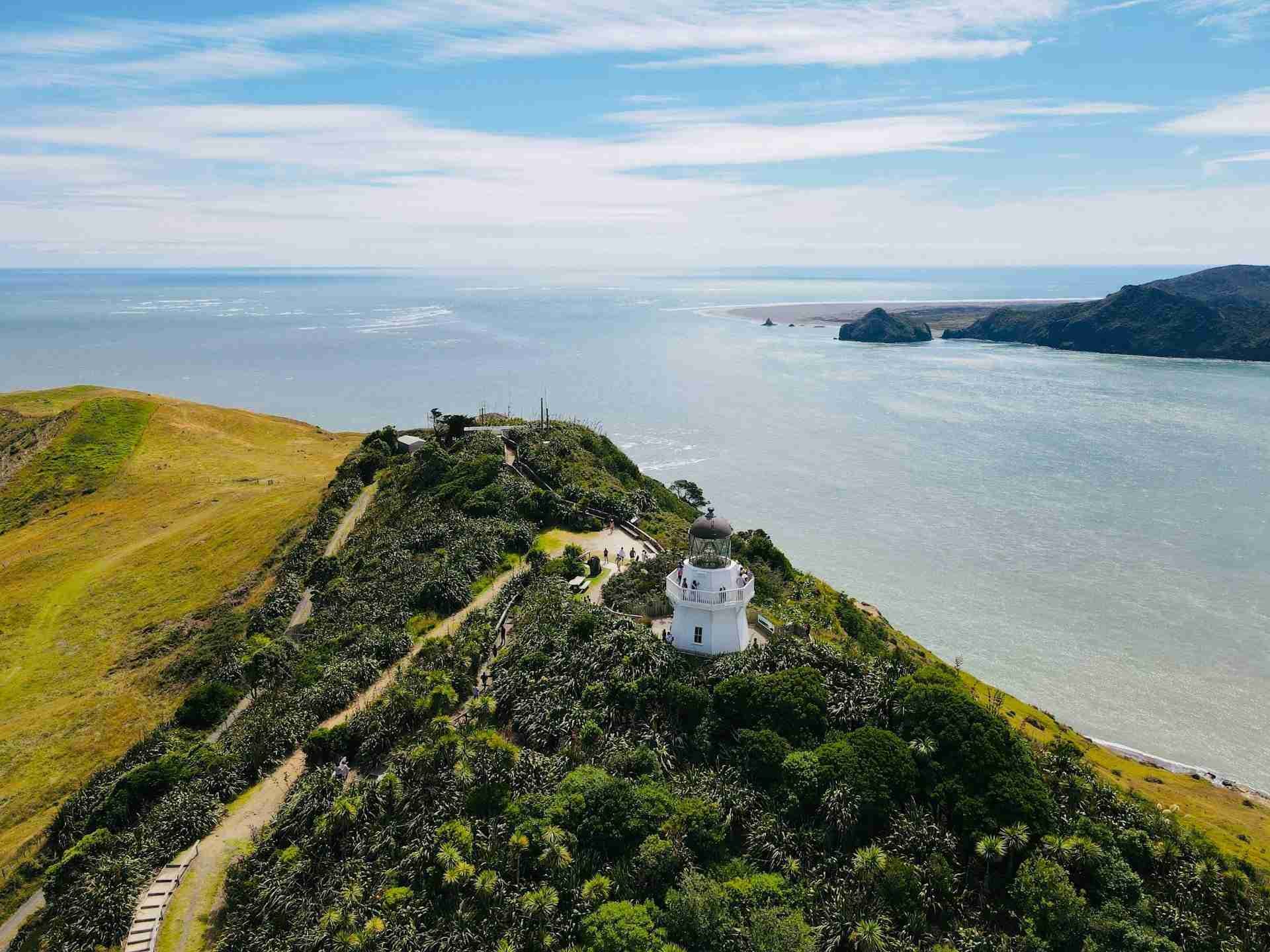
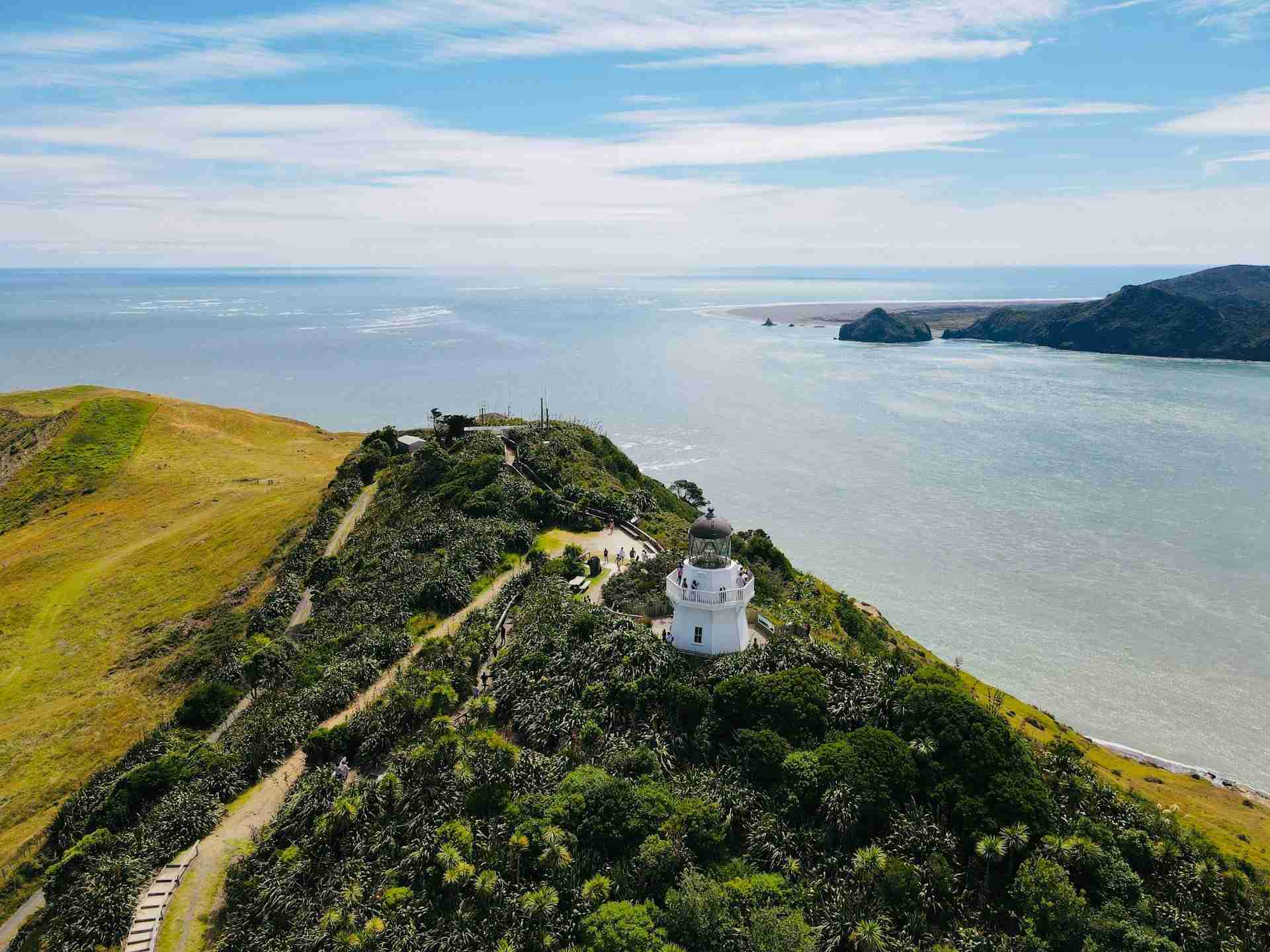
Perched high above the entrance to the Manukau Harbour, the Manukau Heads Lighthouse is one of New Zealand's most remote and visually commanding coastal beacons. Surrounded by steep hills, black sand beaches, and the restless Tasman Sea, the lighthouse stands not only as a maritime sentinel but as a striking subject for landscape and travel photographers. With panoramic views stretching across the harbour mouth and down the rugged Awhitu Peninsula, it offers dramatic skyscapes, layered compositions, and a unique perspective on Auckland's untamed western frontier. Whether captured at golden hour, under brooding clouds, or in the stillness of morning, Manukau Heads is where wild coast meets cinematic light.
Best Photography Opportunities
• Golden Hour from the Lighthouse Platform
The viewing deck around the lighthouse provides unobstructed 270-degree views across the harbour entrance and out to the Tasman Sea. At sunrise and sunset, the low light rakes across the waves and rolling headlands, creating soft gradients in the water and deep texture in the hills. Compose with the lighthouse in the foreground or frame outward toward the mouth of the harbour to capture the vastness of the scene.
• Silhouettes and Backlight from the Hilltop Trail
A short walk behind the lighthouse leads to slightly elevated viewpoints where you can silhouette the structure against the glowing sky. This is especially effective at sunset with warm tones behind the beacon or during blue hour when the first stars appear. A tripod and a small aperture help create crisp starburst effects with the sun dipping behind the railings.
• Wide Landscapes with Foreground Flax and Grasses
The native vegetation around the lighthouse—harakeke (flax), toetoe, and rugged shrubs—makes for excellent foreground interest. Shoot low with a wide-angle lens to lead the viewer's eye toward the lighthouse or across the dunes and distant coastline. Overcast conditions soften highlights and make foliage appear richly saturated.
• Minimalist Compositions of the Lighthouse Against the Sky
Isolate the lighthouse structure with a telephoto lens from across the slopes for minimalist studies. These compositions are particularly effective in moody weather or mist, where the white form stands out starkly against a shifting sky. Black-and-white processing enhances the historic atmosphere and drama.
• Aerial Perspectives of the Lighthouse and Harbour Mouth
When conditions and permissions allow, drone photography reveals the lighthouse sitting atop a sharp green ridge, surrounded by cliffs, ocean, and open sky. Overhead compositions showcase the turbulent meeting point of the Tasman Sea and Manukau Harbour, ideal for storytelling about the site's maritime significance.
Best Time to Visit
Manukau Heads is at its most photogenic during golden hour and in the soft light of early morning. Sunrise brings light over the Awhitu hills and across the harbour entrance, especially beautiful when mist lingers low over the water. Sunset is equally powerful, with the lighthouse glowing in warm light and long shadows stretching inland.
Autumn and winter bring dramatic weather and fast-moving clouds—perfect for long exposure sky work and contrast-rich landscapes. These seasons also deliver lower sun angles, which enhance depth and texture across the hillsides and vegetation.
Spring and summer offer longer shooting windows and blooming coastal flora for foreground detail, though the midday sun can be harsh. Plan around late afternoon for the most flattering directional light. Overcast skies are excellent for color grading and textural studies, and fog or sea mist can transform the scene into something ethereal.
Strong westerlies are common, especially in winter, so come prepared for wind when setting up tripods or attempting longer exposures.
How to Get There
Manukau Heads Lighthouse is located on the Awhitu Peninsula, about 90 minutes' drive southwest of central Auckland. From Waiuku, follow Awhitu Road along the spine of the peninsula, then turn onto Manukau Heads Road, which winds through farmland and bush to the lighthouse car park. The last stretch is sealed but narrow, with scenic views over the harbour and hills.
From the car park, a short, well-formed walking path (5–10 minutes) leads to the lighthouse and viewing platform. The site is open daily during daylight hours and is free to visit. Facilities are limited, so bring water and essentials, especially if planning a longer stay for sunset or sunrise shooting.
Tripods are welcome, and the deck is stable enough for long exposures. If using a drone, be mindful of wind conditions and always fly with consideration of local regulations and natural habitats.
Exploring the Surrounding Area
Beyond the lighthouse itself, the Awhitu Peninsula offers sweeping farmland vistas, remote beaches, and scenic headlands that beg to be explored with a camera. Just below the lighthouse, the cliffs drop dramatically into the sea—accessible only to the eye, but providing powerful backdrop lines for layered seascapes and abstract compositions.
To the east, Awhitu Regional Park features rolling meadows, hilltop viewpoints, and calm estuary waters along the harbour's edge. The park's blend of coastal forest, farmland, and beach makes for varied landscape opportunities throughout the day.
Gravel roads and pull-offs along the peninsula offer spontaneous moments of rural charm—solitary trees, grazing sheep, mist drifting over pastures—ideal for environmental portraits or classic New Zealand countryside images.
Nearby Photography Locations
Just north of the lighthouse, this expansive park offers gentle hills, distant harbour views, and quiet beaches. Great for sunrise or sunset light over rolling terrain and soft pastel skies.
A wild, black-sand surf beach to the south, with massive dunes and dramatic skies—ideal for long exposure seascapes and abstract studies of wind and tide. Best in overcast or stormy conditions.
Inland from the peninsula, this pine forest and dune landscape offers straight tree lines, patterns in sand, and moody light. Excellent for minimalist compositions and symmetry-focused photography.
• Grahams Beach and Big Bay
These quiet harbour-side communities offer calm waters, reflective surfaces, and charming jetties—perfect for drone photography or soft twilight landscapes.
Across the harbour mouth (accessible via Auckland's west coast), Whatipu offers a darker, more volcanic coastal landscape—ideal for pairing with Manukau Heads in a contrast-rich coastal series.
Manukau Heads Lighthouse offers not just a beacon at the edge of New Zealand's largest harbour, but a rare and cinematic perspective on land, sea, and sky converging. For photographers, it's a place of openness and solitude—where the weather writes itself across the horizon, and the light sculpts every curve of dune, cliff, and cloud. Whether capturing bold seascapes, quiet rural scenes, or the stillness between gusts of wind, this headland is a place where the South Pacific feels endlessly vast—and the view, endlessly inspiring.
Comments
Loading comments…