
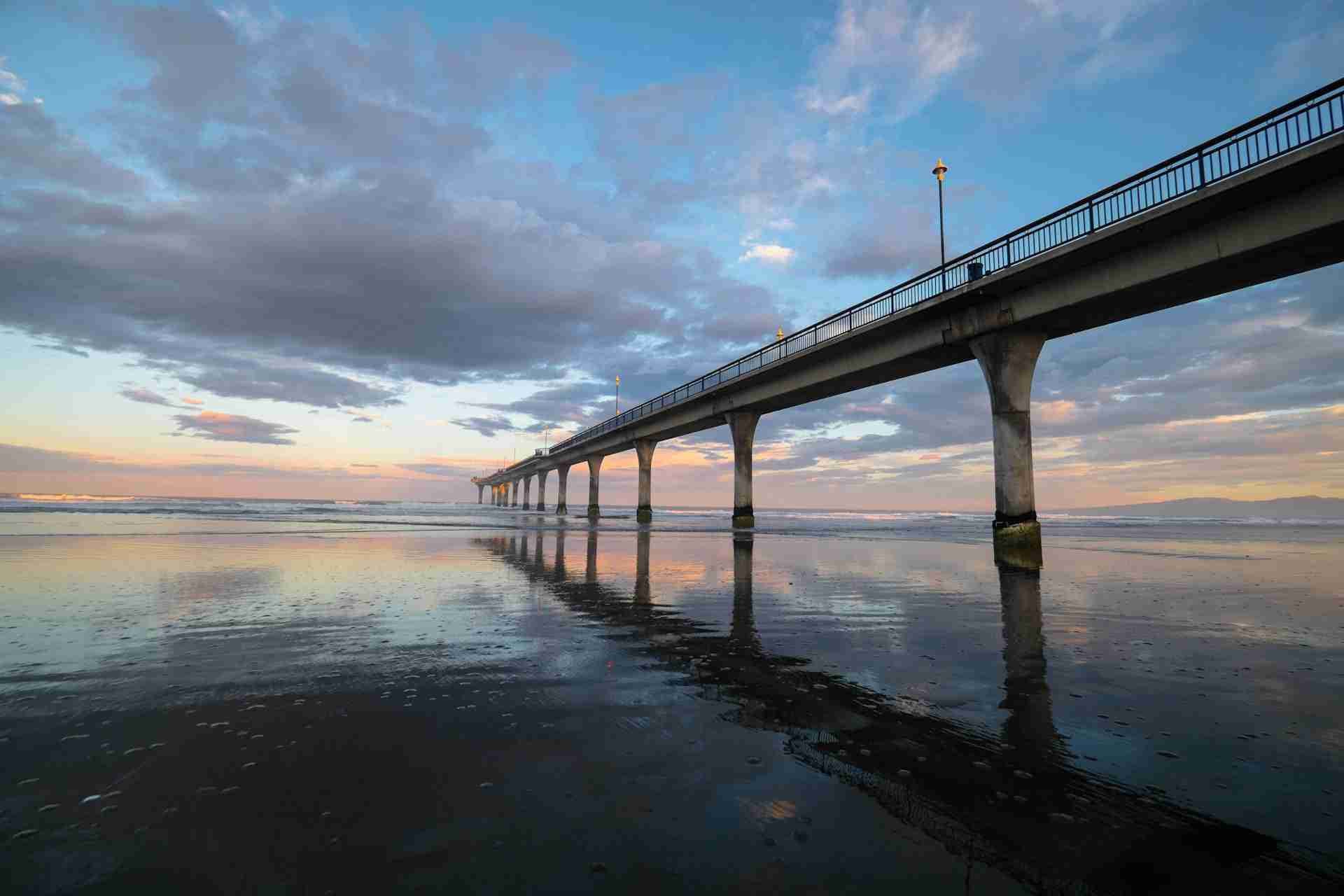
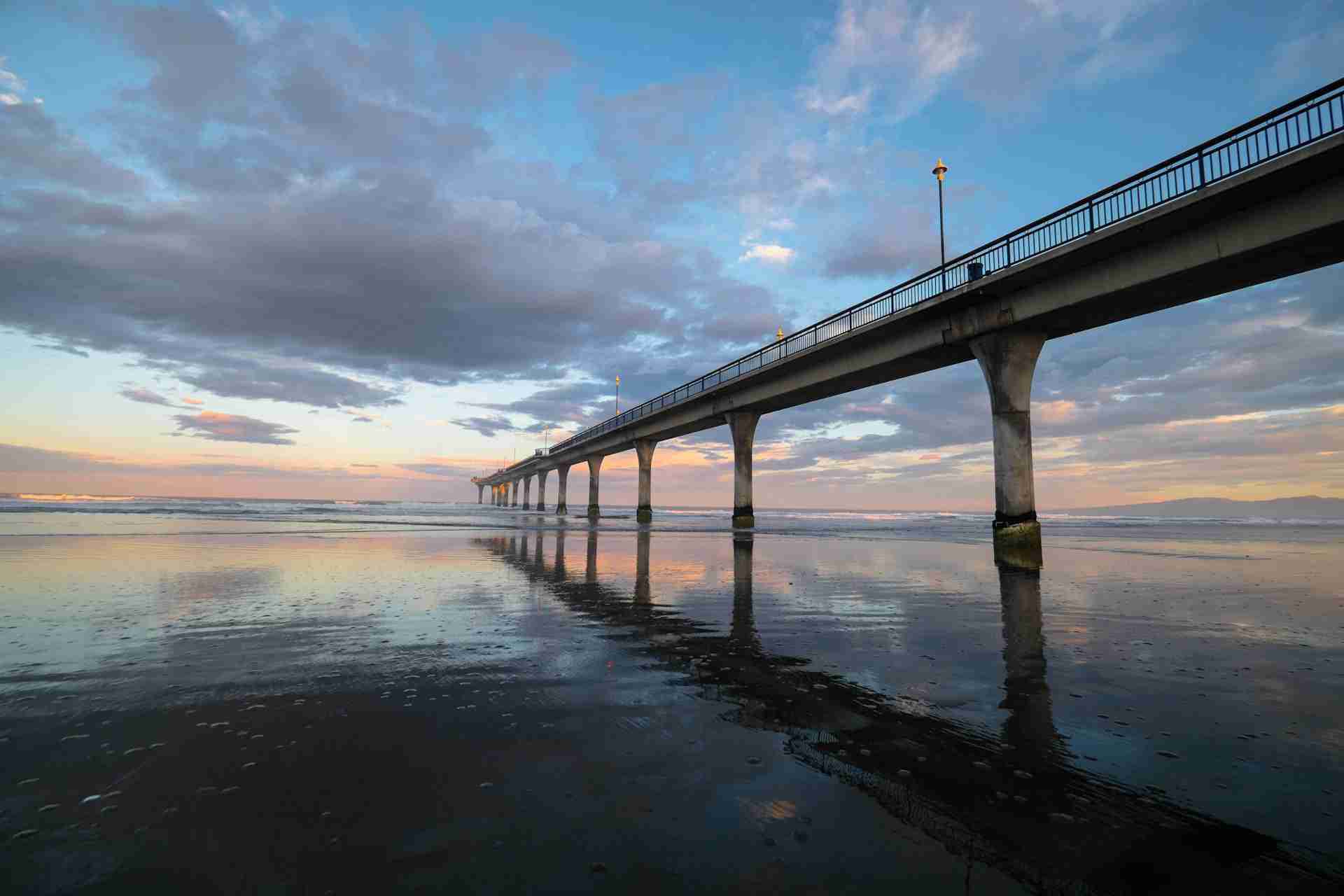
On the eastern edge of Christchurch, where the Pacific meets the city's shoreline, New Brighton Pier stretches into the sea like a concrete arm reaching for the horizon. This modern pier is long and symmetrical, offering clean lines, open compositions, and consistent subject matter that rewards both minimalist and moody photographic approaches. With views east toward the sunrise, south toward the Kaikoura ranges, and west over the curve of the city's coastline, the pier serves as a natural stage for changing skies, sea textures, and long exposure studies. For photographers looking to build frames around rhythm, scale, and natural light, it's one of New Zealand's most accessible and productive coastal locations.
Best Photography Opportunities
• Sunrise Over the Pacific
Facing due east, the pier is perfectly aligned for sunrise sessions. On clear mornings, the sky opens in soft blues and pinks, gradually shifting to golden hues as the sun rises. Cloud cover only adds dimension and drama. Set up on the sand before dawn to capture the silhouette of the pier against the brightening sky. A tripod is essential for this work, especially if you're layering exposures or using ND filters to soften the sea. The structure's long, repeating columns create strong foreground interest that leads directly to the horizon.
• Under the Pier and Tidal Symmetry
From the beach, low tide offers access to a classic compositional setup beneath the pier. The vertical supports form a tunnel of diminishing perspective, and when the tide is right, you'll get mirrored reflections in wet sand or pooled water. Frame from directly below for full symmetry, or step to the side to introduce asymmetry and leading diagonals. Be aware of wet patches or shifting sand. A 24 to 70mm lens works well here, allowing you to fine-tune angles without sacrificing compositional control.
• Storm Light and Cloud Formations
On overcast or changeable weather days, the pier takes on a more dramatic character. Dark skies and choppy waves add texture and contrast to long exposures. Use a 6-stop ND filter to stretch exposure times into the 10 to 30-second range, smoothing the water and pulling motion from the clouds. The combination of the rigid pier and soft sky works particularly well in black and white. Position yourself slightly off-center to let the structure cut diagonally through the frame while the storm elements move above it.
• Evening and Blue Hour Scenes
After sunset, the pier lights begin to glow along its length, forming a string of warm tones above the sea. Blue hour here lasts long enough to balance ambient light and artificial illumination, especially in late autumn and winter. Frame from the side to catch the reflections of the lights in the wet sand, or step back to include shoreline elements. The dynamic range is wide at this time, so shoot bracketed exposures if needed or work in RAW to recover detail.
• High Tide and Wave Movement
During high tide, waves reach the base of the pier and offer more kinetic scenes. Use a faster shutter speed to capture sharp peaks or try slightly slower speeds (1/4 to 1/2 second) to introduce blur without losing structure. Shooting from slightly elevated dunes behind the beach can give you better vantage points over the waterline, and a telephoto lens can compress the pier into the ocean swells for a tighter, more abstract look.
Best Time to Visit
The pier can be photographed year-round, but certain times offer clear advantages depending on your goal. Summer mornings between December and February bring warmer temperatures and calmer seas, with sunrises that begin early. Get to the beach at least 45 minutes before sunrise to catch the most dramatic color shifts in the sky.
Autumn (March to May) offers the best balance of light and atmosphere. The air cools, skies often hold more interest, and morning fog can sometimes roll in from the water. Light is softer, and fewer people visit the beach early in the day, making it easier to work undisturbed.
Winter brings low-angle sun and longer blue hours. From June to August, sunrise happens later in the morning, allowing for more manageable call times. This season is excellent for long exposures and moody edits. Just be prepared for colder conditions and possible wet weather.
Spring sees changeable light and breezy conditions, which are excellent for movement in the water and clouds. The best shooting windows across all seasons are within 30 minutes on either side of sunrise or just after sunset. Midday light is usually too harsh for the pier itself but can work for detail shots or high-contrast abstracts in black and white.
How to Get There
New Brighton Pier is located about 20 minutes from the center of Christchurch by car. From the city, head east on Pages Road until it leads directly into Marine Parade, which runs along the beachfront. The pier sits at the heart of the New Brighton Beach area, adjacent to the New Brighton Library and beachfront plaza.
There is free public parking near the base of the pier along Marine Parade, with additional street parking nearby. The area is well-lit, and footpaths are maintained, making it easy to arrive before dawn or stay into the evening. No permits or fees are required to photograph the pier, and both the beach and structure are open to the public year-round.
The beach is wide and flat, and access to the sand is available via multiple ramps and steps. If planning to shoot from under the pier, check tide tables in advance to ensure safe access. Christchurch weather changes quickly, so bring layers and check forecasts before heading out.
Recommended Photography Gear
A sturdy tripod is crucial for long exposures and low-light shooting. The wind off the ocean can be strong at times, so use a tripod with a center column hook to weigh it down. A camera with good weather sealing is helpful, especially in salt spray or rain.
Use a wide-angle zoom like a 16 to 35mm lens for under-pier shots, broad seascapes, and sunrise frames. A mid-range zoom such as a 24 to 70mm is great for walking the beach and composing from the dunes or boardwalk. A 70 to 200mm telephoto is useful for compressing the pier against a dynamic sky or isolating wave detail at high tide.
Bring neutral density filters (6-stop and 10-stop) for long exposures, and a circular polarizer to cut glare from the water and wet sand. A remote shutter release or camera timer helps avoid shake. Lens cloths and a small towel are useful to manage spray from the waves.
Wear waterproof boots if you plan to shoot from wet areas near the surf, and carry a light backpack with a rain cover for your gear. Extra batteries and memory cards are essential, especially if you're bracketing exposures or experimenting with video sequences.
Nearby Photography Locations
South of New Brighton, Sumner Beach offers interesting geological features like Cave Rock and layered cliffs. Sunset light here can be striking, especially when clouds reflect over the low-tide pools. The rock formations provide a completely different visual than the clean lines of the pier.
Just inland from New Brighton, this wetland area offers opportunities for wildlife photography, especially birds at dawn. Raised walkways and open fields provide varied compositions, and the low morning sun creates long shadows and golden light.
A narrow peninsula stretching into the estuary south of the pier, Southshore provides access to dune grasses, driftwood-strewn beaches, and excellent views back toward the Christchurch coastline. It's best visited in the late afternoon for sidelight and shifting textures.
A pine forest with cycling and walking trails located just north of the pier. This location offers moody woodland compositions and filtered light that shifts beautifully throughout the morning. Ideal for a soft contrast to the wide-open seascape of the pier.
For elevated views over the coastline and Christchurch, the Port Hills area provides dramatic evening compositions, especially on clear days. Telephoto lenses work best here, as you can compress distant landmarks with open sky for context and drama.
New Brighton Pier is more than a coastal structure. It's a frame waiting for light, a test of patience and rhythm, and a steady subject in a place where sky and sea are always in motion. Whether you return again and again to chase perfection or arrive once to catch it at just the right moment, the pier will hold still while everything else moves around it.
Comments
Loading comments…