
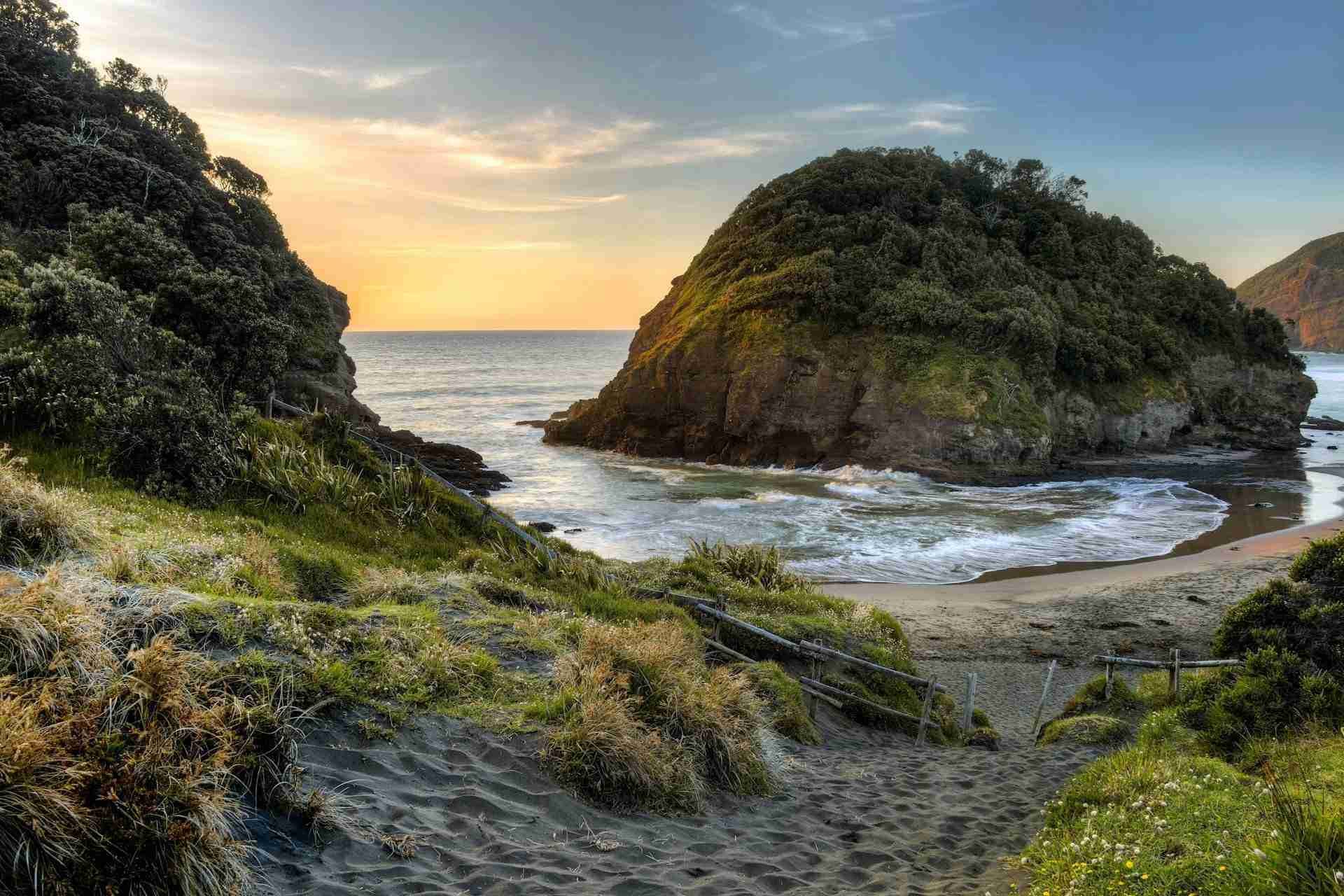
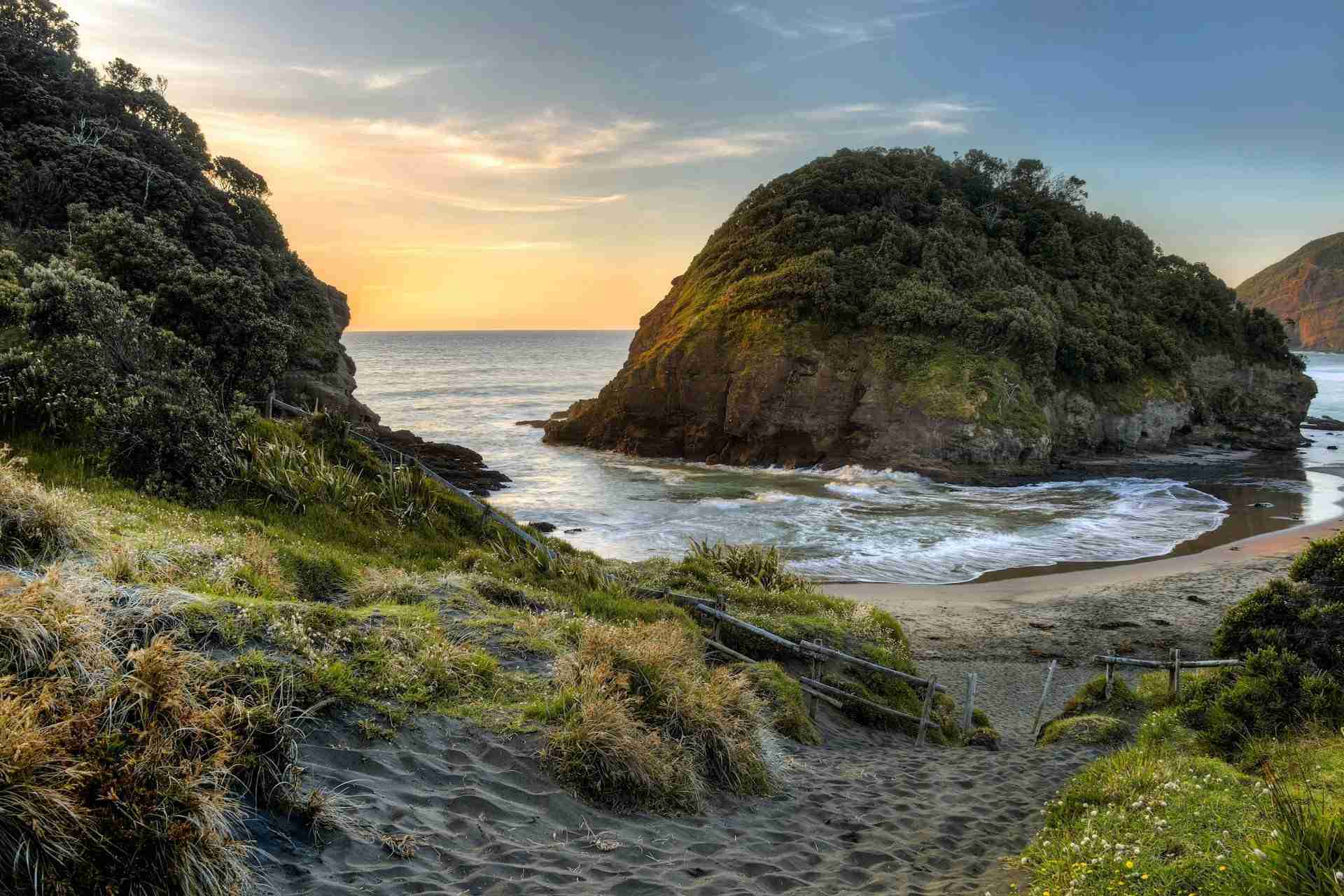
Tucked between the dramatic headlands of Te Henga (Bethells Beach) on New Zealand's rugged west coast, O'Neill Bay is a secluded, moody expanse of black sand, volcanic cliffs, and raw Pacific energy. Framed by rocky outcrops and battered by powerful surf, this wild beach offers a distinctly atmospheric setting that feels far removed from civilization—despite being less than an hour from Auckland. For photographers, O'Neill Bay is a study in natural drama: shifting tides, wind-blown grasses, textured basalt formations, and golden light breaking through coastal cloud banks. Whether you're after minimalist seascapes, epic sunsets, or intimate geological details, O'Neill Bay delivers a rich palette of visual material shaped by wind, tide, and time.
Best Photography Opportunities
• Low Tide Reflections on the Black Sand
At low tide, the receding surf leaves behind a glistening mirror of compressed black sand that perfectly reflects the surrounding cliffs and sky. Shoot low and wide for dramatic symmetry, especially when cloud textures sweep across the horizon. This is particularly effective during golden hour, when soft light catches both sand and water in warm hues.
• Silhouettes and Sunsets Behind the Headlands
The sun sets directly behind the northern cliffs during much of the year, creating powerful silhouette compositions as light filters through sea mist and rock gaps. Use a longer lens to compress the scene, or shoot wide to include dramatic skies. Adding a lone figure or bird into the frame can give scale and storytelling dimension.
• Wave Motion and Long Exposures
With its consistent surf, O'Neill Bay is ideal for wave-based long exposure work. Set up on the rocks at either end of the bay and use a neutral density filter to stretch the movement of incoming waves into silky ribbons. Combine this with strong foreground textures—like sea-sculpted rocks or water channels—for layered, dynamic compositions.
• Textural Studies of Rock and Dune Grass
The volcanic cliffs and boulders that flank the bay are rich in detail: lichen-covered faces, basalt layers, and eroded surfaces that glow under sidelight. Nearby, wind-rippled dunes are covered in hardy grasses, offering clean, abstract compositions in muted tones. Early morning or soft overcast days are best for capturing these textures without harsh contrast.
• Storm Light and Atmospheric Weather
West coast weather moves fast, and storm fronts rolling in off the Tasman Sea bring sudden shifts in light, cloud drama, and high-impact mood. Use the fast-changing conditions to shoot layered compositions with dark skies above sunlit waves or shafts of light breaking through heavy cloud. Black sand and surf under moody skies make for cinematic, high-contrast images.
Best Time to Visit
O'Neill Bay is a location that transforms with time of day, tide, and weather—making it well worth visiting multiple times across different conditions. The best light for photography occurs at sunrise and sunset, particularly in autumn and winter when the sun's angle creates long shadows across the beach and enhances the texture in the cliffs and sand. Sunset is especially powerful when clouds line the horizon and the light bounces back across the wet sand and incoming tide.
Low tide opens up the full expanse of beach and reveals rock pools, mirrored sand, and strong foreground options. Check local tide charts before visiting—some of the best reflection shots and compositional possibilities are only visible during outgoing or fully receded tides.
Winter and spring bring dramatic weather and frequently changing light conditions, ideal for moody seascapes and black-and-white interpretations. In summer, calmer seas and warmer tones make for classic golden-hour beach photography, but the location remains relatively uncrowded year-round due to its remote access and exposed nature.
Avoid mid-afternoon visits in harsh sunlight, unless you're focusing on abstract textures or using strong filters to manage highlights. Overcast conditions are excellent for subtle detail work, color grading, and long exposures without blown highlights.
How to Get There
O'Neill Bay is accessed via Te Henga (Bethells Beach), located about 45–60 minutes west of Auckland via Scenic Drive and Bethells Road. Once at the Bethells Beach car park, follow the marked coastal track north across the sand dunes and along the cliffs. The walk takes approximately 15–20 minutes and includes a short climb over rocky headland terrain before descending to O'Neill Bay. The trail is well-trodden but can be muddy and slippery in wet weather—wear sturdy footwear and be cautious with heavy camera gear.
There is no cost to visit or photograph O'Neill Bay, and the area is publicly accessible year-round. However, it is remote and has no facilities, so bring water, snacks, and weather-appropriate clothing. Mobile reception is limited near the bay, and lighting conditions change rapidly, so plan to arrive early to scout your shots and adjust to the shifting light.
Tripods and filters are highly recommended for working with long exposures and the subtle tones of the black sand and water. Be mindful of tides and never turn your back on the surf—rogue waves can occur, especially near rocks and during high swell conditions.
Exploring the Surrounding Area
The entire coastline around Te Henga offers rich photographic material for those willing to explore on foot. South of O'Neill Bay, Bethells Beach opens into a wider, more accessible shoreline with rolling surf, sea caves, and dramatic boulders scattered along the tide line. The Te Henga Walkway continues northward into the Waitākere Ranges, offering elevated views back toward O'Neill Bay and distant headlands—ideal for aerial-like perspectives without a drone.
The cliffs and hills above the bay are carpeted in native grasses and manuka scrub, especially beautiful when backlit at golden hour. These areas provide excellent vantage points for layered compositions of beach, sea, and sky, and are often dotted with wind-shaped trees that add visual anchors to wide scenes.
Inland, the Waitākere Ranges offer shaded forest walks, waterfalls, and river crossings that contrast the open coastal environment. These rainforest trails—like those around Lake Wainamu or Mokoroa Falls—make excellent secondary stops for photographers looking to combine coastal drama with lush greenery in a single outing.
Nearby Photography Locations
Just south of O'Neill Bay, this wide, windswept beach features sea stacks, dramatic surf, and excellent golden-hour light. It's a more accessible and expansive canvas for large-scale seascapes or long exposure shoreline photography.
A short walk inland from Bethells Beach, this freshwater lake is surrounded by steep black sand dunes and native bush. The trail includes a waterfall and shallow stream crossings, offering variety for landscape, portrait, and detail-oriented photography.
• Muriwai Beach and Gannet Colony
Further up the coast, Muriwai Beach is known for its coastal cliffs and seasonal gannet colony—ideal for wildlife and wave photography. The layered rock platforms and tidal motion create dynamic seascapes, especially during stormy weather.
South of Bethells, Karekare is another isolated black sand beach framed by tall cliffs and waterfall-fed trails. Its moody atmosphere and broad, reflective sands make it perfect for minimalist, emotional seascapes.
The forested inland mountains offer waterfalls, canopy trails, and panoramic viewpoints over the west coast. Tracks like the Fairy Falls or Kitekite Falls routes are perfect for photographing rainforest light, water motion, and natural textures.
O'Neill Bay is a west coast gem that delivers wild beauty in its rawest form. With shifting tides, volcanic cliffs, and the ever-present rhythm of the Pacific, it invites a slower, more observational style of photography. Whether you're chasing drama in a stormy sky, tracing textures in basalt rock, or capturing the fleeting glow of sunset on the black sand, O'Neill Bay offers a rare combination of seclusion, scale, and sensory immersion that keeps calling photographers back.
Comments
Loading comments…