
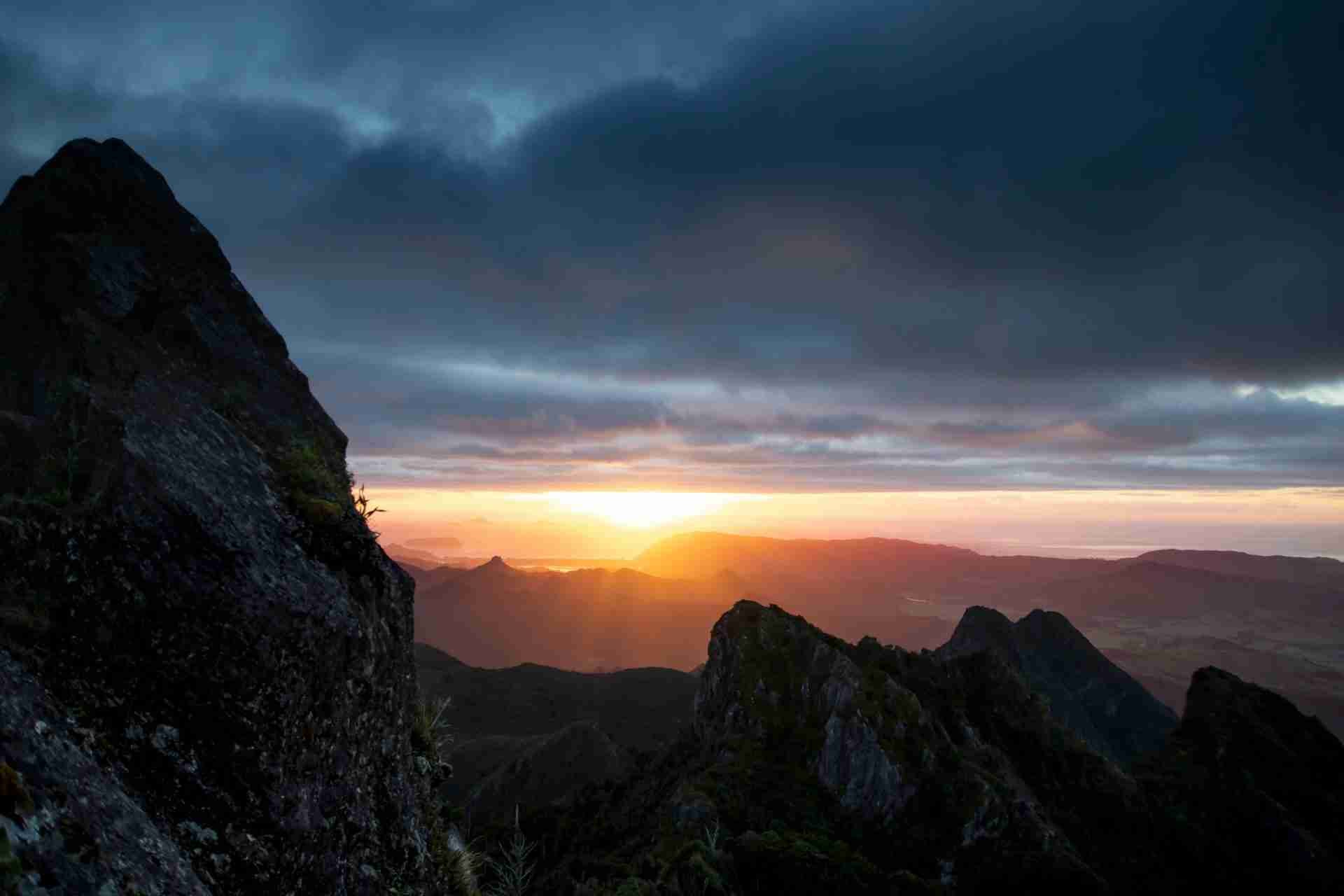
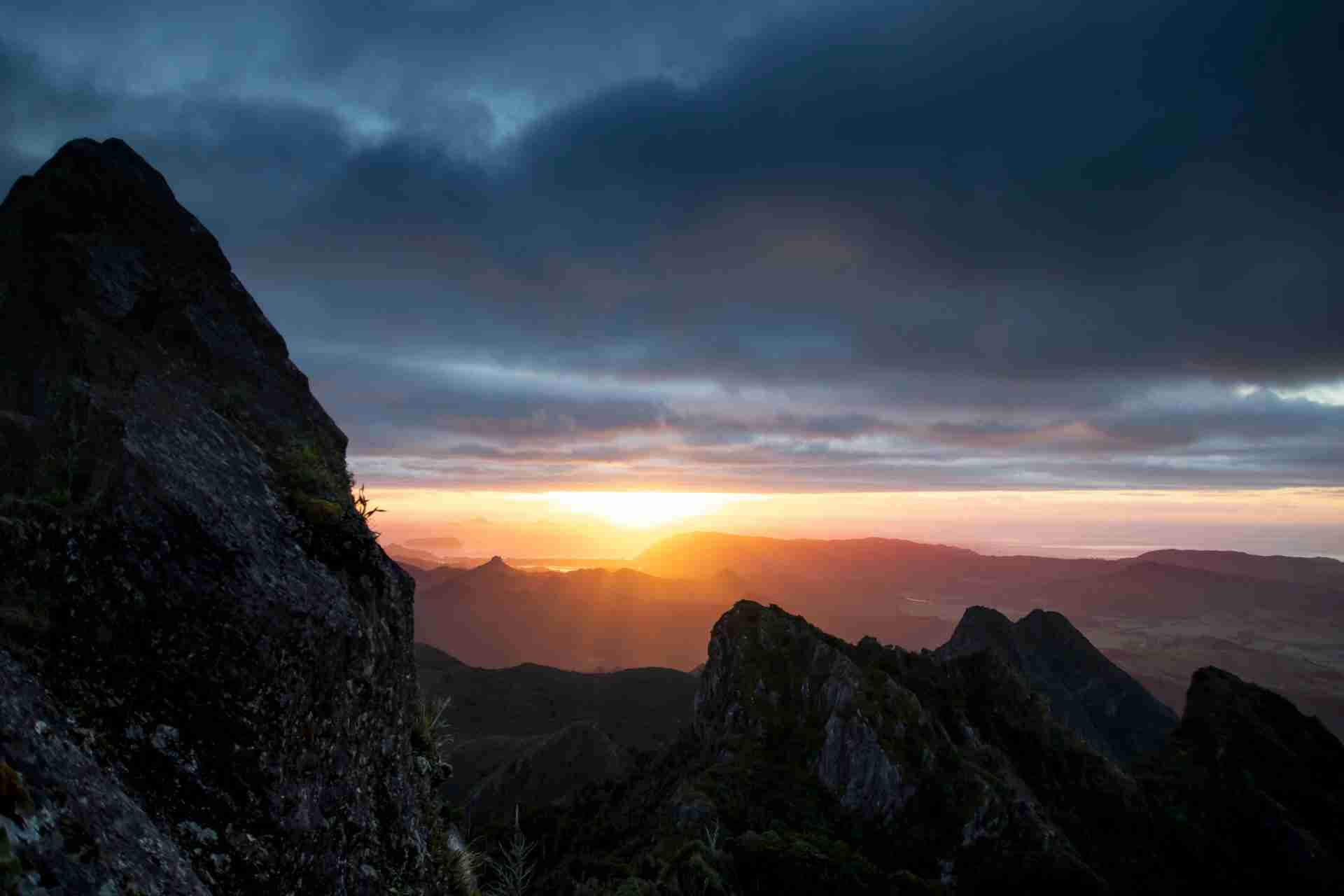
The Pinnacles rise sharply above the dense native forest of the Coromandel Peninsula, forming one of the most distinctive (and photogenic) skylines in the region. These jagged rock formations sit high along the Kauaeranga Kauri Trail within Coromandel Forest Park, creating dramatic vertical lines that contrast with rolling green hills and distant coastal views. Unlike wide alpine plateaus, this location feels steep, textured, and exposed near the summit, while the approach trail winds through lush forest and historic pack horse routes. For photographers, the experience unfolds in stages. You move from shaded bush paths to open ridge lines and finally to the rocky summit itself, where 360 degree views stretch across the peninsula. The combination of rugged geology, layered hills, and changing weather makes this a location where patience and timing matter as much as composition.
Best Photography Opportunities
• Summit View
From the top of the Pinnacles, the surrounding landscape opens in every direction. Rolling ridge lines extend toward the Pacific Ocean, and on clear days the coastline becomes visible in the distance. A moderate focal length keeps the summit rock in the foreground while allowing hills to layer naturally into the background. Positioning yourself slightly lower on the summit rocks can help frame distant ridges beneath a textured sky. These wide environmental compositions are strongest in soft early light when haze is minimal and contrast remains balanced.
• Rock Formations at First Light
The jagged granite spires near the summit create strong foreground anchors. Shooting from a lower angle emphasizes their sharp vertical presence against the horizon. Early morning light brings subtle warmth to the stone and defines surface texture without flattening detail. Careful footing is essential, as the terrain near the top is uneven and exposed. Including a hint of sky movement adds depth without overpowering the rocky forms.
• Clouds and Mist
On certain mornings, low cloud or mist settles into valleys below the ridge lines. When this happens, the Pinnacles rise above a soft blanket of cloud, creating a striking separation between foreground rock and distant hills. A slightly longer focal length helps compress these atmospheric layers into a cohesive frame. Exposure control is important to retain detail in both bright cloud and darker terrain. These conditions are less predictable but can produce the most memorable images.
• Forest Trail Views
The hike to the summit passes through dense native forest along a historic pack horse route. Wooden steps, moss covered trunks, and filtered light through canopy create quieter compositional opportunities. Shooting along the line of the trail builds depth and narrative into a series. Overcast conditions enhance color saturation in foliage and maintain even exposure. These images complement the dramatic summit views by documenting the journey.
• Sunrise Silhouettes
Because the summit faces east toward open water, sunrise is particularly strong here. As the sun rises, ridge lines become layered silhouettes, gradually revealing detail as light increases. A tripod allows careful control during the transition from darkness to daylight. Watching how quickly light changes is essential, as contrast shifts rapidly once the sun clears the horizon. This is one of the most rewarding times to photograph the Pinnacles.
Best Time to Visit
Sunrise is the most productive time to photograph the Pinnacles. The eastern exposure means first light reaches the summit cleanly, illuminating distant ridges and coastal outlines. Early sessions also avoid stronger wind and heavier foot traffic later in the day. Because the location is elevated, weather conditions can shift quickly, and cloud movement often adds drama to sunrise compositions.
Midday light tends to flatten distant hills and increase haze, particularly in warmer months. However, changing cloud cover can still produce compelling results if you remain flexible. Late afternoon can offer softer light on western facing slopes, though sunrise remains the most visually consistent opportunity. Seasonal variation influences clarity, with cooler months often providing sharper visibility and more stable atmospheric conditions. Checking forecasts for wind speed and cloud cover is especially important due to the exposed summit terrain.
How to Get There
The Pinnacles are accessed along the Kauaeranga Kauri Trail within Coromandel Forest Park, near Thames on New Zealand's North Island. The trailhead is reached by gravel road, with designated parking available at the end of the road. The hike to the summit is approximately seven to eight hours return, depending on pace, with significant elevation gain.
Many photographers choose to stay overnight at Pinnacles Hut, located near the summit, to position themselves for sunrise. A booking fee applies for hut accommodation, and Department of Conservation regulations govern access and use of facilities. The final section to the summit involves steep steps and ladder sections, so care is required, especially in low light. Adequate preparation, weather awareness, and physical readiness are essential for this hike.
Recommended Photography Gear
A versatile standard zoom lens covers most landscape compositions, from summit foreground scenes to distant coastal layers. A short telephoto lens is valuable for compressing ridge lines and isolating atmospheric layers during cloud inversion. A sturdy tripod is strongly recommended for sunrise work and low light conditions near the summit.
Because the hike is demanding, weight management is critical. Carrying only essential lenses and minimizing extra equipment makes the ascent more manageable. A polarizer can help reduce glare and enhance sky contrast in clearer conditions. Weather protection for both gear and clothing is necessary, as wind and sudden rain showers are common. Stable hiking footwear is just as important as camera equipment due to uneven and exposed rock surfaces.
Nearby Photography Locations
This coastal formation offers dramatic sea arches and white sand beaches. It provides strong sunrise and sunset compositions that contrast with the inland mountain setting of the Pinnacles.
Known for geothermal activity beneath the sand, this beach offers both documentary and landscape opportunities. Its open coastal horizon provides a different visual experience from forested ridge lines.
A shorter summit hike with sweeping coastal views, Mount Paku offers expansive ocean panoramas. It complements the inland ridge views of the Pinnacles.
Featuring historic railway tunnels and river gorges, this area provides industrial and landscape subjects within a lush setting.
This coastal town offers long sandy beaches and open horizon compositions. It expands a Coromandel photography itinerary beyond mountain terrain.
Comments
Loading comments…