
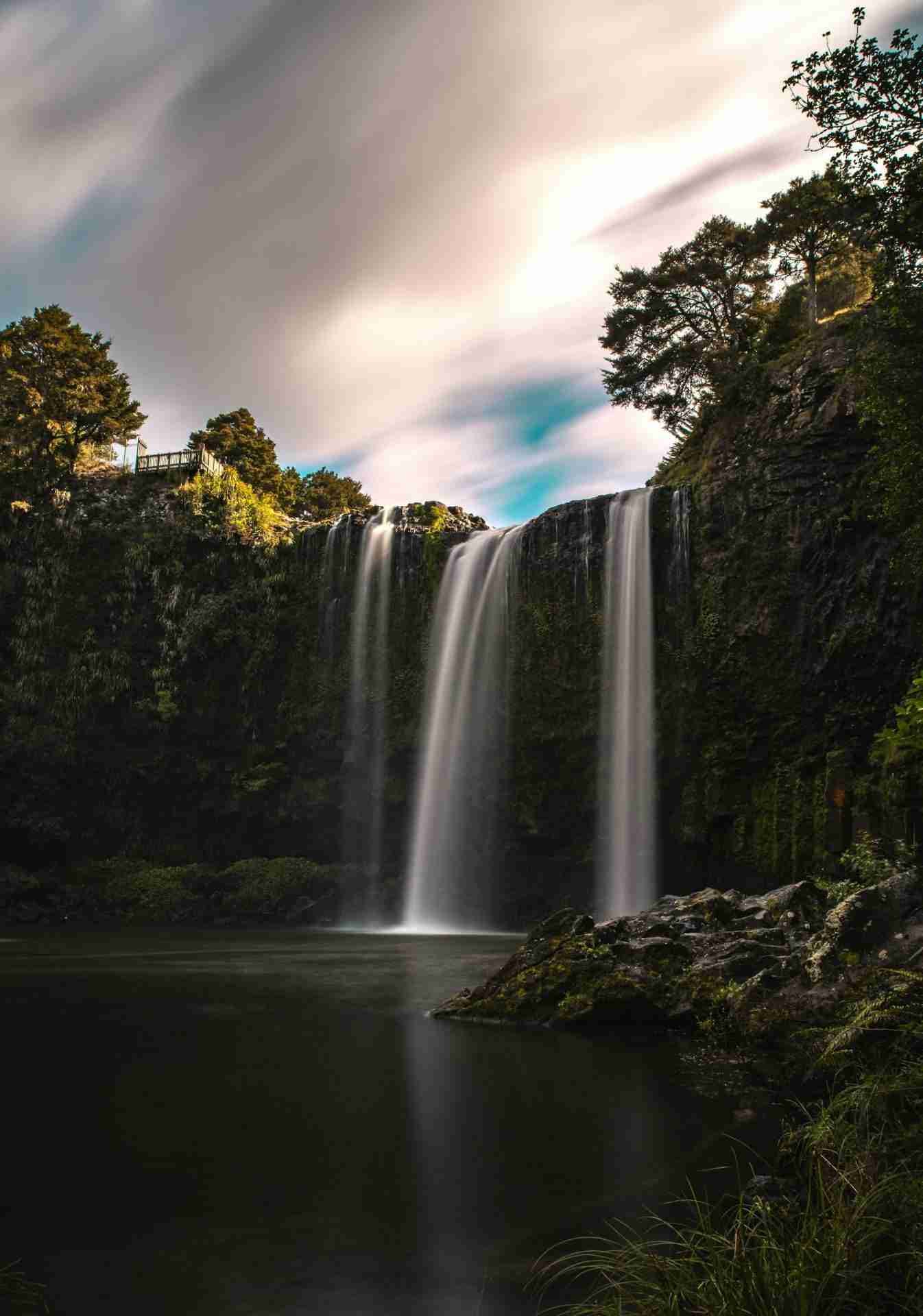
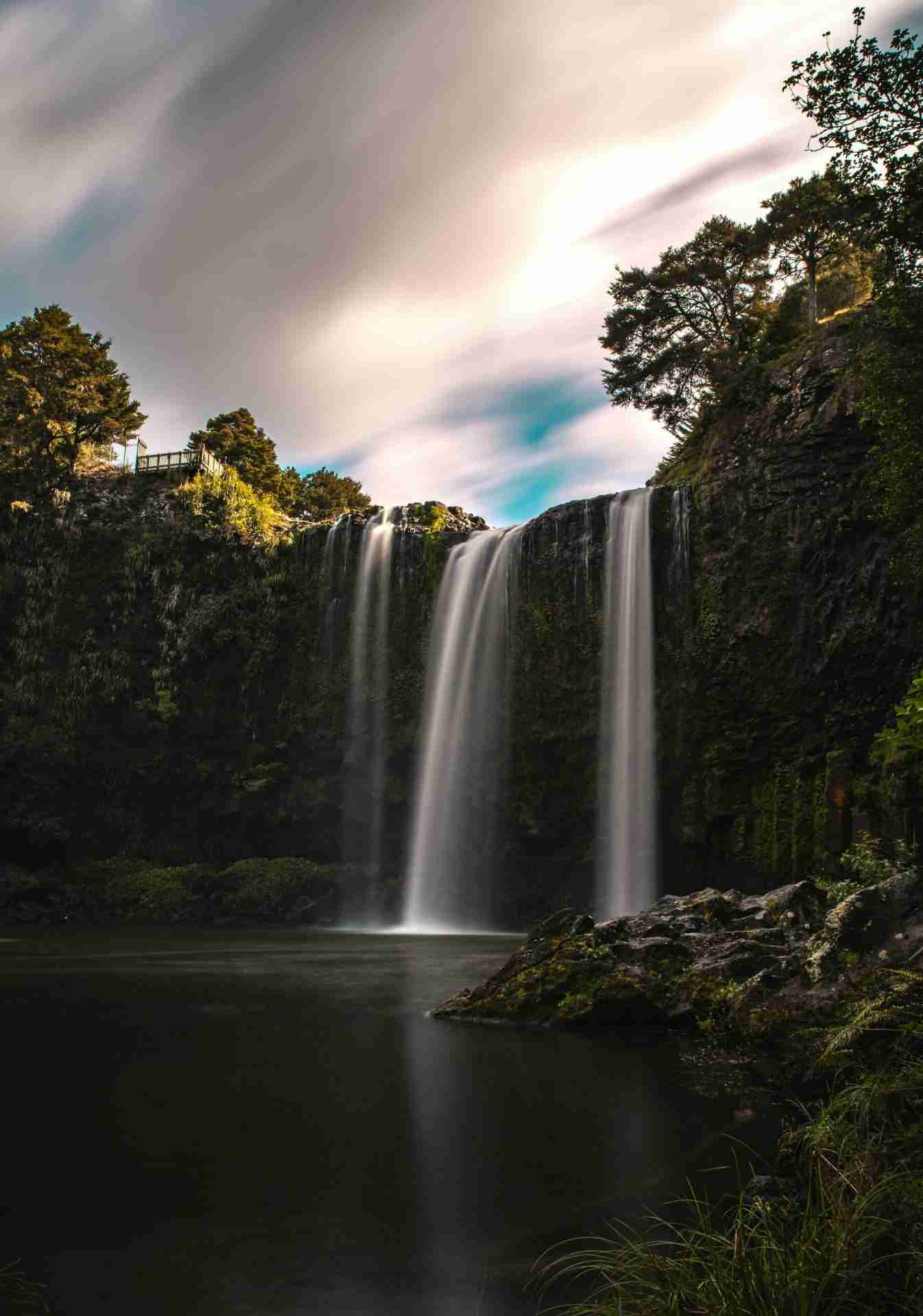
Just a short drive from the heart of Whangārei, the Whangārei Falls (Otuihau) plunge over basalt cliffs into a deep pool framed by native bush, moss-covered rocks, and birdsong. At 26 metres high, the falls form a near-perfect curtain of water, often likened to a mini-Niagara for its symmetry and beauty. Easily accessible and photogenic from multiple angles, Whangārei Falls blends natural elegance with cultural depth, as the area is a historic Māori gathering place. For photographers, it offers a rich mix of long-exposure drama, rainforest texture, and dynamic compositions that shift beautifully with season and light.
Best Photography Opportunities
• Long-Exposure Front-On Composition from the Lower Lookout
The base trail leads to a perfect front-facing view of the falls, where you can shoot straight on across the plunge pool. Use a tripod and neutral density filter to create silky waterfall effects, with mossy foreground rocks or fallen branches anchoring the frame. Early morning light or overcast skies work best to prevent glare on the water's surface.
• Overhead View from the Upper Bridge
From the footbridge above the falls, capture the water as it pours smoothly over the edge. This angle works well for leading lines or more abstract compositions of the water in motion. In late afternoon, the backlight creates shimmering highlights and long shadows on the pool below.
• Side Angles with Framing Vegetation
Several trails snake through the bush, offering partial views of the falls framed by ponga ferns and native shrubs. These compositions work beautifully for layered depth and a wilder feel. Use a 35mm or 50mm lens to include enough of the surrounding foliage while still emphasizing the falls.
• Reflection and Detail Shots Along the River
Downstream of the plunge pool, the Hātea River flows quietly through forested bends. Calm conditions allow for mirror-like reflections of the falls, especially early or late in the day. Look for surface textures, drifting leaves, or morning mist to add atmosphere to minimalist compositions.
• Portraits and Environmental Studies Near the Pool
The shaded, fern-lined path to the base offers excellent locations for lifestyle or environmental portraits. Use soft, natural light filtering through the canopy and compose with the falls in the background or to the side. For scale shots, capture a silhouetted figure against the waterfall's curtain of water from a safe distance.
Best Time to Visit
Whangārei Falls is a year-round photography destination, with seasonal nuances that enrich the visual experience. Spring and early summer (September to December) bring lush growth and blooming understorey plants, perfect for framing and texture. Rainfall is often higher, meaning stronger water flow—ideal for dynamic long-exposure work.
Autumn introduces golden tones in the surrounding foliage, especially from exotic trees near the walking paths. This adds warm contrast to the cool tones of the water and basalt cliffs, especially under late afternoon light. Morning fog or dew in these months adds softness and mood.
Winter offers more overcast days, creating the perfect light for waterfall photography without the harsh contrast of direct sun. The surrounding bush remains green year-round, and cooler temperatures mean fewer visitors—ideal for longer, uninterrupted shoots.
For the best lighting, visit in the early morning before the sun hits the falls directly, or in late afternoon when soft side light casts warmth across the water and rocks. Avoid harsh midday light unless you're shooting high-contrast black-and-white studies or tight details in shadow.
How to Get There
Whangārei Falls is located in the suburb of Tikipunga, just 10 minutes northeast of central Whangārei in Northland, New Zealand. From the city, follow the signs via Hātea Drive and Boundary Road until you reach Ngunguru Road, where a clearly marked car park sits adjacent to the falls.
Parking is free and ample, with picnic areas, public toilets, and well-maintained walking paths that make for easy access. The main loop trail (approximately 1 km) leads to multiple vantage points, including the upper bridge, side views, and the base of the falls via a gentle descent.
All paths are suitable for tripods and small gear setups, though caution is advised near wet rocks or after heavy rain, when lower paths can become slippery. Drone use may be subject to local council and DOC restrictions—check signage or regulations in advance.
Exploring the Surrounding Area
The Whangārei Falls Scenic Reserve extends beyond the falls themselves, offering rich opportunities for forest and river photography. Trails follow the Hātea River through native bush filled with kōwhai, nikau, and kauri seedlings—ideal for macro work and detailed forest compositions.
Just upstream, calm river bends reflect tree canopies and passing clouds, especially in the early morning. These areas are quieter than the falls and offer peaceful scenes perfect for long-lens studies of birds, water, and foliage.
To the south, the Hātea River Walk connects with the AH Reed Memorial Park, known for its elevated tree-top walkway and stands of mature kauri. This extension adds forest light-play and higher perspectives for photographers seeking variety in their shoot.
Nearby Photography Locations
A short walk or drive from the falls, this canopy walkway and forest trail offers elevated perspectives among tall native trees. Great for golden-hour light filtering through the leaves and slow-paced forest compositions.
For sweeping views over Whangārei Harbour and the city, head to this nearby volcanic peak. Sunrise and sunset are ideal for panoramic landscapes or timelapse sequences with moving clouds and changing light.
Located just south of town, this botanical garden set in a repurposed quarry provides lush plant compositions, seasonal flowers, and reflective ponds—perfect for macro work and wide garden scenes.
A 30-minute drive east leads to dramatic coastal formations, white sand beaches, and cliffside views. Great for seascapes, drone photography, and sunrise over the Pacific.
For a full-day hike and coastal photography adventure, this rugged headland track offers dramatic cliffs, native forest, and views all the way to Poor Knights Islands. Best tackled at sunrise or in changing weather for mood and movement.
Whangārei Falls blends elegance and power in a setting that is both accessible and immersive. With its symmetrical plunge, lush surroundings, and shifting light throughout the day, it invites not just a single photograph—but a sequence of images that unfold with time, angle, and atmosphere. Whether you're chasing soft morning mist, golden light through ferns, or the deep hush of water over rock, this Northland icon offers a rich and rewarding experience for landscape photographers in every season.
Comments
Loading comments…