
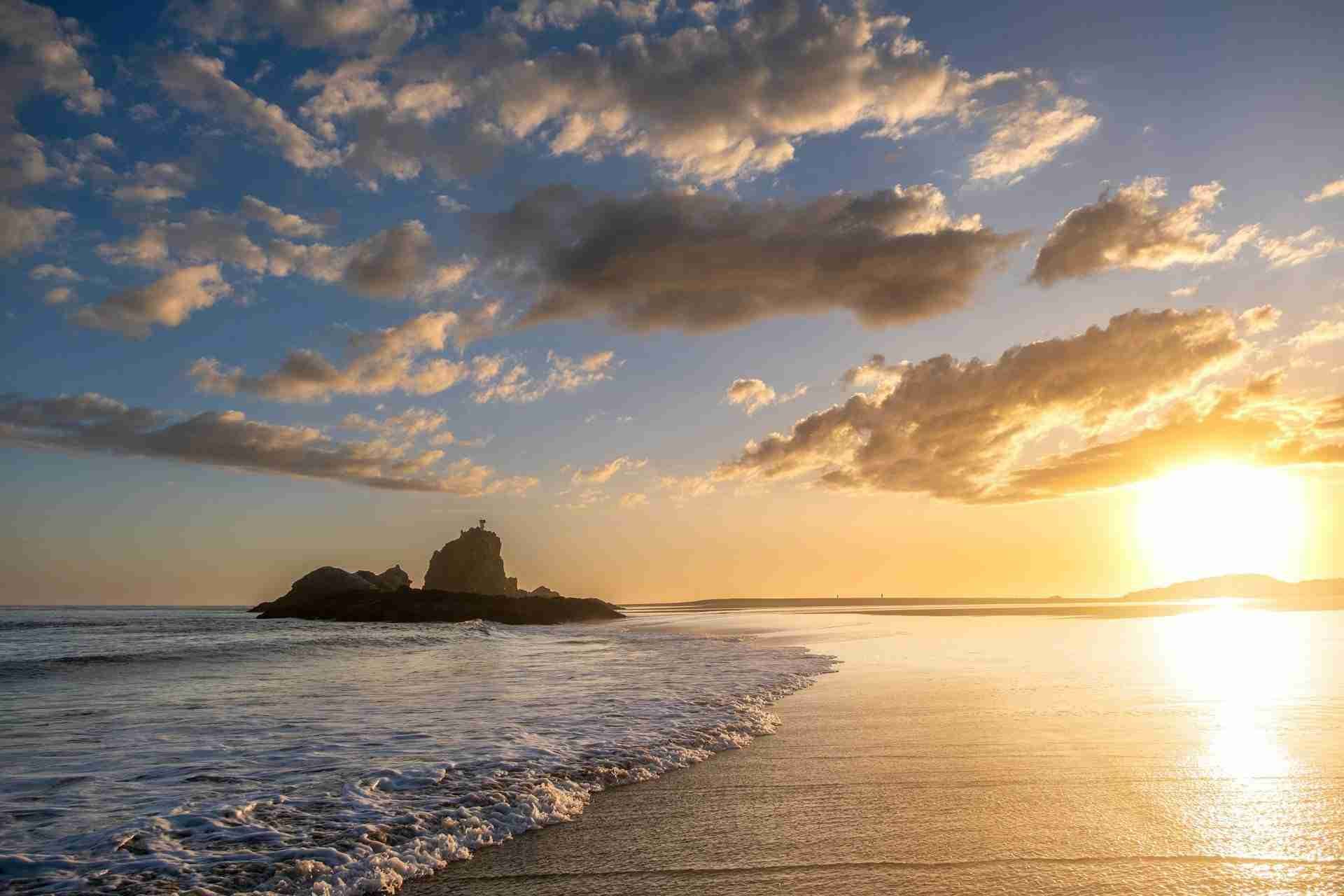
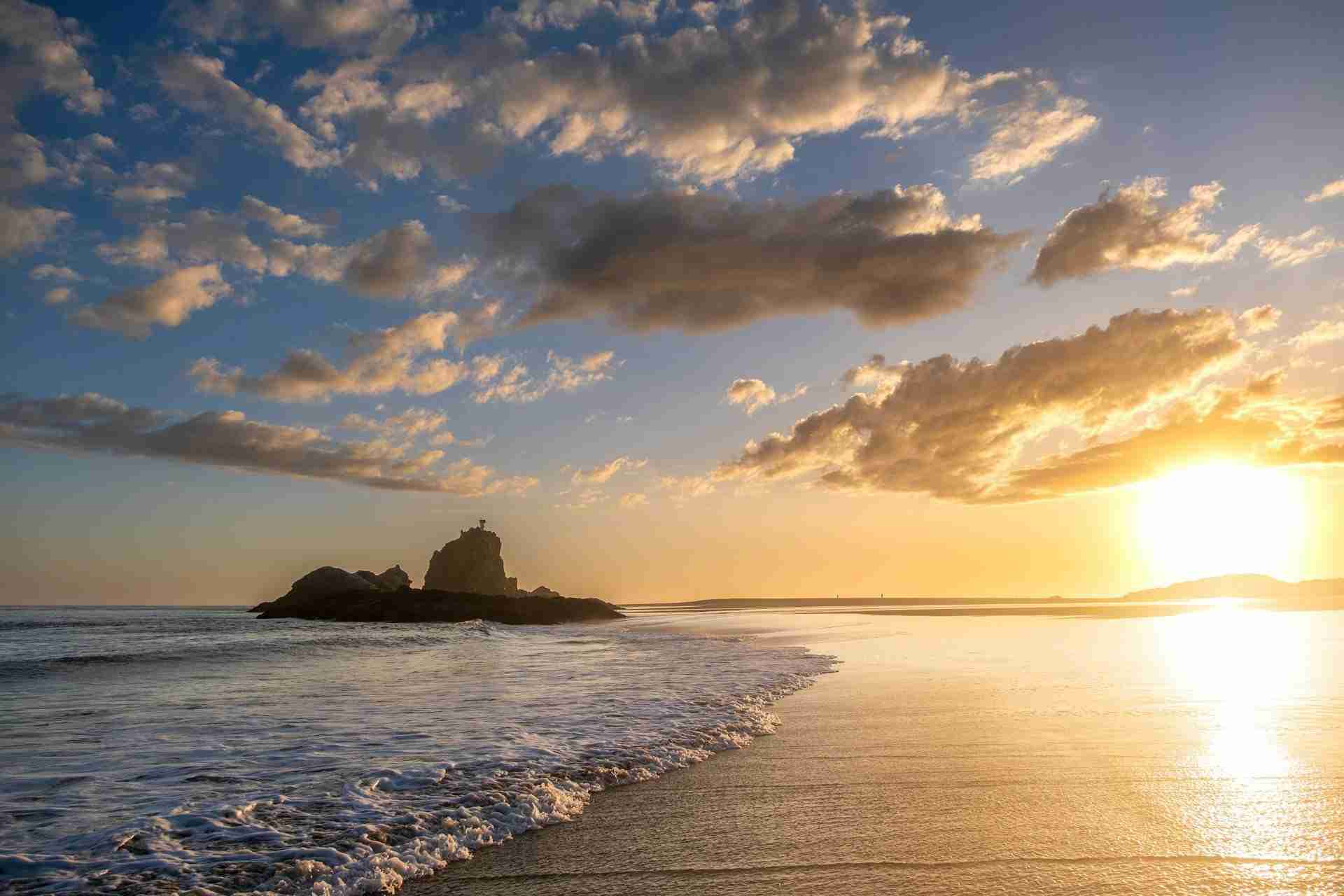
On the remote western edge of Auckland's Waitākere Ranges lies Whatipu Beach—a raw, wind-swept expanse of black sand, dramatic dunes, and endless Tasman Sea horizon. Dominating the seascape just offshore is Ninepin Rock, a hulking volcanic sea stack that stands like a sentinel at the edge of the surf. Isolated and atmospheric, Whatipu is a haven for photographers chasing vast skies, minimalist landscapes, moody long exposures, and compositions where ocean, land, and cloud meet in elemental dialogue. With its volcanic origins, historical shipwrecks, and shifting light, Whatipu Beach is one of the most photogenic—and least crowded—coastal locations in the Auckland region.
Best Photography Opportunities
• Long Exposures of Ninepin Rock at Sunset
The iconic sea stack of Ninepin Rock anchors wide compositions looking west across the Tasman Sea. Use a neutral density filter and long exposure to soften the incoming tide and blur low clouds above the rock. Silhouetted against the sky or bathed in golden-hour light, it adds bold structure and scale to an otherwise open composition. The best angles are found slightly south of the beach's access point, looking back toward the headland.
• Minimalist Dune Compositions with Leading Lines
The beach's sprawling dune system is ever-shifting, with wind-sculpted ridges and tufts of hardy grasses creating flowing, graphic patterns. These are perfect for minimalist photography, especially when using a long lens to compress form and texture. Shoot during early morning or late afternoon to accentuate shadows and highlight the curve of the sand.
• Storm Light and Cloud Drama Over the Ocean
With its open western exposure, Whatipu is ideal for dramatic skies and fast-moving weather fronts. Shoot with a wide-angle lens to emphasize cloud movement over the sea, framing Ninepin Rock or the distant Manukau Heads for visual anchor. Moody skies pair well with the dark sand and create powerful black-and-white conversions.
• Reflections and Sky Glow in the Wet Sand
At low tide, the beach becomes a mirror for sky color, particularly after sunset when the wet sand glows with pastel reflections. Shoot low to the ground and compose with leading lines from tide patterns or footprints. A tripod is essential here to stabilize longer exposures and maximize detail in low light.
• Textural Studies of Driftwood and Volcanic Rock
Scattered across the high tide line and tucked into the base of the dunes are fragments of ancient wood, seaweed, and porous volcanic stone. Use a macro lens or shoot at ground level to isolate these elements against the monochrome palette of the black sand. Early morning light provides soft shadows and a quiet mood for these detailed, intimate shots.
Best Time to Visit
Whatipu Beach is beautiful in every season, but its mood shifts dramatically with the weather. Late autumn through early spring (April to September) brings the most atmospheric light, including morning fog, dramatic sunsets, and low, golden sunlight that enhances the texture of both sand and sky. These months also offer frequent storm systems moving across the Tasman—perfect for moody seascapes and dynamic cloud work.
Sunset is the ideal time to photograph Ninepin Rock and the beach's west-facing expanses. In summer, the sun dips directly into the sea, creating dramatic silhouettes and deep color gradients. Arriving an hour before sunset allows time to explore compositions as the light changes.
Early mornings are best for capturing the beach's untouched texture, gentle fog, and the tracks of birds or wildlife. With virtually no crowds, sunrise offers true solitude and mirror-like reflections in the sand.
Overcast conditions are excellent for shooting texture and tone—ideal for black-and-white work or moody abstracts. Avoid midday unless using infrared or focusing on minimalist studies of form, as the harsh overhead light tends to flatten the scene.
How to Get There
Whatipu Beach is located at the southernmost edge of Auckland's west coast, roughly a 70-minute drive from the city centre. From Titirangi, follow the winding, unsealed Whatipu Road through the Waitākere Ranges. The final stretch is gravel and narrow, but passable in dry conditions with a standard vehicle. Drive slowly and allow time for photo stops along the route—especially as you descend through the forested ridges.
A public car park near the Whatipu Lodge provides the main access point to the beach. From here, it's a short walk across the dunes to reach the shoreline. Sturdy shoes are recommended, as the terrain can be soft or uneven depending on tides and recent weather.
There are no shops or facilities at the beach itself, so bring food, water, and appropriate clothing. Cell reception is limited. A tripod is essential for long exposures, and a lens cloth is useful for managing sea spray and wind-blown sand. For drone operators, note that the area is near an ecologically sensitive zone—check local regulations before flying.
Exploring the Surrounding Area
Beyond the beach itself, the surrounding Whatipu landscape is rich in photographic possibilities. Ancient lava fields and sea caves lie just north of the beach, accessible via short trails from the car park. These are excellent for textural and environmental detail shots, particularly in angled morning light.
To the south, the coastline stretches toward the Manukau Heads, offering elevated views, weathered cliffs, and birdlife along the bluffs. The Whatipu Scientific Reserve encompasses tidal wetlands, dune ecosystems, and forest edges—perfect for wildlife photography or abstract studies of nature's interaction with the elements.
Bush trails into the Waitākere Ranges offer alternative perspectives, with occasional elevated views back toward the beach and Ninepin Rock. These trails are quiet, remote, and best explored during cooler weather when the light is low and the bush is richly saturated.
Nearby Photography Locations
A 30-minute drive north, Karekare offers a similarly raw coastal feel with tall cliffs, black sand, and powerful surf. The waterfall just inland provides contrast with the beachscape for a well-rounded shoot.
• Piha Beach and Lion Rock
One of the most iconic west coast beaches, Piha features a striking central sea stack and dramatic waves—ideal for long exposure and surf photography. Best visited at sunrise or golden hour to avoid crowds.
Near Bethells Beach, this freshwater lake surrounded by high sand dunes provides unique compositions of water, light, and abstract forms. Great for pairing soft reflections with sharp dune ridges.
Across the harbour from Whatipu, the Awhitu Peninsula offers panoramic coastal views, rolling farmland, and the historic lighthouse—a perfect counterpoint to the wild energy of the beach.
On the drive to Whatipu, stop to explore this dense rainforest filled with streams, bridges, and native trees. Excellent for forest compositions and misty mood in early morning light.
Whatipu Beach and Ninepin Rock offer a rare opportunity to photograph a coastal landscape that still feels genuinely untamed—where the sand moves with the wind, the sea pounds the shore, and the light changes by the minute. Whether you're crafting long-exposure seascapes, minimalist dune abstracts, or expansive skyscapes above volcanic rock, Whatipu rewards those willing to walk a little further and wait a little longer for the moment when wildness, light, and solitude converge.
Comments
Loading comments…