
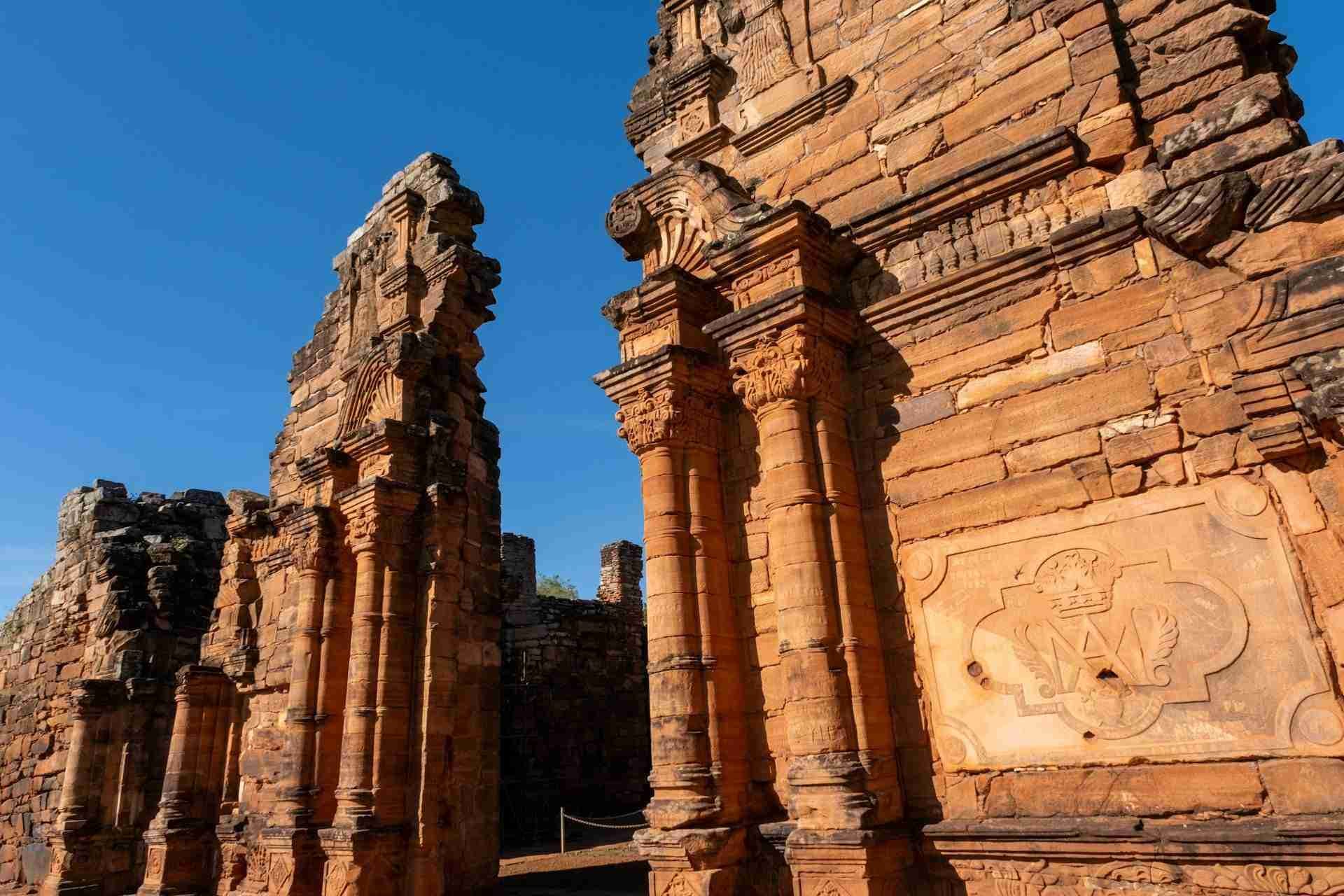
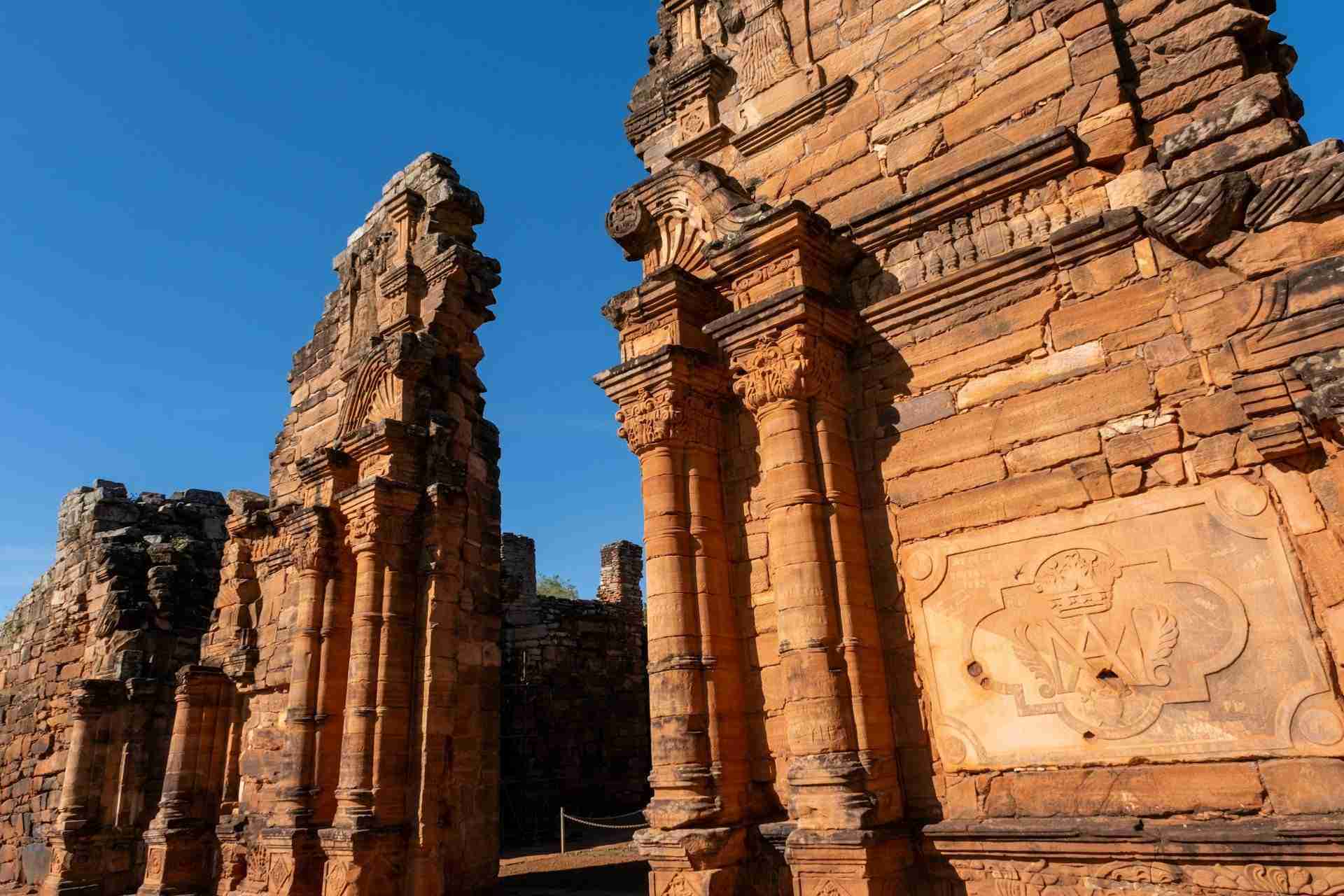
Tucked within the steamy subtropical greenery of Argentina's Misiones Province, the Ruinas de San Ignacio
are among the most visually captivating remnants of the Jesuit mission system that once thrived across South America. Built in the early 17th century and rediscovered centuries later beneath encroaching jungle, these ruins—crafted from deep red sandstone—form a hauntingly beautiful testament to spiritual ambition, colonial history, and the reclaiming force of nature. The site's mix of towering baroque façades, fractured walls, and creeping vines makes it a dream for photographers interested in light, texture, and cultural depth. Every angle here offers a story carved in stone and shaded in green.
Best Photography Opportunities
• Main church façade at sunrise or late afternoon
: The most iconic structure in the ruins is the baroque front of the main church, an imposing and intricate wall of red sandstone detailed with carved angels, floral reliefs, and religious iconography. At sunrise, soft golden light rakes across the carvings, bringing out texture and depth in the stonework. In late afternoon, the warm tones of the stone seem to glow, especially when contrasted with the deep greens of surrounding vegetation. Use a wide-angle lens to capture the façade in full, framed by jungle growth or a moody sky. A lower shooting angle can add grandeur and elevate the vertical presence of the structure.
• Overgrown passageways and door frames
: Tucked behind the main structures are a series of narrow halls, crumbling arches, and doorways framed by time and plant life. These are perfect for compositions that blend natural and manmade lines—roots curling through cracks, ferns spilling over walls, and shafts of light illuminating empty corridors. Shoot during mid-morning or late afternoon when directional light adds drama. These transitional spaces are ideal for storytelling shots, abstract studies, or portraits that feel immersed in a historic setting.
• Stonework textures and carved details
: The ruin's red sandstone is deeply weathered, giving it an almost velvety patina. Use a macro lens or short telephoto to isolate carvings, brick patterns, lichen-covered surfaces, and the worn iconography of Jesuit craftsmanship. Overcast conditions are ideal for these detail studies, allowing you to capture nuance without harsh contrast. These elements can also work beautifully in black-and-white, emphasizing form and erosion over time.
• Foreground layers with jungle canopy
: Throughout the site, towering palm trees and dense jungle canopy frame open plazas and fragmented walls. Compose shots that use this natural greenery as a soft border around stone elements, adding depth and narrative to your images. Position yourself to shoot through hanging vines or branches to create visual layers, especially during early morning when mist or dew enhances the jungle atmosphere. These layered compositions emphasize the site's location within a living, breathing ecosystem.
• Night photography and moonlight ambiance
: If permitted during a special event or guided tour, night photography at the ruins offers an entirely different mood. The red sandstone takes on deep tones under moonlight, and the ruins appear more sculptural and mysterious. Use a tripod for long exposures, and include silhouettes of archways or tree branches for added depth. If lighting is installed for tours or shows, take advantage of colored spotlights and shadows to create haunting or dramatic scenes.
Best Time to Visit
The best months for photography at the Ruinas de San Ignacio are from May through September, during the drier and cooler season in Misiones. This period offers clearer skies, fewer afternoon storms, and more stable lighting conditions for both sunrise and late-day shooting. The site remains open year-round, but summer from December to February can be extremely humid with sudden rainstorms, which adds drama and lushness but makes gear protection essential.
For lighting, early morning offers a mix of quiet atmosphere and soft, angled light across the stone surfaces—ideal for capturing contrast and solitude. Late afternoon delivers rich golden tones that enhance the warmth of the red sandstone and create dramatic side lighting on the facades and walls. Overcast days are perfect for texture studies and close-ups, especially when light is flat and color saturation is naturally boosted.
Avoid midday whenever possible, as overhead light tends to wash out contrast and flatten the depth of the carvings. Morning visits also provide the best chance to shoot without crowds, as the site can become busy later in the day.
How to Get There
The Ruinas de San Ignacio are located in the town of San Ignacio, roughly 60 kilometers northeast of Posadas, the capital of Misiones Province. From Posadas, you can reach the site by car in about one hour via National Route 12, which is well-maintained and clearly marked. Buses and tours also operate regularly from Posadas, making the site accessible even without a private vehicle.
The entrance to the ruins is directly off the main road and includes a visitor center, restrooms, and shaded walkways. The site is managed as a UNESCO World Heritage location and charges an entrance fee, which includes access to a small museum. Tripods and non-commercial photography are generally allowed, but drone use and commercial sessions require special permission.
The grounds are mostly flat but uneven in places, with worn stones and occasional mud in rainy weather. Wear sturdy shoes and bring water, especially during warmer months.
Recommended Gear and Shooting Tips
Bring a wide-angle lens (16–35mm) to capture the scale of the main façade and wider compositions of courtyards and jungle-encroached structures. A mid-range zoom (24–70mm) offers flexibility for hallways, layered scenes, and context shots that include tourists or ambient light. A telephoto lens (70–200mm) is useful for compressing columns, isolating details, or capturing light falling across specific carvings or walls.
Pack a tripod for early morning, late afternoon, or interior shadows where long exposures help manage low light and highlight atmospheric conditions. A circular polarizer will reduce glare on damp stone surfaces and enhance contrast in the jungle greens. An ND filter may be useful for long exposures of moving foliage or softening light in harsh sun.
Moisture is a constant factor in Misiones—bring lens cloths, dry bags, and silica packets to protect your gear. Footing can be slippery, so non-slip shoes are a must. Scout compositions early and return later in the day as light shifts—the ruins transform dramatically between morning shadow and evening glow.
Nearby Photography Locations
: Located on Cerro Santa Ana, this hilltop site features a massive cross monument overlooking the Misiones rainforest. From the observation deck, panoramic views stretch to the horizon, perfect for long-lens landscape work at sunrise or sunset, especially when the canopy is shrouded in morning mist.
: Another Jesuit mission site about 20 kilometers away, Santa Ana offers a more overgrown, less-restored experience than San Ignacio. Ideal for moody, atmospheric compositions and detail work focused on jungle reclamation and spiritual decay.
: A protected wilderness area filled with dense Atlantic Forest, rivers, and waterfalls. Photographers seeking nature compositions, wildlife, or waterfall long exposures will find ample material here, especially in the early morning.
• Posadas Waterfront
: If you're based in the city, the waterfront walkway along the Paraná River offers wide compositions, reflections, and city lights at dusk. It's a strong contrast to the ancient quiet of the ruins, great for modern versus historic image series.
• San Ignacio Mini town streets
: The surrounding town features traditional Misiones architecture, murals, markets, and red-dirt streets lined with flowering trees. These quieter streets are excellent for capturing everyday life and framing the ruins in local context.
The Ruinas de San Ignacio are more than a historical site—they're a living interplay of jungle and memory, where every angle holds a balance of human effort and natural return. For photographers, the ruins offer not only stunning stonework and atmosphere, but a rare chance to capture the tension between permanence and impermanence in the heart of Argentina's red-earth frontier.
Comments
Loading comments…