
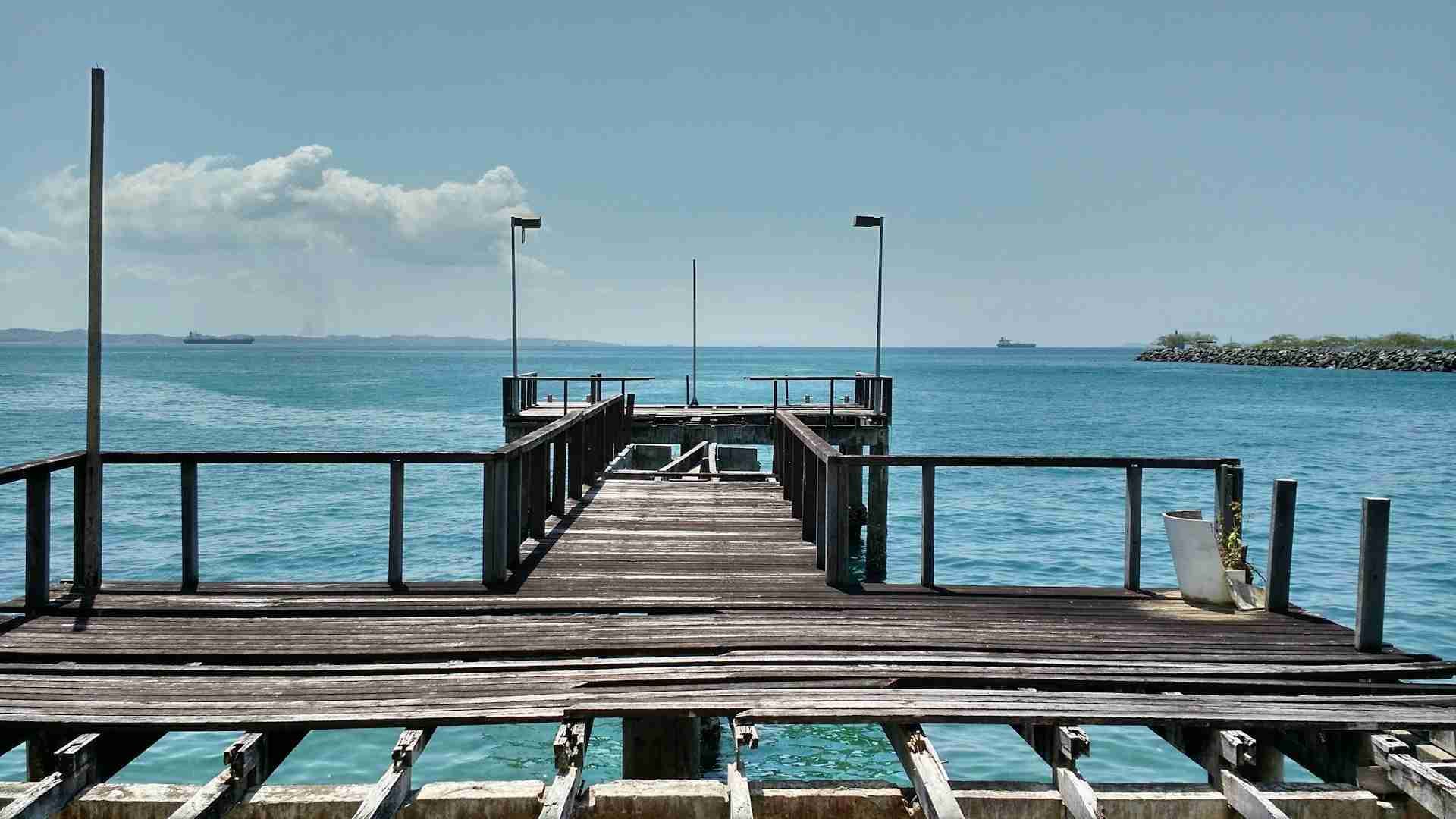
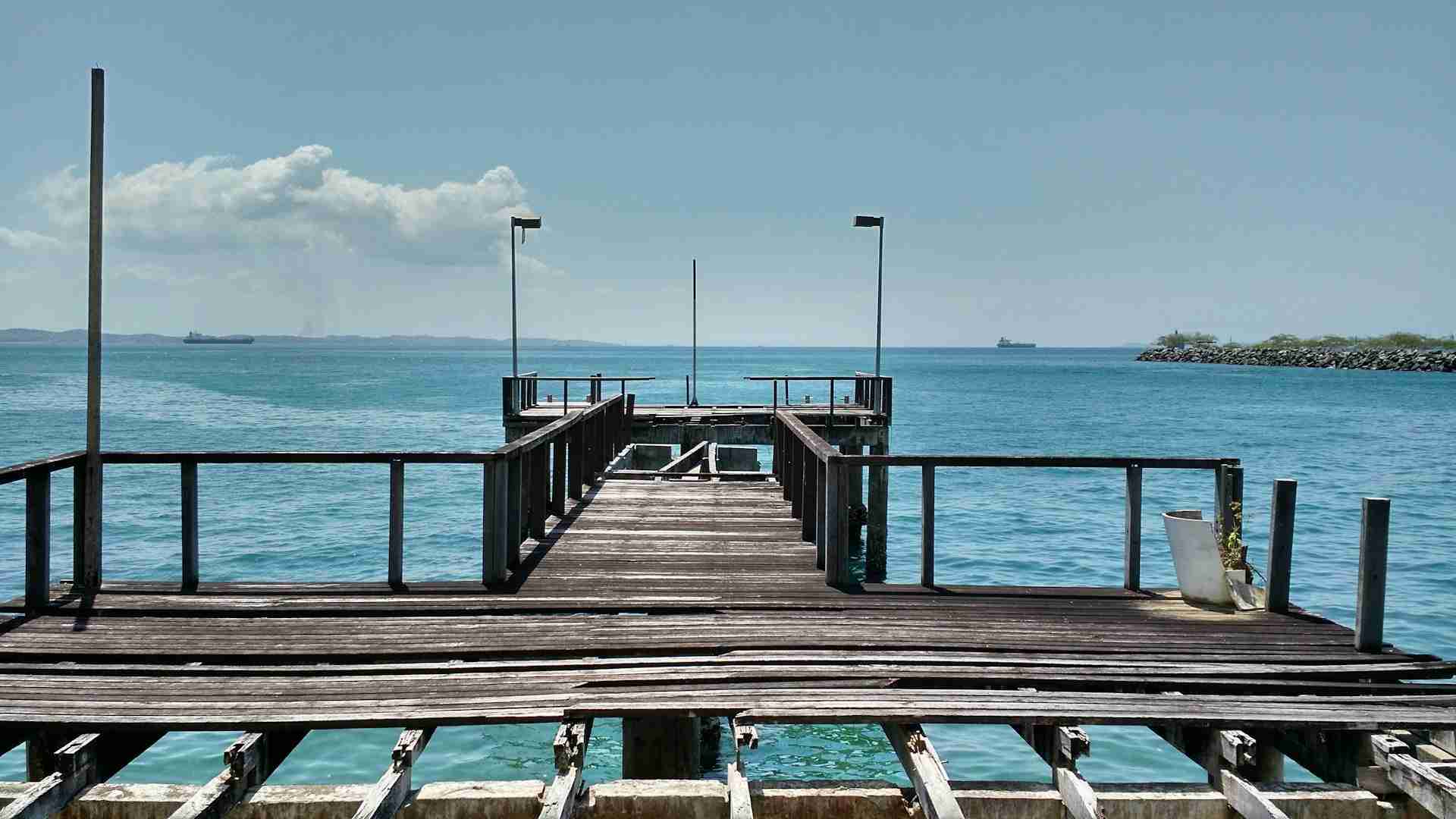
Tucked behind the Museu de Arte Moderna da Bahia in Salvador, a broken dock juts quietly into the Bay of All Saints, offering a raw, unpolished subject for photographers drawn to visual contrast and texture. Weathered pilings, crumbling concrete, and sections of exposed rebar create a foreground full of lines, gaps, and tension, all set against the calm sweep of the bay. The scene is backed by open water, shifting cloud cover, and the subtle gradient of the Salvador skyline in the distance. Though small in scale, this fragment of dock has a strong presence when photographed thoughtfully, especially when light moves across the surfaces or when water conditions mirror the sky. Its position behind the museum makes it feel hidden yet accessible, rewarding photographers who explore beyond the main exhibits.
Best Photography Opportunities
• Frontal Compositions from the End of the Museum Grounds
One of the most direct and balanced angles is found by walking to the edge of the museum's rear platform where the broken dock extends straight out into the water. Shooting head-on gives you clean symmetry and a strong leading line into the frame, especially effective with a wide-angle lens. Early morning light creates long shadows across the dock remains, while late afternoon emphasizes rust and concrete texture in warm tones. Use a tripod to experiment with long exposures that smooth the water and isolate the dock's form. Including a low horizon line helps the structure stand out sharply against open sky.
• Side Angles from the Rocks Along the Shoreline
Accessing the rocky shoreline next to the dock allows you to shoot it from the side, capturing its full length along with the layers of decay. This view works especially well with a 24 to 70 millimeter lens, giving you control over perspective and helping compress the dock into the landscape. Watch for low tide, which exposes more structure and provides foreground texture from wet stones and tidal debris. Cloudy conditions or soft backlight give the scene a more subdued, atmospheric feel, which pairs well with the fractured geometry of the dock. It's a good place to work handheld and low to the ground for added drama.
• Silhouette Frames at Sunset from the Museum's Rear Steps
As the sun lowers behind the bay, the broken dock turns into a dark silhouette, ideal for strong contrast against the golden sky. From the museum's rear steps or garden area, you can shoot over the dock and water without needing to climb or maneuver through rough terrain. This angle works well for minimalist compositions, with the dock as the only hard structure against a gradient sky. Use a short telephoto lens to crop in and balance shape with light. Timing is everything here—wait for the last moments of sun when colors begin to shift toward red and orange for the strongest results.
• Detail Work on Dock Textures and Materials
If conditions allow and the museum provides access close to the dock remains, spend time photographing textures, surfaces, and decay. Focus on the edges of concrete slabs, rusted bolts, seaweed-covered rebar, and water-damaged wood. These abstract images pair well with black and white processing or muted color palettes. Overcast days are especially useful for this work, offering soft light without harsh shadows. A macro or short telephoto lens will help isolate details and remove background distractions. Take your time with framing—slight changes in angle or distance can dramatically alter the balance of a close-up shot.
• Reflections and Long Exposures after Rain or Tide Shift
When the tide is in or the water is especially still, the broken dock's shape reflects softly in the bay, creating symmetry that contrasts its rough, fractured surface. Long exposures help smooth minor ripples and stretch cloud motion overhead. This type of shot benefits from a sturdy tripod, neutral density filter, and careful horizon alignment. Aim to shoot either during early blue hour or in the hour after sunrise, when wind is low and light is even. Reflections work best from a slightly elevated angle, such as the far edge of the museum's waterfront area.
Best Time to Visit
Light and water conditions shift frequently along this part of the Salvador coastline, so flexibility is key. Sunrise provides soft front lighting on the dock if shooting from the museum side, and it often coincides with calm water for reflections and long exposures. Sunset brings directional side light that highlights surface texture and works well for silhouettes. The museum grounds typically open mid-morning, so catching early golden hour may require special access or coordination with staff.
Rain and tidal shifts also play a role. Low tide exposes more of the dock's structure and gives additional foreground options, but be cautious of slippery rocks if attempting shoreline access. Overcast conditions are best for close-up or structural work, while clear skies emphasize shape and shadow. Weekdays tend to be quieter around the museum, allowing for slower, more deliberate shooting without interruption. Always check the tide tables and museum hours ahead of time to plan your session effectively.
How to Get There
The broken dock sits behind the Museu de Arte Moderna da Bahia, located in the Solar do Unhão complex along Avenida Contorno in Salvador. The museum is easily reached by car or rideshare from the city center or Pelourinho. Once on site the dock becomes visible from the lower patio and may require staff permission to access closely, depending on current restrictions or events.
There is no separate fee to access the outdoor museum grounds, but check in at the entrance to confirm whether photography is permitted that day. Drones are restricted due to proximity to urban areas and pedestrian traffic. Tripods are generally allowed outdoors, though using them inside the museum may require staff approval. Be cautious around the dock's edge, as some surfaces may be unstable or slippery, especially in wet conditions.
Recommended Photography Gear
Bring a wide-angle lens in the 16 to 35 millimeter range to capture the dock within its full environment, especially from the frontal or elevated views. A mid-range zoom like 24 to 70 millimeters offers flexibility when working from different vantage points around the museum and shoreline. For detail work or isolating textures, a 70 to 200 millimeter lens or macro lens will help you focus on individual materials and surfaces.
A tripod is essential for twilight, blue hour, or long exposure work, particularly when photographing reflections. A circular polarizer can help reduce glare off the water or wet surfaces, while a neutral density filter is helpful for extending shutter speeds during brighter parts of the day. Consider bringing a lens cloth or protective wrap, as salt spray and moisture near the water can build up quickly. Pack light if moving along the rocky shoreline, and wear shoes with solid grip for uneven terrain.
Nearby Photography Locations
This historic complex surrounding the museum offers strong architectural lines, weathered stone walls, and outdoor art pieces that pair well with natural light. It's a good place for texture studies and balanced compositions.
A short drive or walk uphill brings you to one of Salvador's best-known lookouts, where you can frame the bay, the lower city, and sections of the port. It is strongest at sunset or just after rainfall when the sky opens up.
Just west of the museum, this small beach offers city-backed coastline views with layered crowds, colorful boats, and afternoon light moving across the bay. It works well for documentary street scenes and dynamic lighting conditions.
Further west along the coast, this 17th-century fort and its lighthouse offer classic seafront views with wide-angle potential and strong silhouettes at sunset. The structure itself is clean and symmetrical, ideal for architectural compositions.
This historic district provides the exact opposite of the broken dock's minimalism, with vibrant color, colonial architecture, and busy street activity. It's best approached early in the day to avoid heavy crowds and direct overhead light.
The broken dock behind MAM Bahia may not be on most people's radar, but it offers a rare combination of decay, geometry, and setting that lends itself well to quiet, focused photography. Whether framed at sunset from the edge of the museum or studied up close for texture and detail, it rewards patience and an eye for line and contrast. Tucked behind a center of modern art, it becomes its own kind of installation; open to the elements, shaped by time, and waiting to be seen through the lens.
Comments
Loading comments…