
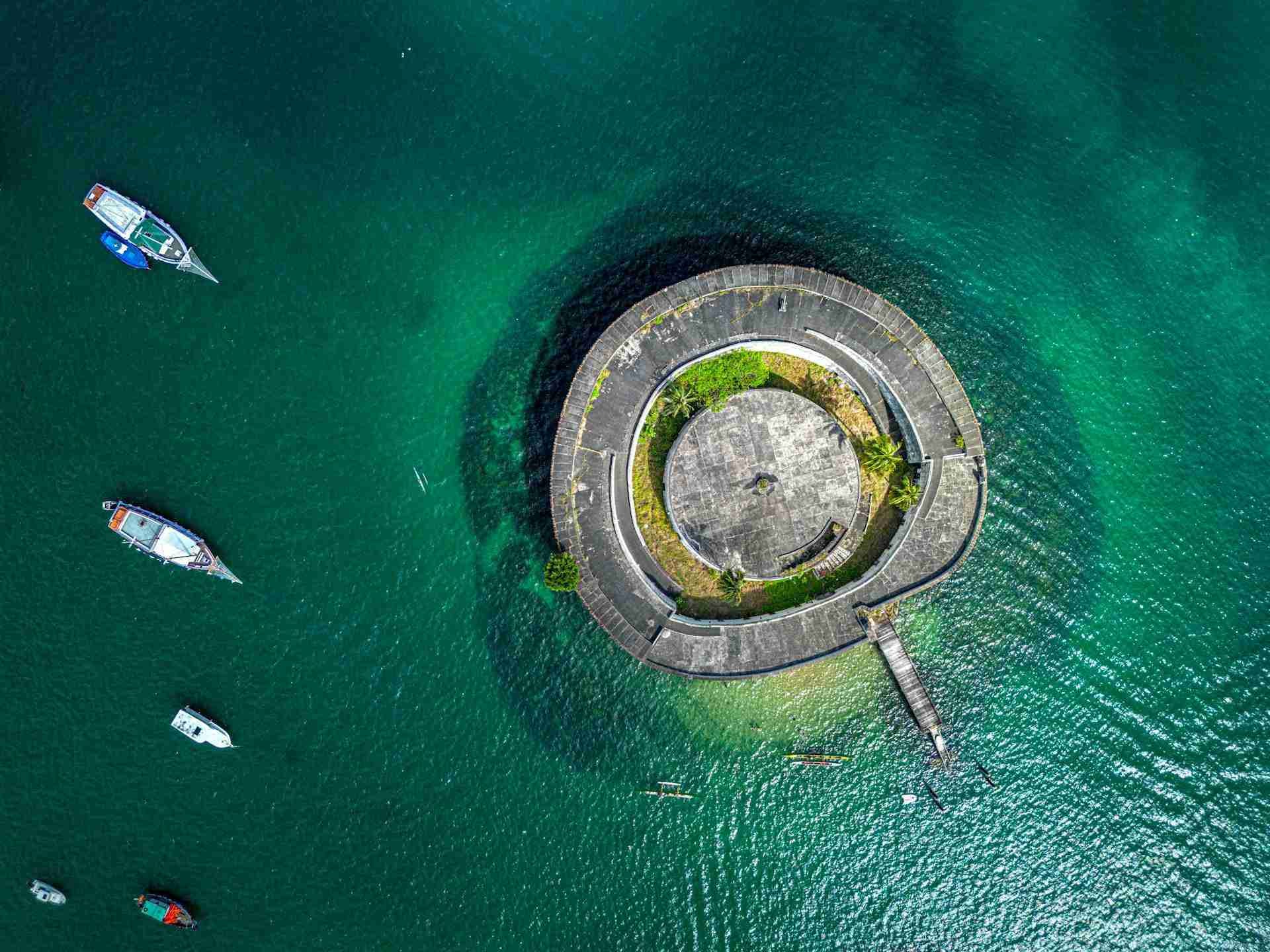
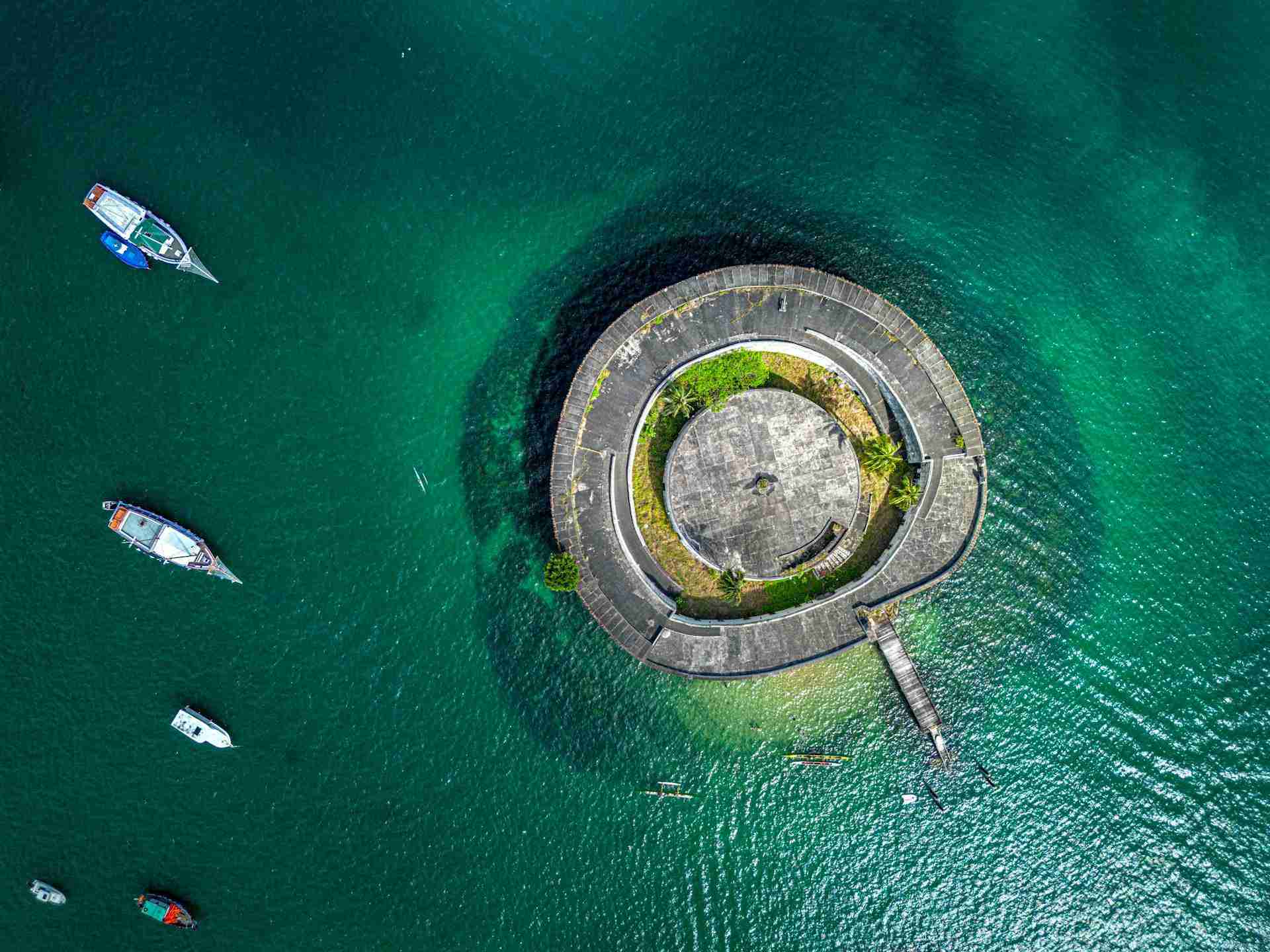
Perched on a circular platform just off the coast of Salvador in the Bay of All Saints, Forte São Marcelo is a captivating maritime stronghold with a unique "floating" presence. Its compact island structure, built entirely from coral stone, offers photographers a rare opportunity to explore symmetry, seascape, and historical narrative all in one dramatic scene. This fortress's distinctive shape, its relationship to changing tides, and its reflections on the water make it a compelling subject for wide and detail oriented compositions alike.
Best Photography Opportunities
• Forte São Marcelo from the Pier at Sunrise:
Arrive before dawn to capture the fortress bathed in soft, gilded morning light. The calm bay often offers a mirror-like reflection of the circular walls, creating symmetrical landscape shots. Use a wide-angle lens to include the pier in the foreground, leading the eye out toward the fortress, or zoom in closer to reveal the textured coral stone and moss-lined ramparts. The area is often quiet in the early hours, allowing for clean, uncluttered compositions. Weather permitting, the sunrise creates pastel tones that shift rapidly, providing a variety of atmospheric moods within a short window of time.
• Close-Up Textures and Fort Details:
The coral-stone walls, weathered mortar, and small cannon embrasures are rich in tactile detail. Switch to a medium zoom or macro lens to isolate these textures. Early morning or late afternoon light accentuates the weather-worn surfaces, casting natural shadows that reveal the fortress's aged character without overwhelming contrast. Details such as iron grates, mooring cleats, and salt-stained brickwork offer strong visual interest. These shots are excellent for building a visual narrative of the fort's defensive purpose and age.
• Seascape and Silhouettes at Sunset:
As the sun dips low, Fortaleza São Marcelo becomes an elegant silhouette against pastel sky tones. Use a tripod and long exposure to smooth out the bay's surface and capture passing boats traced by flowing light. Position your composition so the fortress's round form is centered in the frame, creating a minimalist and meditative visual. The golden hour light spills across the surrounding water, often illuminating the salt spray and distant skyline, providing layers of compositional depth.
• Aerial or Elevated Perspective:
If you have drone access, capture the full geometry of the fort's circular design and its position in the open water. From higher vantage points, you can contrast the fortress's form with the city's shoreline in the distance. Handheld elevated shots from the pier or a boat can also highlight the concentric layout and surrounding water patterns. These angles reveal how the fort is uniquely integrated into the bay and emphasize its symmetry in ways not possible from sea level.
• Nighttime Light and Reflection Play:
On clear evenings, city lights reflect gently on the bay. Use a long exposure and wide-angle lens to compose a scene where the fortress is illuminated by spotlights and city glow provides a shimmering backdrop. Low light emphasizes form over color, making this ideal for monochrome or muted-color compositions. Photographers should experiment with both color and black-and-white rendering to emphasize the fortress's geometry and the bay's luminous texture.
Best Time to Visit
Photographers benefit most from visiting during transitional light periods. Sunrise offers calm water and soft color transitions, ideal for reflections and low-contrast textures. Aim for the half-hour before and after sunrise to capture the fullest range of hues and serene conditions. The fortress often glows with golden and pink hues, its shape reflected almost perfectly on the water's surface. Light fog or low clouds can introduce subtle mood, and birds passing through the frame add an element of dynamism.
Sunset offers strong silhouettes and pastel skies; arrive early to compose your reflections and set up long exposures as light fades. The golden hour leading into blue hour can last over 45 minutes in Bahia's tropical latitude, and subtle shifts in tone can transform the fortress from a focal subject to a silhouetted accent. Dusk also brings city lights into play, creating a vibrant contrast between the natural and man-made illumination surrounding the fortress.
Midday light can be harsh, but it works for highlighting texture and revealing structural details in high contrast. Choose overcast afternoons for even lighting that reduces glare and brings out coral-stone nuances. Midday shooting is also a good time to explore the interplay of light and shadow on the fortress's interior courtyards and the patterning of salt marks on the exterior walls. The surrounding water takes on brighter turquoise hues during this period, which can contrast effectively with the stonework for bold color compositions.
Throughout the year, dry season months (May to September) offer the clearest skies and most reliable lighting. Rainy season visits (October to April) can still be rewarding, but plan for sudden changes in weather and bring rain protection for gear. Cloud breaks following a storm can deliver some of the most dramatic skies for background drama.
How to Get There
Forte São Marcelo is accessible only by boat from Salvador's marina area near Praça Tomé de Souza or at Porto da Barra. Tourist boat operators and private charters make regular runs; confirm departure times and ask if photography-focused visits are available. Transfer to the pier typically includes round-trip fare, but exclusive photo visits may cost extra—ask ahead for options that allow you longer shooting windows. Private tours may also offer early morning or sunset departures, which are crucial for optimal lighting.
On the way out to the fort, consider photographing Salvador's waterfront and the historic Elevador Lacerda from the water, which can provide dramatic backdrops during early light. Ensure all gear is packed in waterproof bags or dry boxes, and avoid lens changes mid-transit unless you're protected from salt spray. Upon arrival at the fortress, note that access may be restricted during maintenance or depending on sea conditions. If the inner courtyard is open, explore different vantage points from the stairwells and defensive overlooks for compositions framed by the inner arches and parapets.
Lighting conditions vary by season: summer (December to February) brings strong midday light and frequent but fast-moving showers, while winter (June to August) offers long stretches of golden hour light and smooth, glassy sea surfaces. Visits just after rain often yield rich, saturated colors and low haze for cityscape backgrounds. Accessibility is weather-dependent; check local marine forecasts before planning your crossing.
Essential Gear for Forte São Marcelo
Choose a lightweight but comprehensive kit that supports versatility and mobility on the pier and boat. A wide-angle to standard zoom (16–70mm) offers flexibility from expansive island views to detailed textures. Bring a telephoto zoom (70–200mm) to isolate wall sections or silhouetted figures on the structure, or to compress the distance between the fort and city skyline. For drone users, ensure flight permissions are cleared in advance—this perspective is one of the most effective for capturing the full geometry of the circular platform in context.
A lightweight tripod is crucial for sunrise, sunset, and night shots—select one that is easy to carry on a boat and includes spiked feet or rubber grips for marine surfaces. Bring neutral density (ND) filters for creative long exposures of water movement and low-light reflections, and consider graduated ND filters for sky-water balance. A circular polarizer will help manage glare off the sea and deepen cloud textures or blue tones in midday skies.
Carry multiple microfiber cloths and lens hoods to manage sea spray and salt accumulation. Weather-sealed gear or protective rain sleeves are strongly recommended due to the maritime conditions. Include spare batteries, high-capacity memory cards, and a remote shutter release for long-exposure work. A compact LED panel or headlamp with red-light mode helps with night setup without overexposing your frame. Protective gloves and rubber-soled footwear will help you navigate the damp surfaces around the fort safely.
Don't forget lens pouches or internal padding if your gear bag will be shifting during the boat ride. If you're photographing during cultural or guided tours, respect space and ask permission when shooting portraits. Your preparation and respect for the environment will directly reflect in the quality of images you return with.
Nearby Photography Locations
Just inland from the boat departure point, this beach is perfect for vibrant sunset compositions and people-watching shots. Waterfront cafes, colorful boats, and locals swimming create dynamic foregrounds that complement views of Forte São Marcelo.
A few minutes' drive from the marina, this iconic fort-lighthouse offers dramatic structural lines and museum interiors. From its ramparts, you can photograph São Marcelo framed against expansive bay and cityscape views.
Moving inland, Salvador's historic center is a maze of tiled alleyways, colonial architecture, and rich cultural life. Vibrant facades and street scenes provide vivid contrast to your coastal fortress shots.
• Forte de Santo Antônio da Barra:
Adjacent to Farol da Barra, this fort provides elevated vantage points of the ocean and São Marcelo in the distance. Its coastal gardens also offer unique perspectives for foreground framing.
• Ponta de Humaitá and Monte Serrat Promontory:
Across the bay from São Marcelo, this vantage point delivers panoramic views of the fortress in its maritime setting. Sunset from the promontory places you on the opposite shore, capturing São Marcelo nestled in the waters with Salvador's skyline beyond.
Whether your vision is architectural detail, seascape minimalism, or cultural context, Forte São Marcelo delivers. It reveals a story of defense, endurance, and maritime identity all framed by Salvador's resplendent light.
Comments
Loading comments…