
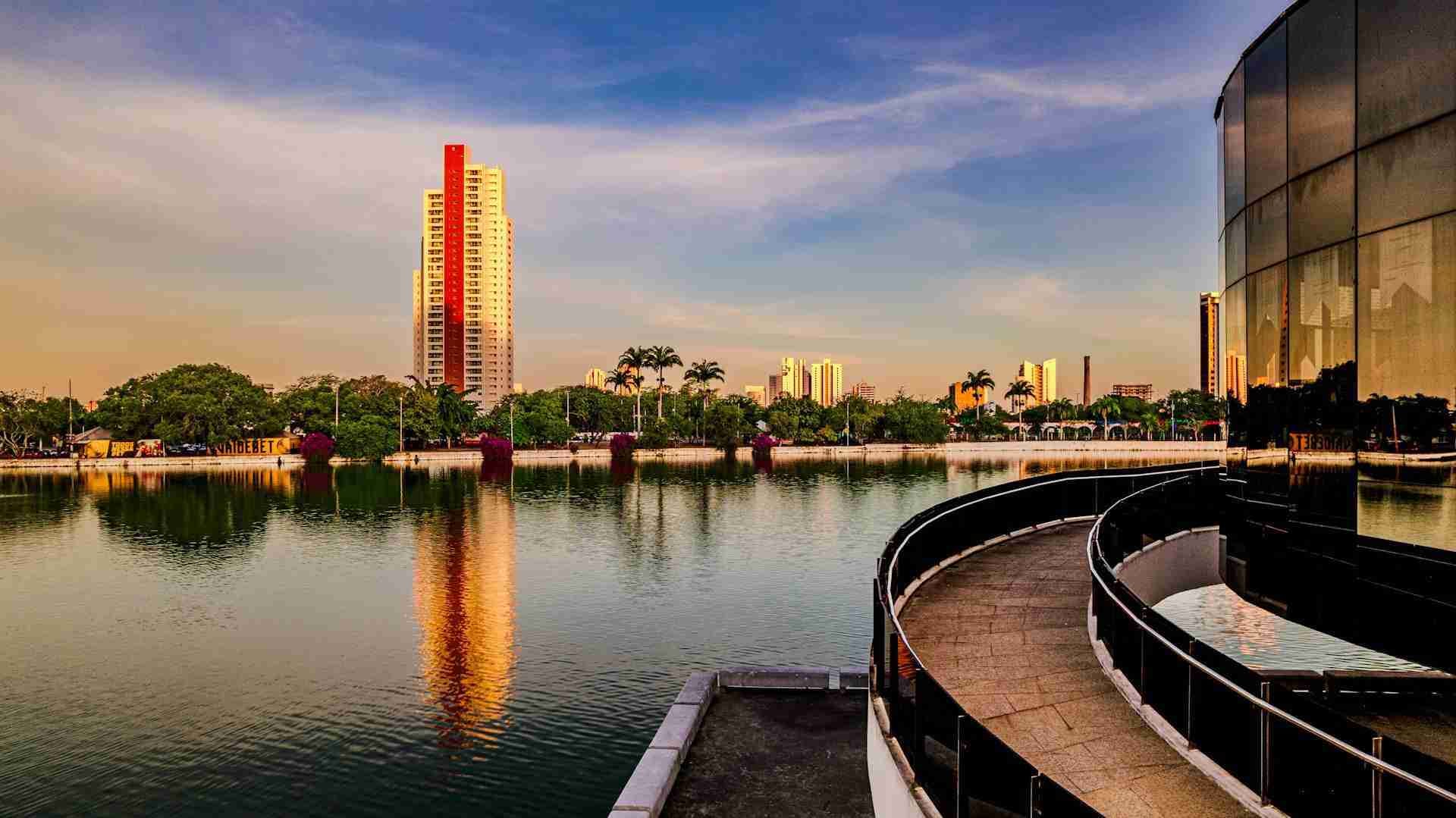
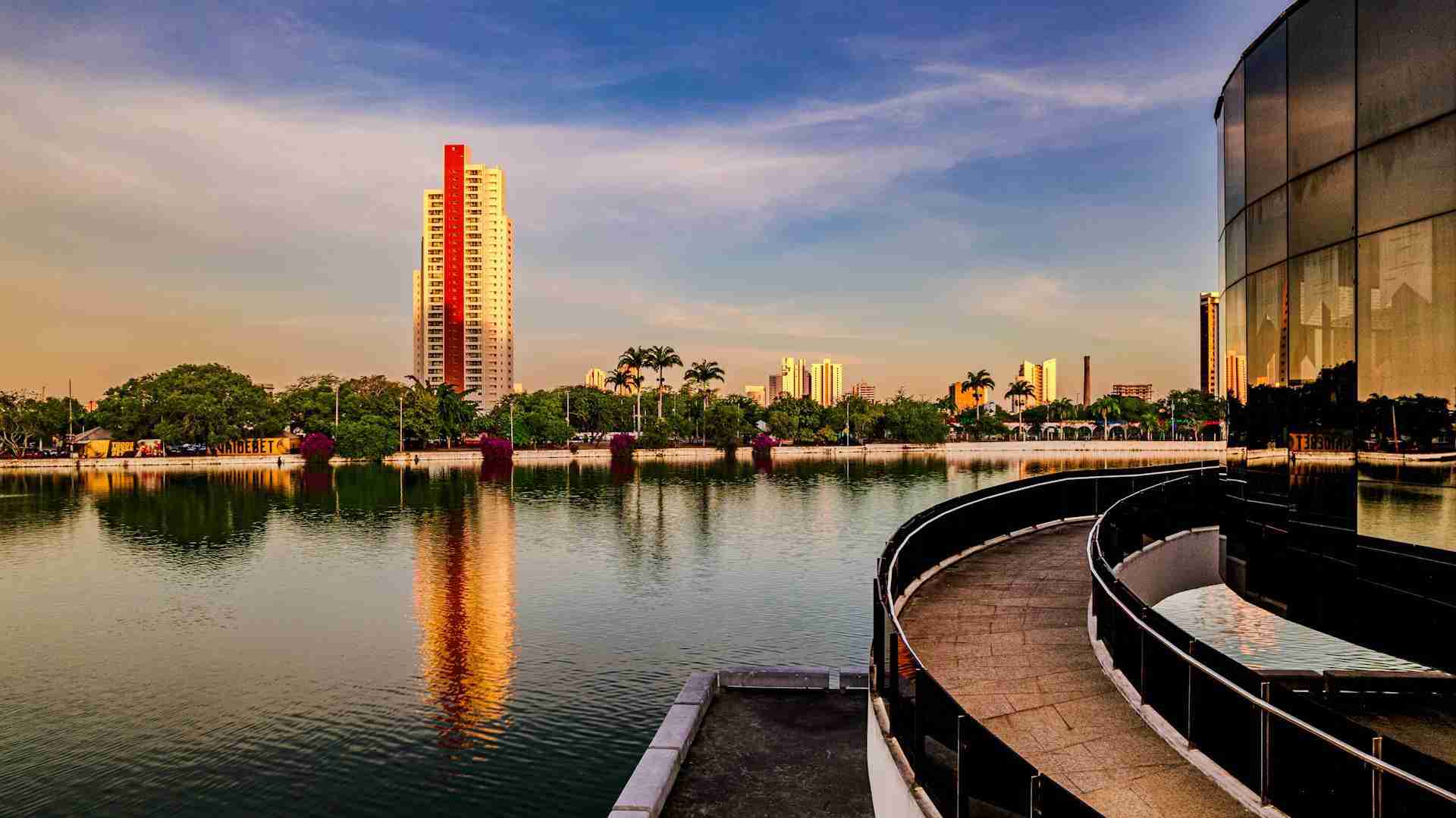
In the heart of Campina Grande, Brazil, the Museu de Arte Popular da Paraíba sits at the edge of Açude Velho, a manmade lake that acts as both a reflective surface and a central anchor in the city. Designed by Oscar Niemeyer, the museum's architecture provides bold curves, clean lines, and sculptural geometry that shift dramatically depending on the light. The surrounding water serves as a natural mirror, turning the entire site into a study in symmetry and subtle movement. With wide paths, palm trees, and constantly changing skies, this location gives photographers opportunities to explore bold architectural forms and still natural scenes in the same frame. Whether you shoot it as minimalist modernism or incorporate the life moving around the lake, it is a setting that rewards both precision and patience.
Best Photography Opportunities
• Shooting the Museum Across Açude Velho
One of the strongest compositions comes from across the lake, where you can use the water to reflect the curves of the museum's structure. The best time to shoot from this angle is early in the morning when wind is minimal and the water is still, making the reflections sharp and symmetrical. A 35mm or 50mm lens gives you enough reach to work the geometry while including the skyline and trees for context. Low light brings out the warm tones of the structure and soft shadows along the rounded edges. If you're patient, birds or joggers passing into the frame can add a clean foreground element without cluttering the image.
• Architectural Details of Niemeyer's Design
The building's signature curves and columns change appearance depending on your angle, especially in the afternoon when the sun strikes from the west. This is an excellent time for shooting detail-focused compositions that highlight the tension between line and curve. A short telephoto or a fast prime lens helps isolate clean shapes without distortion, especially when framing shadows along the surfaces. Working in black and white can also help emphasize the structure's shape and rhythm. With few distractions in the immediate background, this is a location where simplicity in composition can be especially strong.
• Walkway and Shoreline Views with People in Frame
The paved walkways around the lake are active throughout the day with cyclists, families, and street vendors, offering opportunities for incorporating life and motion into your scenes. Position yourself along the curves of the walkway and wait for clean gaps in foot traffic. Including figures gives scale to the museum and adds narrative without distracting from the visual balance. A moderate zoom, such as 24 to 70mm, works well here for adjusting your frame quickly as scenes unfold. Late afternoon provides side light that helps separate subjects from the background and adds contrast along the pavement.
• Reflections and Low Angles Along the Edge of the Water
Moving closer to the lake's edge, you can create low-angle compositions that use the water to reflect trees, clouds, and parts of the structure. These shots work best when the wind is low and the light is soft, especially on overcast days or just after sunrise. Using a small tripod or placing your camera low to the ground increases the effect of the reflection. A polarizer can help control glare, though sometimes embracing the reflection's imperfection makes the image feel more natural. These frames benefit from keeping the horizon line low and letting the water take up most of the composition.
• Evening Color and Blue Hour Across the Lake
As the sun drops, the museum takes on a different mood. Its warm-toned surfaces reflect soft ambient light, and the water begins to darken into rich blues and deep grays. Streetlights around the perimeter switch on gradually, giving the shoreline a warm glow. This is a good time to use a tripod and experiment with long exposures. You can smooth out the water, stretch light trails from passing traffic, or simply hold the rich tones in the sky. Position yourself on the far side of the lake so you can include both the museum and its lights reflected in the water.
Best Time to Visit
Early morning is the best time for calm water and minimal crowds. Sunrise light comes in low across the lake and bathes the museum in soft gold tones while keeping shadows long and manageable. Conditions are typically quiet, giving you more time and space to set up shots or wait for a clean composition without interruption. Morning haze can add subtle atmosphere over the water, especially in cooler months.
Late afternoon offers stronger light and the best chance for side-lit textures on the museum's surfaces. As the sun shifts west, it creates distinct shapes along the curved structure and adds warmth to the surrounding pavement and trees. Blue hour works well when clouds are present or when you want to balance artificial and ambient light in long exposures.
Rainy or overcast days create a flat, even light that works well for shooting architectural details and reflections without high contrast. Since the area is open and mostly paved, even wet conditions can add visual interest, especially with light bouncing off the surface. Avoid weekends or public holidays if you want fewer people in the frame.
How to Get There
The museum and Açude Velho are located in the Centro district of Campina Grande and are easily accessible by car, taxi, or local bus. If arriving from outside the city, Campina Grande's airport is approximately 20 minutes away by car. There are several parking options nearby, including public spaces along Avenida Marechal Floriano Peixoto, which runs along the lake's northern edge.
The site is free to access and open throughout the day, with no gates or restricted areas around the lake itself. The museum has specific opening hours if you plan to photograph the interior, but most photography here focuses on the exterior design and the lake. Wide sidewalks, benches, and green space make it comfortable to work along the shoreline. While tripods are not restricted, use them considerately on busy walkways.
Recommended Photography Gear
A wide-angle lens, such as 16 to 35mm, is essential for capturing full views of the museum with its reflection in the lake. For architectural studies and tight framing of lines and textures, a fast prime around 50mm or a short telephoto like 85mm gives you greater precision and subject isolation. A standard zoom such as 24 to 70mm will allow you to adapt as you move around the location, especially when photographing people near the shoreline.
Bring a lightweight tripod for early morning or blue hour shooting. Long exposures help when smoothing water or balancing bright streetlights with ambient light. A circular polarizer is helpful to manage glare from the lake, especially when photographing close to the surface. Also consider carrying a lens cloth or rain sleeve, as tropical weather can shift quickly, especially in warmer months.
A small tabletop tripod or low-angle support is useful for reflection-focused compositions along the edge of the water. You will not need much reach in this location, so leave the long telephoto at home and keep your kit light and flexible for movement around the lake.
Nearby Photography Locations
This central gathering space is especially photogenic during festivals, but even on quiet days, it provides wide views, traditional structures, and colorful murals. It is ideal for street photography and cultural context, especially in soft light.
Just a few blocks from Açude Velho, this busy square offers urban photography opportunities with monuments, historic facades, and foot traffic. Use a longer lens to compress scenes and highlight architectural layers.
• São José Church
This modest church provides a quiet contrast to the modern lines of the museum. Its clean, simple design works well in morning light, and the area surrounding it is ideal for small detail studies and local color.
• Historic Center of Campina Grande
With cobbled streets, traditional signage, and preserved commercial buildings, the historic center is a good location for slow-paced exploration. Work early in the morning for directional light and lower pedestrian traffic.
• Museu do Telegrafo
A lesser-known location, this museum has a rustic charm and offers a mix of industrial and historical design. It is best approached with a documentary mindset and benefits from natural light falling across the small structures.
Photographing the Museu de Arte Popular and Açude Velho is about more than lines and reflections. It is a rare chance to work in a space where bold modern architecture and daily public life meet at the edge of the water. The compositions can be clean and structured or full of motion and mood, depending on the light and your timing. Few locations in Brazil offer this kind of versatility within such a walkable, accessible area.
Comments
Loading comments…