
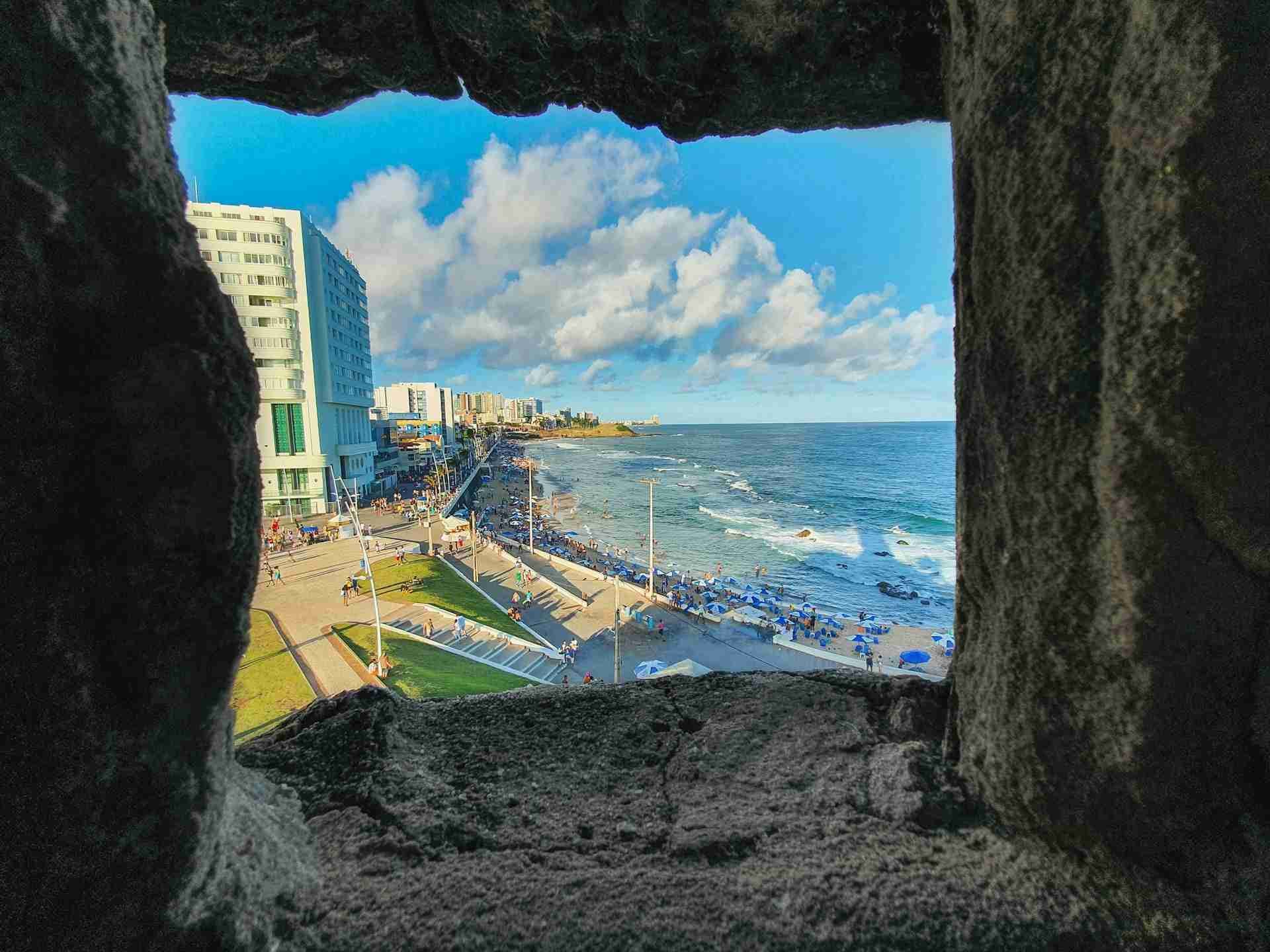
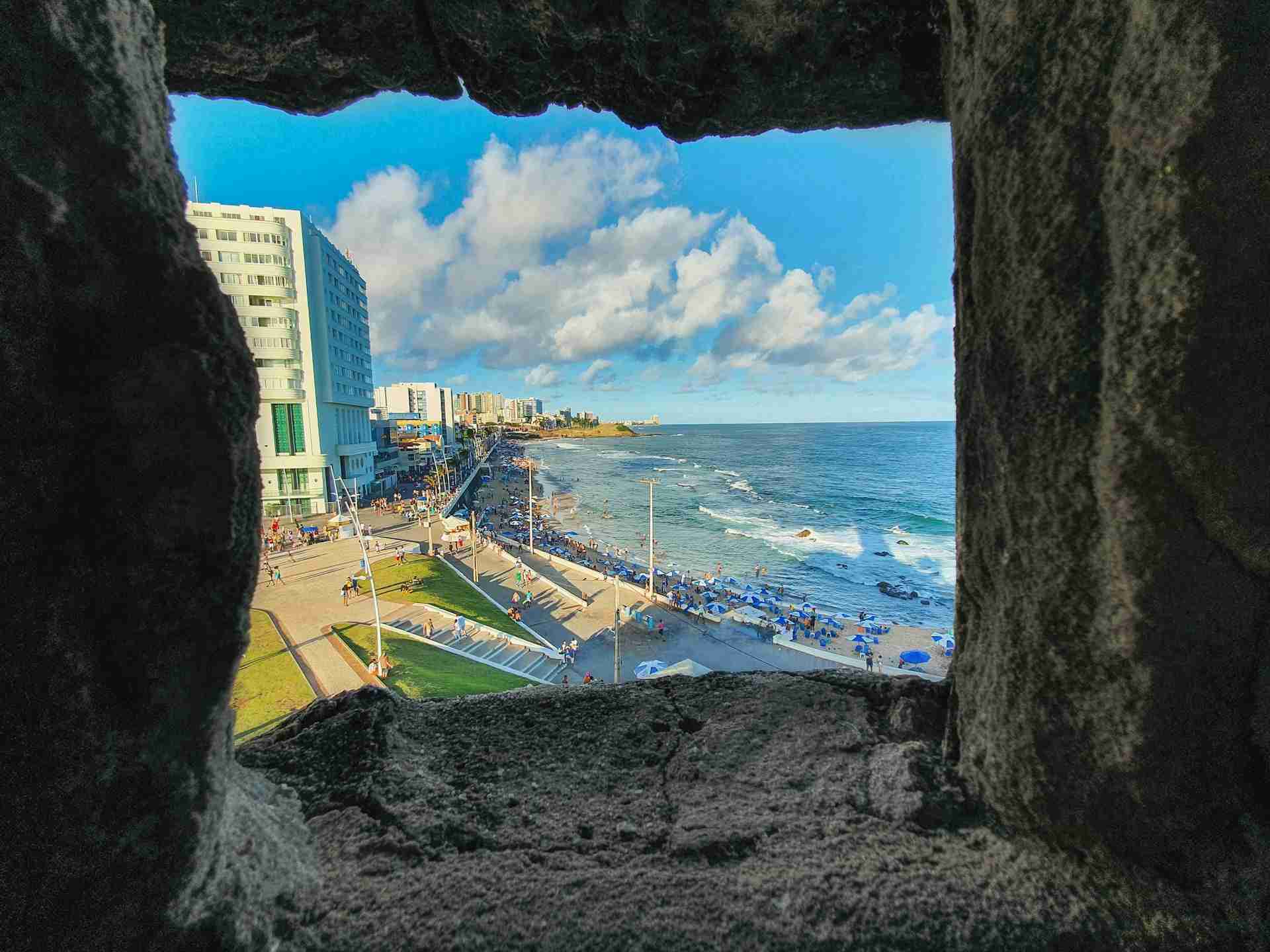
The Museu Náutico da Bahia is housed inside the stone walls of the Forte de Santo Antônio da Barra, one of the oldest and well preserved fortresses in Brazil. Overlooking the meeting point of the Atlantic Ocean and the Bay of All Saints, the museum blends military history with striking architectural design. The fortress itself features rounded bastions, thick masonry walls, and elevated walkways, offering strong lines and uninterrupted views of the surrounding coastline. Rising from the center of the complex is the Farol da Barra lighthouse, painted in bold black and white bands, which adds a visual anchor to both wide and close compositions. With the museum's exhibits, open grounds, and changing sky and sea conditions, this location offers more than just a postcard view. It is a place where texture, symmetry, and motion all come together for photographers who enjoy working with structure and light in a coastal environment.
Best Photography Opportunities
• Elevated views from within the fort's inner wall
From inside the museum grounds, photographers can position themselves at various points along the upper perimeter wall. These views offer wide coverage of the surrounding ocean and curve of the coast, with the lighthouse rising from the middle of the frame. Late afternoon light brings out the warm tones in the stone and enhances the contrast between the fort's geometry and the open water beyond. Including parts of the cannon mounts or wall edges in the foreground adds depth and scale, especially when the tide is visible below. This spot works well for shooting during changing weather, as clouds moving in from the sea add drama without requiring heavy post-processing.
• Low angles from the surrounding plaza and seawall
Outside the fortress, the wide, open plaza offers space to shoot from below the fort's base. These angles emphasize the full height and layered structure of the fort, especially when framed from the north side where the stone base meets the ocean. Early morning is best here, with soft directional light coming in from the east. At low tide, the rocks below the wall can also be included in the frame, giving texture to the lower half of the composition. Using a polarizing filter in this spot can help reduce glare and bring more clarity to the textures in both the stone and the water surface.
• Detail studies of architectural features and material contrast
The museum and fortress include a variety of well-preserved textures, including coral stone, iron hardware, and painted wood doors. These elements offer strong detail studies for those interested in close compositions. A short telephoto lens is ideal for isolating shadows on staircases, framing old entryways, or capturing the patina of weathered materials. Overcast skies work well for this type of photography, reducing harsh shadows and allowing surface detail to become more prominent. Framing tighter allows for visual rhythm using repeated patterns in the stone or contrasting colors along the fort's interior walkways.
• Twilight scenes with silhouette and sky gradient
As the sun sets across the bay, the fort becomes a silhouette against a brightening sky, particularly when viewed from the western edge of the promenade. This is an excellent time to work with longer exposures to capture both the curve of the coastline and the solid form of the structure. A tripod is essential, and using a timer or remote shutter ensures cleaner results. These images benefit from careful alignment and subtle tonal adjustments, rather than heavy edits. Including small human figures in the frame can provide a sense of scale without distracting from the core subject.
• Long exposures of wave movement along the outer wall
At higher tide or during periods of moderate swell, waves crash along the rocky edge of the fort, especially below the north facing side. This is an ideal place for long exposure photography that softens the water and enhances the solidity of the structure above. A neutral density filter allows for exposures of several seconds or more, even in daytime, creating smooth surface textures while keeping the lighthouse and fort sharp. Best results come during cloudy or blue hour conditions, when the light is balanced and the sky contributes gentle tonal shifts. This approach highlights the interaction between natural and built environments without overcomplicating the frame.
Best Time to Visit
The site offers usable light throughout the day, but early morning and late afternoon bring the most control and contrast for photographers. Morning light comes from behind or across the ocean, making the eastern and southern sides of the fort most dynamic. In the afternoon, side lighting reveals texture in the walls and gives subtle definition to the structure's form. Sunset is particularly effective for shooting the lighthouse and sky in silhouette from the promenade. During the dry season between September and March, skies tend to be more consistent and the light is stronger and more direct. Rainy season visits are still productive, especially for long exposure and moody sky work, but require patience and flexibility due to shifting conditions.
Crowds build during midday and weekends, so photographers looking to work with a tripod or explore the site quietly will have the best experience arriving early on weekdays. Evenings can also be quiet, particularly after the museum closes, though exterior paths remain open to the public. Always check for local events or festivals that may affect access.
How to Get There
The Museu Náutico da Bahia is located within the Forte de Santo Antônio da Barra at the southern tip of Salvador's Barra neighborhood. It is easily reached by public transportation, car, or on foot from central areas of the city. The site is a major landmark and well marked from all directions. If arriving by taxi or ride share, drop-off is possible at the main entrance plaza. Public parking is available nearby, though it may be limited during peak times.
The exterior grounds of the fort, including the plaza and surrounding walkways, are open to the public at all hours. Entry into the museum and interior fortress areas requires a ticket, which can be purchased at the entrance. Photography is allowed throughout the complex, and tripods are generally permitted outside the museum's interior exhibit areas. Drones are not officially restricted, but local guidelines should be reviewed, and flying is best avoided during crowded periods or when cruise ships are in port.
Recommended Photography Gear
A wide angle lens is essential for working within the tight corners of the fortress and for capturing the full scene from the surrounding plaza. It allows you to emphasize the scale and shape of the stone walls while including sky and foreground. A standard zoom lens offers flexibility for shooting across the plaza, composing scenes with the lighthouse, and adjusting quickly to changing crowds or light. A short telephoto is especially useful for compressing elements from the walkway and isolating details like windows, doors, and texture studies in the architecture.
A tripod is strongly recommended for blue hour, twilight, and long exposure work, particularly near the water's edge. A neutral density filter is required if you plan to smooth water motion during daylight conditions. A circular polarizer will help manage reflections on the ocean and bring out color contrast in the sky, especially when the sun is low. Lens cloths and weather protection are also valuable in this humid, salt-heavy environment, where sea spray and wind are common. Lightweight gear is easiest to manage on foot between locations, and compact setups will draw less attention when working around other visitors.
Nearby Photography Locations
This nearby cove just north of the fortress offers calm surf, golden light, and wide views of swimmers and anchored boats. It is particularly effective for relaxed shoreline compositions and early morning reflections.
Located in the historic center of Salvador, this vertical transport system connects the lower commercial area with the upper colonial streets. The platform above offers panoramic views across the harbor and layers of rooftops and bay structures.
A short drive inland, this neighborhood offers tightly packed colonial streets, colorful buildings, and intricate architectural detail. It's best explored during early morning when light cuts across the narrow alleys without heavy foot traffic.
• Solar do Unhão and the Museum of Modern Art
Along the coast, this restored 17th-century estate includes open terraces, dramatic stonework, and clean views across the bay. Sunset is the most productive time here, with the fort and lighthouse sometimes visible in the distance.
• Morro do Cristo viewpoint
A raised overlook a short walk from the lighthouse that offers full views of the coastline stretching north. Late afternoon and blue hour give clean gradients in the sky and long shadows across the curved beachfront and distant cityscape.
The Museu Náutico da Bahia and its surrounding fortress are more than just a scenic stop along Salvador's coastline. For photographers, it offers a working blend of structure, history, movement, and light that invites detailed observation and creative flexibility. Whether you're isolating the textures of coral stone or watching the horizon change minute by minute at golden hour, this site delivers strong compositions in nearly every direction without overwhelming the frame.
Comments
Loading comments…