
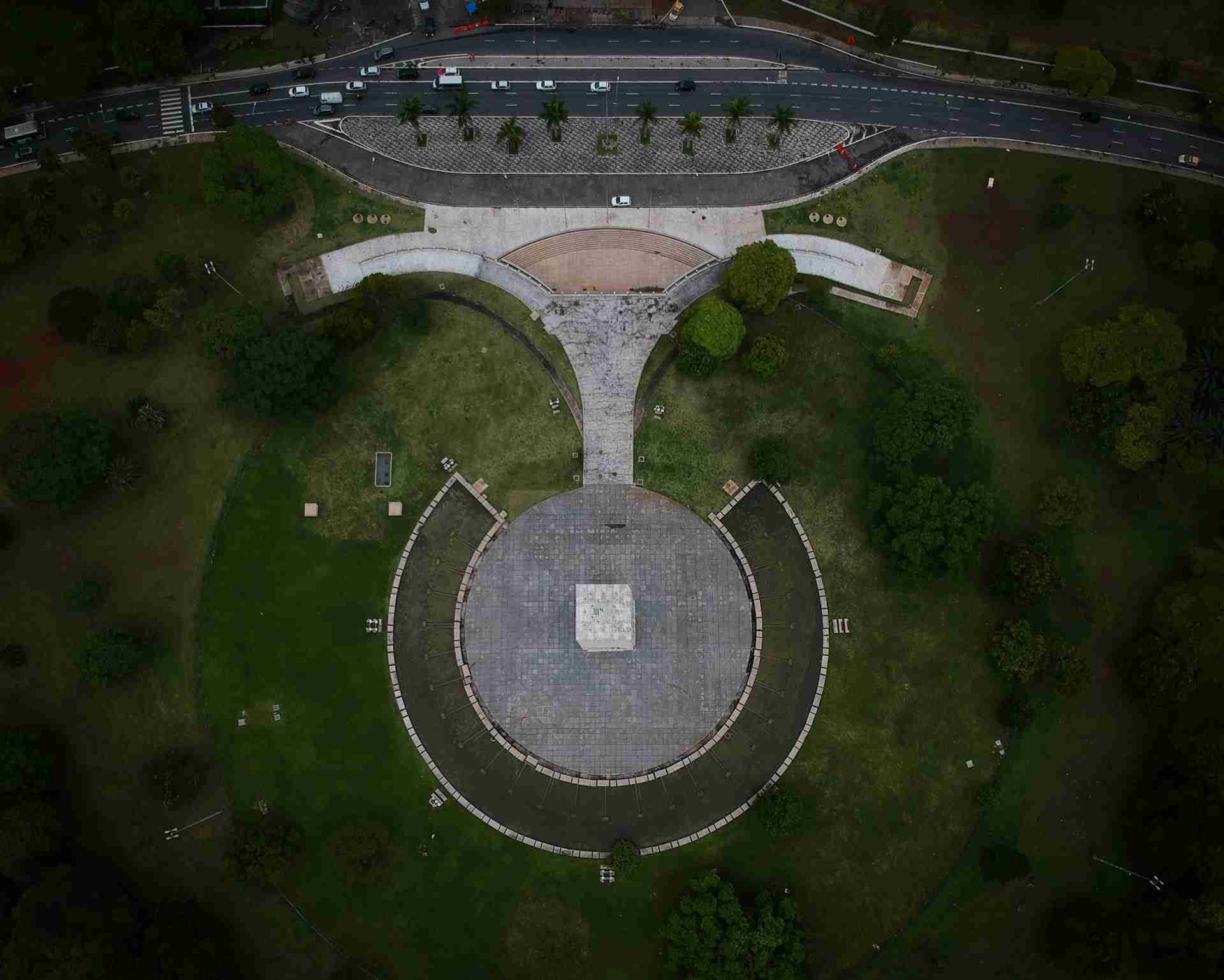
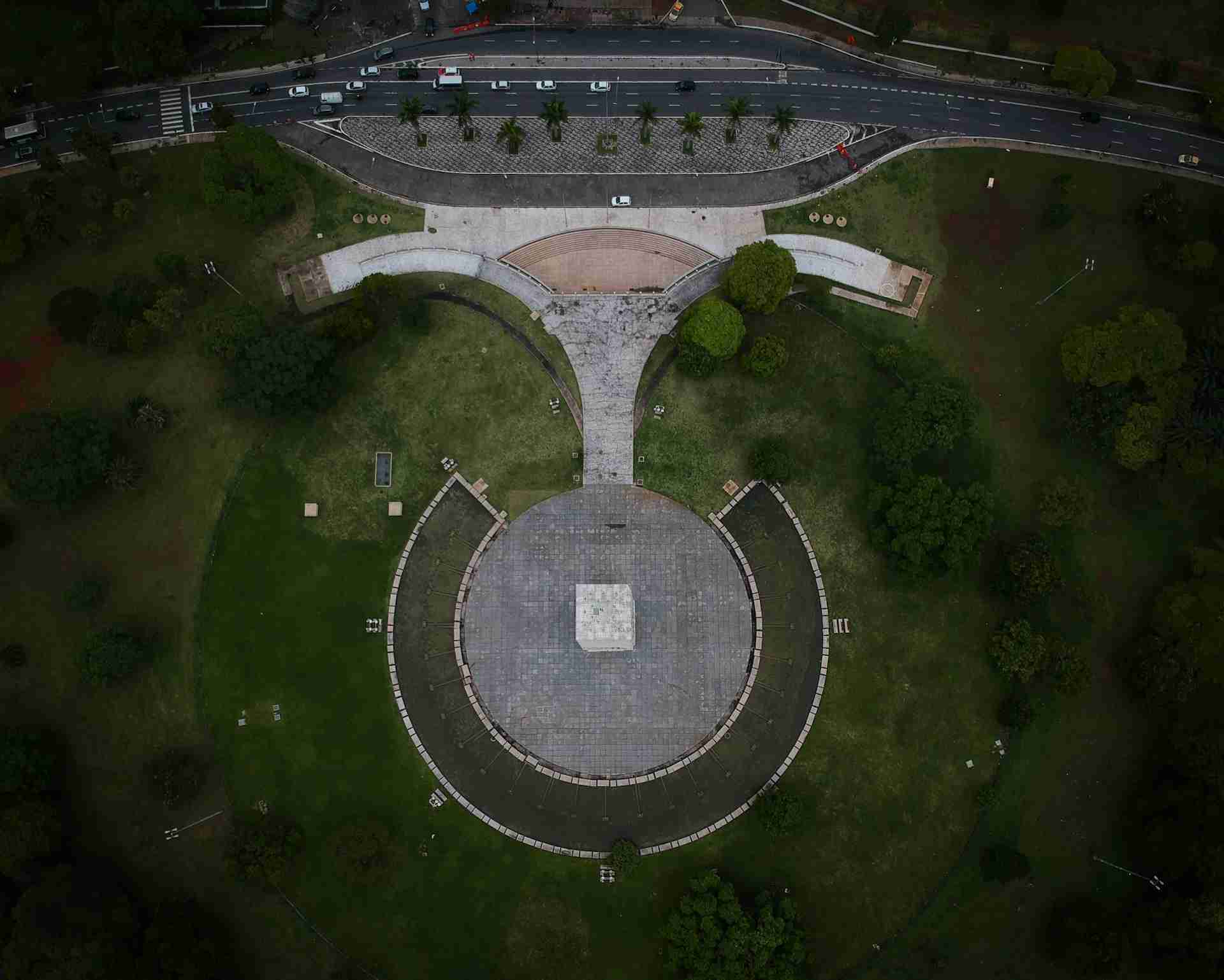
Rising above the green expanse of Ibirapuera Park, the Obelisk of São Paulo commands both physical and emotional gravity. Built as a towering tribute to the victims of the 1932 Constitutionalist Revolution, this 72-meter monolith is the tallest monument in the city and one of its most striking architectural forms. Its simplicity is its strength—constructed of pure travertine marble, the obelisk slices upward into the sky with clean geometry that plays powerfully against shifting light and open space. For photographers, the site is an ideal blend of minimal structure, rich historical context, and urban nature. Whether shot as a lone form in the early morning haze or as a glowing centerpiece at sunset, the obelisk offers endless ways to explore scale, contrast, and light in motion.
Best Photography Opportunities
Symmetry at Sunrise
Positioned along the eastern edge of Ibirapuera Park, the Obelisk catches first light across its marble face. Arriving before dawn allows you to frame the monument from its long central axis with warm sidelight brushing across the stone, revealing subtle textures in the marble. This composition is well-suited to a wide-angle lens placed low to the ground, emphasizing the monument's height and isolating it against a glowing sky. The path leading toward the base creates natural lines that guide the viewer's eye, while soft light reduces harsh contrast and preserves fine surface details. As the sun rises, the light transitions quickly, offering a short but rewarding window for golden hues.
Silhouettes and Scale at Sunset
In the final hour of light, the Obelisk becomes a powerful silhouette when shot from the west. The backdrop of São Paulo's dense skyline to the north and tree-lined Ibirapuera Park to the south makes it possible to frame the structure against both built and natural environments. Shooting directly into the sun from a distance can result in dramatic flare and contrast-rich compositions, especially when clouds or atmospheric haze soften the background. Including people in the frame—joggers, cyclists, or park visitors—adds a reference point that emphasizes the scale of the structure without distracting from it. Sunset also introduces ambient city light, which can add warmth to longer exposures and offer opportunities for combining artificial and natural tones.
Monochrome Textures in Overcast Light
On cloudy days, the Obelisk's soft white marble becomes a canvas for grayscale studies in form and surface. Overcast conditions minimize harsh shadows and create even illumination across the monument's four sides, making it a prime time for clean, symmetrical compositions. Black and white photography works especially well here, enhancing the tonal range and emphasizing the monument's solemn character. The soft light allows the subtle inscriptions, engraved dates, and carvings to be photographed clearly, especially with a mid-telephoto lens. Framing the obelisk tightly against an even sky or placing it off-center within its urban park setting both yield compelling results.
Reflections and Context from the Ibirapuera Lake
The artificial lake near the northern edge of Ibirapuera Park provides one of the most interesting compositional opportunities for shooting the Obelisk with a full sense of place. On calm mornings, the water reflects the monument and the surrounding skyline, allowing for mirrored compositions that work well in landscape or portrait orientation. This is an excellent location for using a polarizer to control surface reflection or emphasize sky contrast. The distance softens the monument's detail but places it in context with São Paulo's vertical density. When the light is right—especially around late golden hour—the lake surface acts as a secondary light source, bouncing warm tones back onto the scene.
Close-up Architectural and Inscription Detail
Up close, the Obelisk reveals more than just its imposing scale. The base features inscriptions commemorating those who fought in the 1932 revolution, as well as sculptural reliefs and embedded historical dates. These elements invite tighter framing, particularly with a 50mm or 85mm prime lens, to isolate the text and carvings against clean marble background. Side lighting is best for these details, as it casts fine shadows into the etched surfaces, enhancing legibility and visual texture. This type of shooting is less about the monument's scale and more about storytelling—capturing the marks of history etched into its stone.
Best Time to Visit
The Obelisk of São Paulo photographs well throughout the year, but certain seasons and times of day offer conditions that better support the monument's visual strengths. The dry season, from May through September, provides the most consistent lighting with minimal rain, making early morning and sunset sessions more predictable. During these months, the skies are often clear or softly hazy, offering long, golden transitions ideal for wide and telephoto work.
Sunrise is particularly rewarding when shooting from the east or southeast. The low-angle light enhances the marble's warm tone, and foot traffic in the park is minimal, allowing for cleaner frames. Morning mist occasionally lingers in the park, softening contrast and adding depth. Sunset, on the other hand, creates strong silhouettes when shooting from the opposite side and works well for high-contrast compositions that frame the obelisk against the skyline or tree canopy.
Cloudy and overcast days bring out the best in detail photography and black-and-white compositions. The diffuse light wraps evenly around the monument and minimizes hot spots, which is ideal for architectural studies and minimalistic shots. The rainy season, which runs from October through March, can produce dramatic cloud formations during golden hour but often brings sudden downpours, so flexibility is essential. That said, clearing storms often leave reflective surfaces and dramatic skies that amplify the monument's presence.
How to Get There
The Obelisk is located within Ibirapuera Park, one of São Paulo's largest and most visited green spaces. It sits near Gate 6 on the park's northern side, directly across from the Assembly Hall and close to Avenida 23 de Maio. Photographers arriving by car can use the adjacent paid parking areas outside the park perimeter, with multiple access points within walking distance. Public transportation is also convenient, with buses stopping along Avenida 23 de Maio and nearby metro access from the Brigadeiro or Paraíso stations, followed by a short walk.
Pedestrian paths inside the park lead directly to the base of the monument, and the surrounding lawn is open and generally uncrowded in the early morning. Tripods are permitted in most areas, but if you plan to shoot commercially or set up lighting equipment, it's recommended to contact the park's administration for current permit requirements. There is no fee to enter the park or photograph the obelisk from public paths. For interior access to the crypt beneath the monument, guided visits can be arranged, though availability may vary depending on park events or maintenance.
Recommended Photography Gear
Photographing the Obelisk of São Paulo calls for a thoughtful but lightweight kit that allows for movement across the open grounds of Ibirapuera Park. A wide-angle zoom, such as a 16–35mm or 24–70mm, is essential for capturing the full height of the monument from close range and establishing its relationship with the surrounding space. For framing distant compositions—especially across the lake or into the skyline—a telephoto lens in the 70–200mm range helps isolate the obelisk against São Paulo's urban sprawl or trees, while also compressing layers for more graphic impact.
A fast 50mm or 85mm prime lens works well for detail shots of inscriptions, carvings, and surface textures. The clarity and shallow depth of field available with these lenses make them especially effective in soft light or cloudy conditions. A tripod is useful for sunrise, sunset, and twilight shooting, particularly if you're working with long exposures or capturing reflections off the water. For handheld shooting during daylight hours, a circular polarizer can help manage glare on marble surfaces and water, while also enhancing color saturation.
Weather in São Paulo can shift quickly, especially in the rainy season, so lens hoods, rain covers, and a microfiber cloth are practical additions. Footwear should be comfortable for walking across park lawns and paved paths. If you plan to stay for an extended shoot, a small, discreet camera backpack helps keep gear mobile while navigating the open spaces around the monument.
Nearby Photography Locations
Auditório Ibirapuera by Oscar Niemeyer
Just steps from the Obelisk, the Ibirapuera Auditorium offers one of Niemeyer's most striking modernist designs. Its angular white structure and bright red entrance create sharp contrasts ideal for color-focused architectural work. Morning light paints long shadows across its curved surfaces, while the surrounding grass offers clean negative space.
Tucked within Ibirapuera Park, MAM provides opportunities for interior and exterior photography. Its transparent facade reflects nearby trees and monuments, while temporary art installations and sculpture gardens introduce dynamic visual elements. The museum often hosts public exhibits, adding layers of context to environmental frames.
Ibirapuera Footbridges and Reflecting Pools
Scattered across the park, the low footbridges and water features offer minimalist structures that pair well with long exposures and urban park scenes. These locations are especially photogenic in early morning or just after rain, when surfaces gleam and reflections are strong.
Another Niemeyer structure, Oca's domed form is visible from many points in the park and provides excellent opportunity for wide-angle and symmetry-based compositions. Its clean curves and concrete surfaces reflect ambient light, especially when framed against the nearby trees or blue skies.
Biennial Pavilion and Ciccillo Matarazzo Pavilion
Located toward the center of the park, these expansive modernist halls provide long, clean lines and interior lighting that suits documentary and abstract photography. During cultural events or festivals, they come alive with people, signage, and temporary architectural interventions that offer new photographic material.
Though São Paulo can overwhelm with its scale and speed, the Obelisk offers a moment of pause and a powerful subject around which light, space, and form continuously evolve. Its surroundings only strengthen its impact, making it a rewarding destination for photographers who want to engage both subject and setting with purpose.
Comments
Loading comments…