
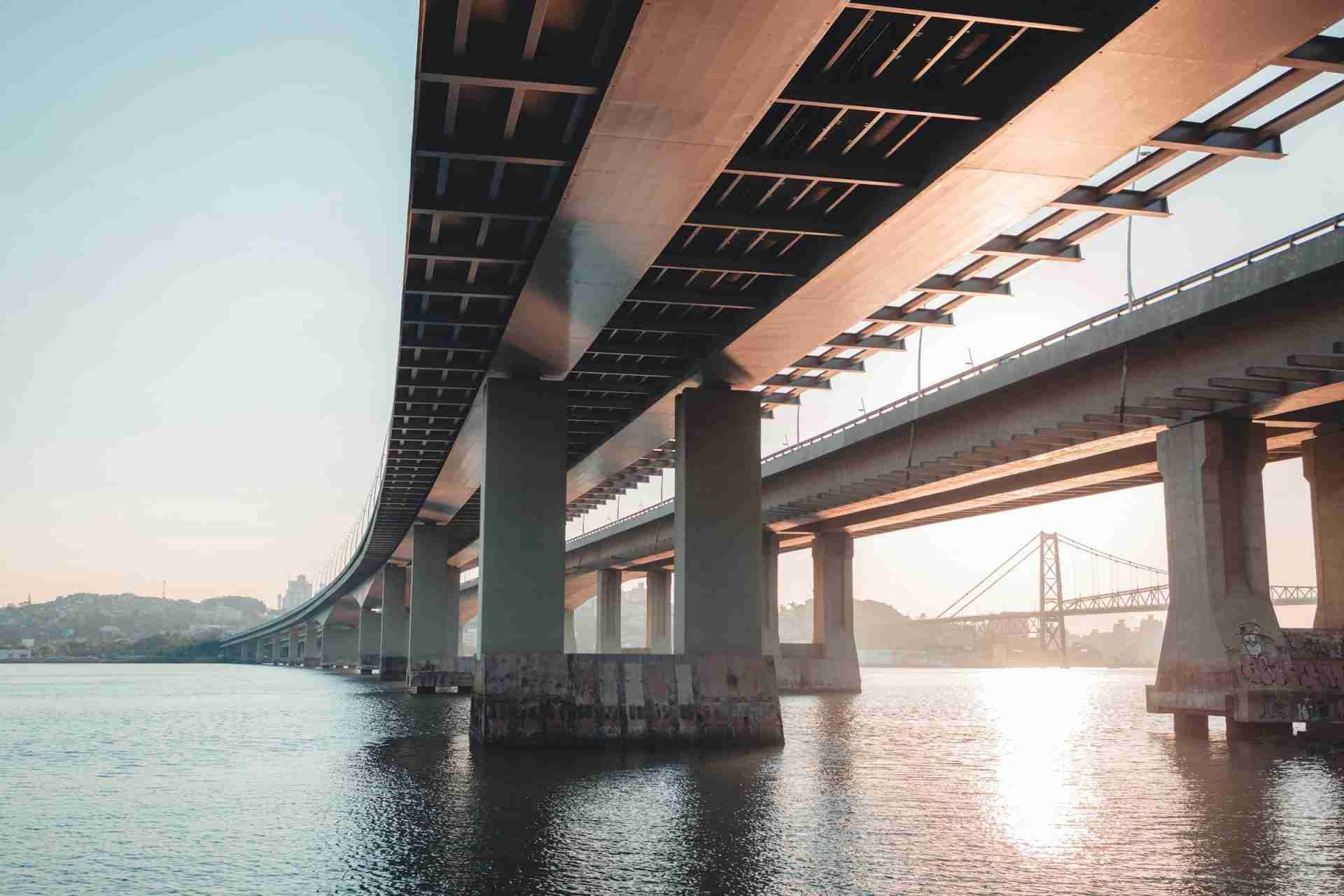
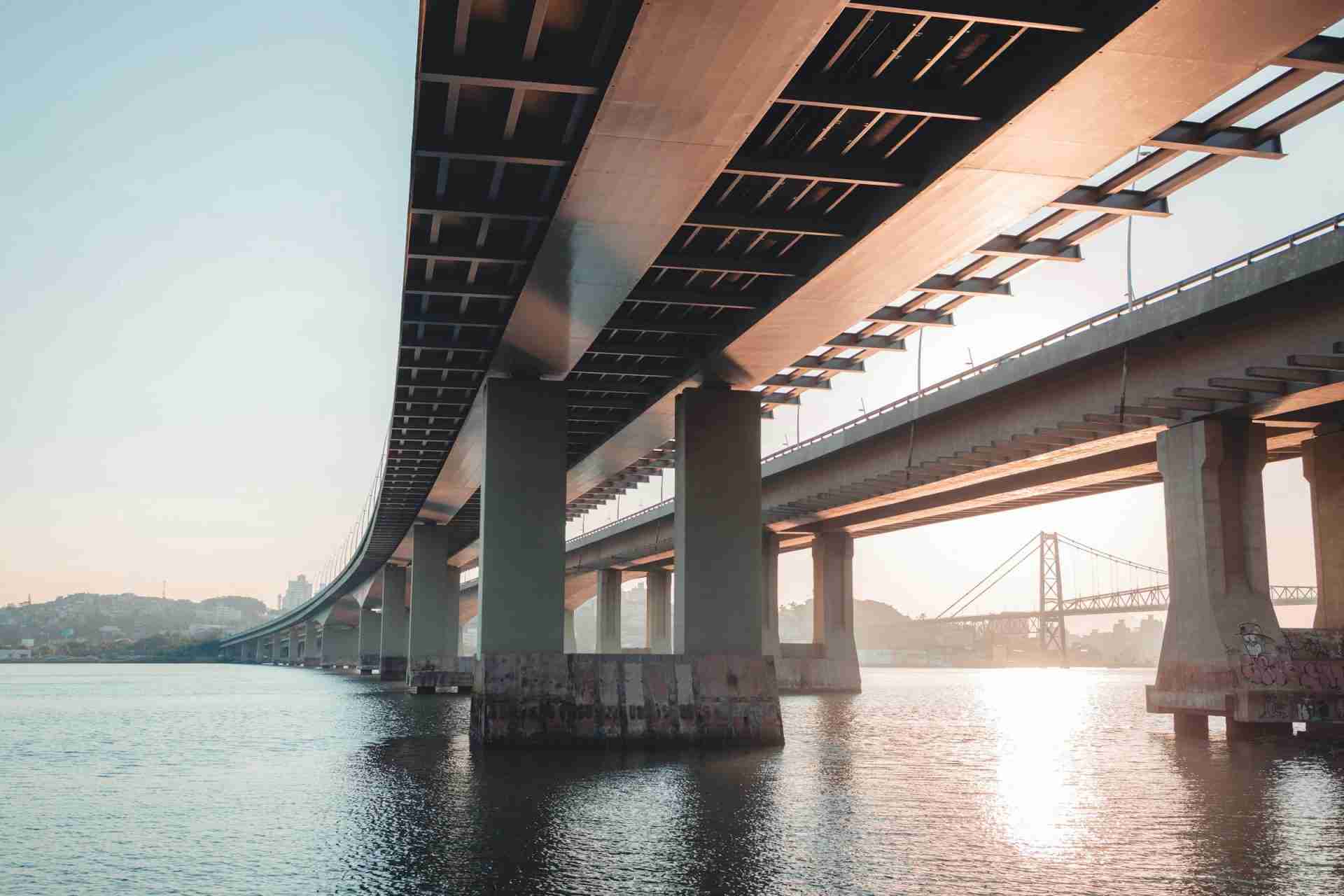
Parque Náutico Walter Lange is a peaceful waterfront park that sits along the edge of Baía Norte in Florianópolis. It's one of the few spots where you can photograph all three major bridges that span the bay from a single, uninterrupted viewpoint. With a mix of calm water, open sky, and modern engineering, the location lends itself well to both clean, wide angle landscapes and detailed architectural compositions. The pace here is slow, the light changes throughout the day, and there's plenty of space to work without pressure. Photographers who enjoy water reflections, long lines, and layered scenes between land and sea will find plenty of material without needing to move far.
Best Photography Opportunities
• The three bridges
One of the most rewarding compositions from the park is a clear view across Baía Norte with all three bridges visible in a single frame. You can photograph from the edge of the promenade or grassy sections of the park or directly under the newer bridges, using the water as your foreground and allowing the bridges to stack. This works especially well early or late in the day when the light gives more shape and shadow across the structures. A wide angle lens helps you pull in the full scene, but make sure to balance the frame with enough space between each bridge. The water often holds soft reflections, adding texture and light to the lower third of your image.
• Bridge details and structural lines
Each bridge crossing Baía Norte brings its own style and construction details, whether it's cables, arches, or exposed trusses. You can isolate sections of a bridge from the park using a short telephoto lens and work with line, form, and pattern without needing to walk far. Side lighting helps bring out the structure's shape, especially if you're shooting for contrast between steel or concrete and the sky behind. On overcast days, even lighting makes it easier to photograph smaller details like bolts, joins, or layered supports. These shots work well when you want to strip away the city background and focus on geometry.
• Reflections at sunrise
The shoreline at Parque Náutico Walter Lange stays calm most mornings, especially when there's little wind or boat traffic. At sunrise, the soft light hits the edges of the bridges and adds color to the sky, which often reflects gently on the surface of the bay. This is a good time for long exposures if you're working with a tripod, or for handheld work with shallow depth of field focused on the water. Look for patterns in the tide or color transitions in the sky to layer into your frame. A polarising filter can help manage glare, but be careful not to remove all the reflection if that's part of your composition.
• Along the shoreline
The edge of the park is easy to approach on foot and lets you get close to the waterline for low angle shots. From here, you can use rocks, grass, or shoreline debris as a foreground to build depth into your composition. Framing the bridges above this textured foreground adds scale and contrast. The light from mid morning to early afternoon works well for these shots, especially with clouds to help diffuse the brightness. This is a quiet way to break up the more obvious wide views and focus on building your frame from the ground up.
• Aerial and elevated views
Drone photography is well suited to this location, especially with the strong horizontal lines of the bridges and the open space over the bay. From the air, you can show the spacing and shape of the bridges in relation to the water, the city skyline, and the far side of the bay. Early morning and late afternoon give the best side light, while midday offers clean top down compositions with strong contrast between structure and water. Make sure to follow local flight regulations, avoid crowded areas, and keep your flight path clear of traffic or boats. From above, the scene becomes much more graphic, and you can experiment with minimalist or abstract compositions as well.
Best Time to Visit
Parque Náutico Walter Lange is best in the early morning when the air is still and the water holds some reflection. The sun rises behind the city, casting soft light across the bay and helping separate the bridges from the skyline. This is also the quietest time in the park, which helps if you're working with a tripod or setting up drone shots.
Late afternoon and golden hour also offer great light, especially from the side, which highlights the bridge forms and adds warmth to the concrete and steel. The sky often picks up soft color near sunset, and clouds can add layers to a wide composition. Midday tends to be bright and contrast heavy, which can work for certain types of architectural detail or black and white photography. Overcast days help with even exposure if you're focusing more on texture and form rather than color.
How to Get There
The park is located along R. Antônio Pereira Oliveira Neto in Florianópolis and is easily accessible from the city center. If you're arriving by car, follow the main coastal road east and look for street parking near the waterfront promenade. From there, it's a short walk into the park along paved paths. The area is flat, open, and easy to explore on foot with camera gear.
Public transport is available along the Beira Mar corridor, with multiple local bus routes stopping within a short walk of the park. There is no entry fee, and the park is open access with no time restrictions for photography. The space is popular with joggers, walkers, and families, especially on weekends, so early arrival helps if you're hoping for fewer distractions in your frame. Amenities and cafes are located nearby if you're planning a longer session or waiting out weather.
Recommended Photography Gear
A wide angle lens in the 16 to 35mm range is ideal for capturing full views of the bay and lining up all three bridges in a single shot. A 24 to 70mm zoom gives you flexibility for tighter frames, structural details, and quick compositions as the light changes. A short telephoto lens works well for isolating design features and compressing the scene when shooting across the water.
Bring a tripod if you plan to shoot in low light or do long exposures. A polarising filter is helpful for managing reflections and deepening sky tone on clear days. Neutral density filters are useful if you want to smooth the water or capture slow cloud movement. A drone is particularly effective here, as the layout of the bridges and the open space allow for strong, balanced compositions from above.
Nearby Photography Locations
• Beira Mar Norte promenade
Just outside the park, this wide coastal walkway gives you additional views across Baía Norte with room to build horizontal compositions or work with silhouettes against the sky. It's a good option for sunrise color or quiet evening reflections.
• Hercílio Luz Bridge viewpoints
West of the park, this historic bridge has a different structural character and is best photographed near sunset when the light warms the ironwork and the channel beneath. It also lights up at night, offering another option if you're staying after dark.
• Santo Antônio de Lisboa
A short drive west brings you to a historic coastal neighborhood with colonial buildings, cobblestone streets, and wide views over the bay. The slower pace and traditional architecture offer a completely different subject just outside the urban core.
North of the city, this beach offers clean lines, soft sand, and long views toward the horizon. Ideal for sunrise or late afternoon when the sun drops low across the water and color begins to build in the sky.
Comments
Loading comments…