
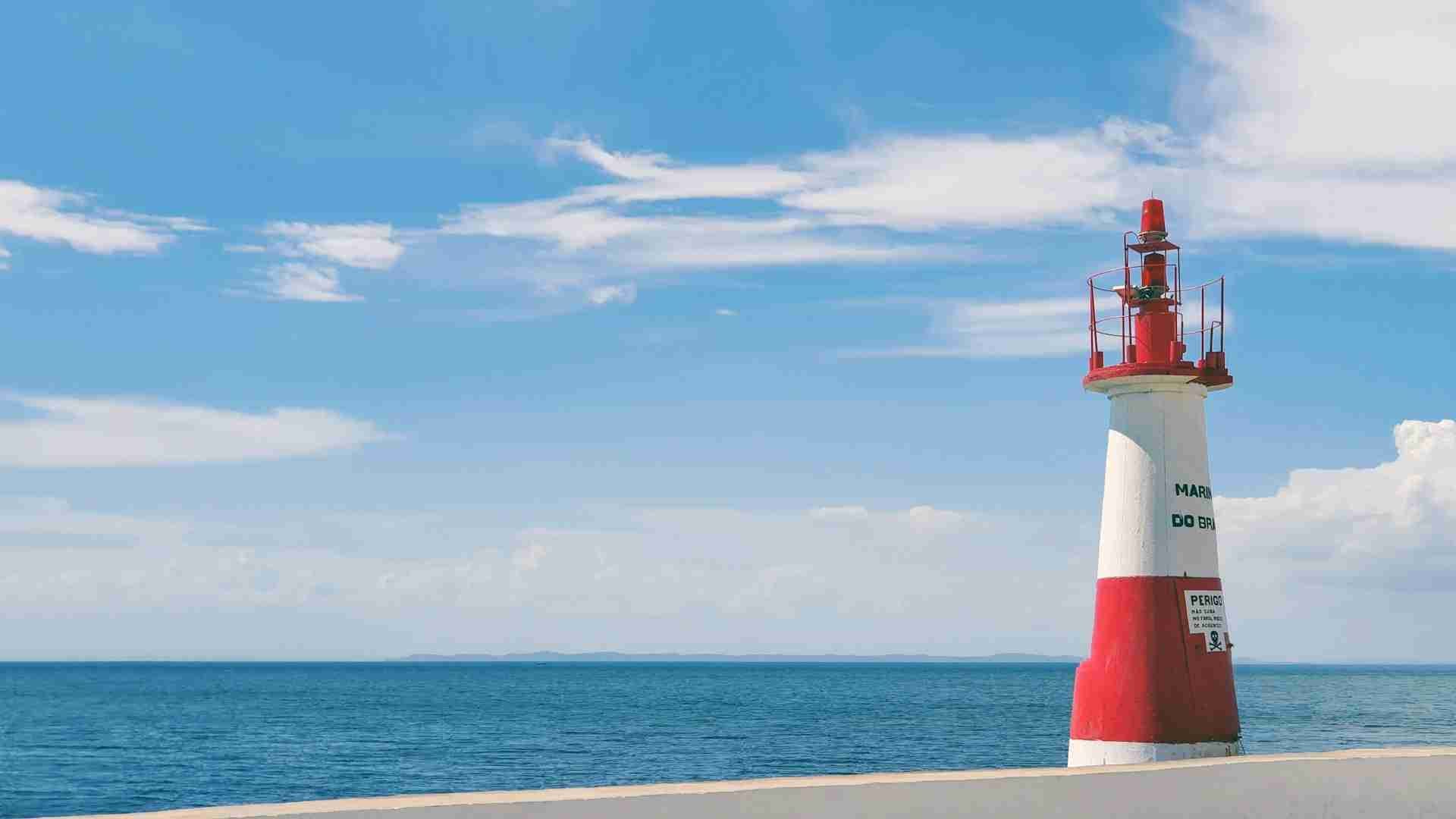
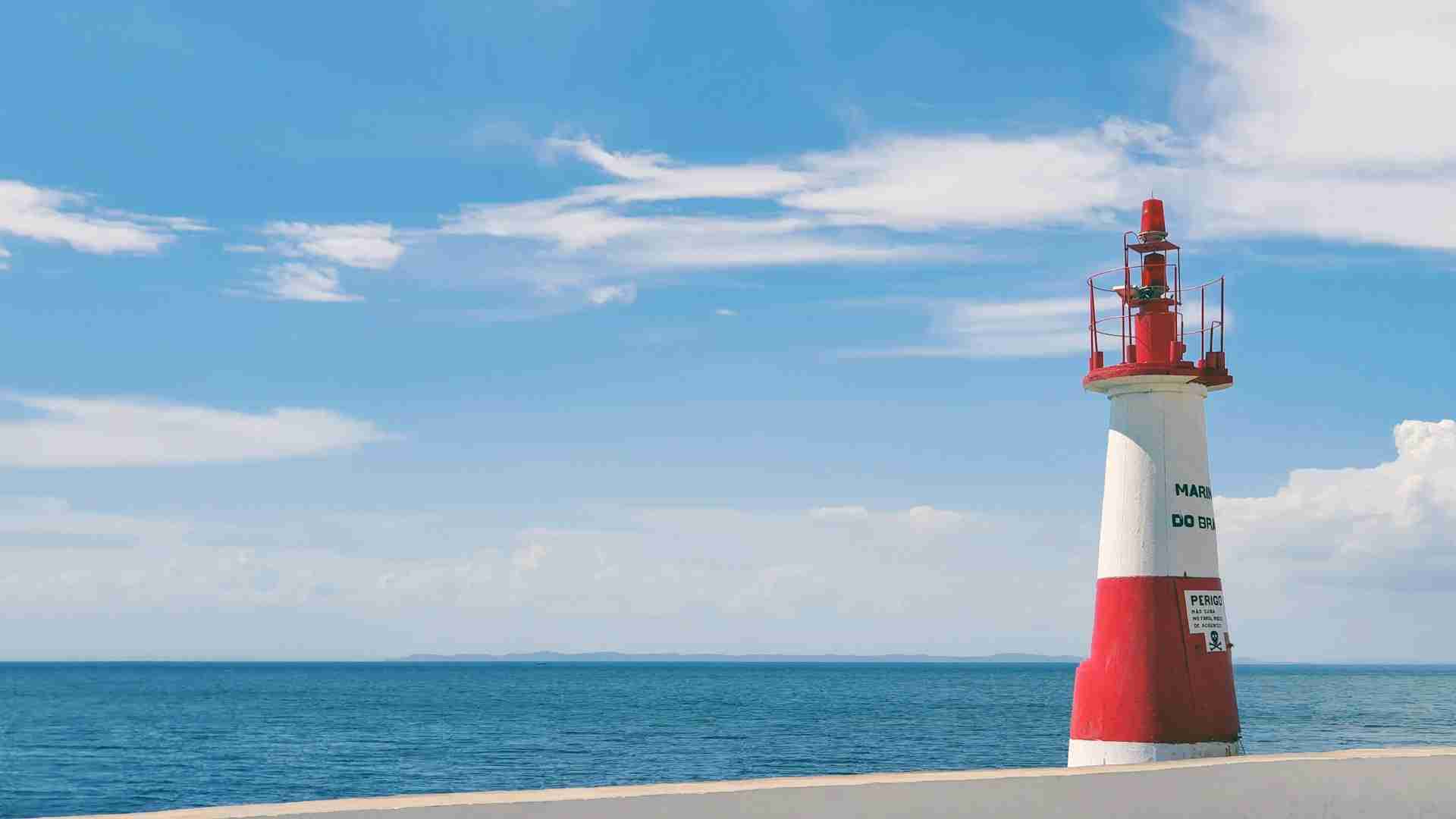
Perched where the Itapagipe Peninsula meets the sweeping Bay of All Saints, Ponta do Humaitá and Monte Serrat in Salvador, Bahia, offer photographers a rare blend of seascape drama and colonial elegance. This spot, often missed by the crowds heading to Pelourinho or Barra, delivers rich scenes marked by heritage architecture, rhythmic tides, and the quiet spiritual pulse of local traditions. The combination of ocean light, historical textures, and authentic local moments makes it an exceptional destination for those seeking layered, story-driven compositions.
Best Photography Opportunities
• Humaitá Lighthouse at Sunset:
The lighthouse stands as the symbolic centerpiece of Ponta do Humaitá, and photographing it at sunset transforms a simple scene into a masterclass in light and mood. The setting sun casts elongated shadows across the water, turning the sky into a gradient of deep tangerine and soft purples. When clouds drift in, their underbellies catch fire, creating textured layers above the steady form of the lighthouse. The adjacent stone bench, often occupied by couples or solitary thinkers, gives you the chance to incorporate human elements that convey serenity or narrative intimacy. Use a moderate zoom to compress the background or a wide lens to highlight the curve of the waterfront esplanade leading toward the beacon.
• Church and Monastery of Nossa Senhora do Monte Serrat:
Built in the 17th century and perched dramatically on a low bluff, the church and monastery offer photographers intricate colonial architecture that rewards both wide compositions and detail shots. The façade features ornamental stucco work, arched windows, and azulejo-tiled pyramidal towers, all weather-worn to a soft, photogenic patina. Interior access allows for shots of vaulted ceilings and filtered light cascading through arched windows. Outside, the geometry of the church contrasts beautifully with the natural coastline, especially when captured during early morning or blue hour, when soft light wraps around the structure.
• Monte Serrat Fort and Its Coastal Ramparts:
This hexagonal coastal fortification provides compelling vantage points for both historical and seascape compositions. The thick whitewashed walls, embedded cannons, and stone lookout posts frame panoramic views of the Bay of All Saints, making it ideal for wide-angle lenses. Try shooting through arched windows or slits in the battlements to create natural frames for the ocean beyond. Textures play a big role here. Moss-covered stones, rusted iron, and salt-worn wood create rich surfaces that add depth and atmosphere. Cloudy days can actually enhance your shots, lending a muted palette that aligns with the site's aged dignity.
• Promontory Panoramas and Water Reflections:
The elevated point where land gives way to the sea at Ponta do Humaitá provides a rare 180-degree perspective of Salvador's coastline, Itaparica Island, and the open bay. Photographers can use this location for wide-format landscapes, sunrise reflections, or long exposures of boats drifting on calm waters. Early morning fog or dusk haze can soften the horizon, adding dreamlike quality to your shots. With ND filters, you can capture long exposures that smooth the bay's surface, making the surrounding colonial structures appear to hover gently above their reflections.
• Cultural Rituals and Local Life:
On special dates, especially around March 8 for Iemanjá celebrations, Ponta do Humaitá becomes a stage for spiritual expression. Devotees dressed in white release offerings into the sea, accompanied by music, chants, and prayer. These moments offer deeply human, emotion-rich scenes that require sensitivity and discretion to document well. Outside of festival days, the site remains lively with locals fishing, performing capoeira, or enjoying quiet conversations on the promenade. These scenes of daily life provide contrast to the architectural elements and add soul to your storytelling.
Best Time to Visit
Photographers will find the most dynamic lighting conditions in the late afternoon, especially from 4:30 PM onward, as the sun begins its descent over the Bay of All Saints. The western-facing orientation of the peninsula is tailor-made for golden hour photography, casting a warm, low-angle light that enhances textures on the fort walls, the church façade, and the water's surface. Sunset itself can be dramatic, especially during the dry season from May through September, when clearer skies offer broader color gradients and more predictable light conditions.
Early morning visits, starting around 6:00 AM, are equally valuable if you prefer tranquility and softer, diffused light. The air is cooler, the site less populated, and the sea often calm enough for mirror-like reflections. This is a great time for long exposures, candid portraits, or images that emphasize solitude and serenity. Morning fog can add atmospheric moodiness, especially when shooting toward the open bay or capturing silhouettes of anchored boats. Birds are often active during these hours as well, adding opportunities for wildlife photography framed by historical architecture.
Midday, while generally avoided due to harsh shadows, can be creatively used to emphasize stark contrasts and architectural geometry. If you're photographing interiors or seeking bright sky backgrounds for light-colored structures, it can serve a stylistic purpose. Evening blue hour transitions smoothly from sunset and allows for deep ambient color washes across the sky and water. Using a tripod and slow shutter speed, photographers can capture glowing lanterns or illuminated facades reflecting off the bay's surface. Altogether, the site is versatile across a full spectrum of lighting conditions if you match your intent to the time of day.
How to Get There
Ponta do Humaitá and Monte Serrat are located in the Lower City of Salvador, roughly 8 kilometers from the Historic Center. The area is accessible by multiple public transit options, including city buses heading toward Boa Viagem or Ribeira. Rideshare services like Uber and taxi are more convenient, especially if you're carrying gear. If you're driving, there is limited street-level parking near the base of the promontory, though it can fill quickly on weekends or holidays.
Once you arrive, you will ascend a gently sloped paved walkway that leads past the fort and church before reaching the lighthouse and main viewing point. The route is partially wheelchair-accessible, thanks to municipal improvements made in recent years. Entrance to the area is generally free, though interior access to certain buildings like the fort or church may occasionally require a small fee or donation, especially during events or guided tours. There are no official gates or time restrictions, but early arrival helps avoid crowds and harsh lighting.
Essential Gear for Capturing the Coast
Given the variety of subjects, from expansive landscapes to tight architectural details, a versatile gear setup is essential. Start with a wide-angle lens, ideally 16–35mm, to capture sweeping views of the coastline, fort, and church. This range will also let you work in tight spaces without losing context. A 24–70mm standard zoom offers excellent flexibility for framing portraits, architectural angles, and candid street moments. For isolating distant boats, details on Itaparica Island, or capturing ceremonies from a respectful distance, a 70–200mm telephoto lens is invaluable.
Bring a sturdy tripod to stabilize shots in low light, especially during golden hour or blue hour. A set of neutral density filters allows for long exposures of the sea and moving clouds, while a polarizing filter helps control glare and deepen skies. High-capacity memory cards and extra batteries are a must, as is a cleaning kit for salt spray and tropical humidity. A lightweight, weather-resistant camera bag will protect your gear and keep you mobile as you explore the promontory and surrounding area.
Also consider bringing a lens hood and microfiber cloth to combat sea spray and glare, especially during windy afternoons. If you plan to photograph during festivals or ceremonies, a discreet camera strap and silent shooting mode can help maintain a low profile and respect the cultural atmosphere. Lightweight clothing, sun protection, and water are essential for longer shoots under Bahia's intense tropical sun. With the right preparation, this location offers nearly every setting a photographer could hope for in one coastal package.
Nearby Photography Locations
Just a short drive east, this waterfront colonial complex houses the Museum of Modern Art and boasts cobblestone lanes, baroque balconies, and striking views of the bay framed by coconut palms. Photographers will find rich textures in the aged walls and fascinating juxtapositions between heritage architecture and contemporary sculpture installations. Late afternoons here are golden, especially when the sky reflects off the water near the boat docks.
• Praia da Boa Viagem:
This small beach south of Monte Serrat is favored by locals and ideal for quiet shoreline photography. The calm, protected waters allow for minimal motion blur during long exposures, while the presence of fishermen, traditional boats, and distant views of Fort São Marcelo create a timeless, working-coast atmosphere. Visit in the early evening to catch pastel skies that mirror across the water.
Located a bit inland, this peaceful complex pays homage to one of Brazil's most beloved spiritual figures. The memorial and sanctuary offer contemplative photographic scenes, including stained glass reflections, softly lit chapels, and bronze statues of Irmã Dulce in reflective poses. Ideal for those seeking moments of stillness or spiritual context, especially during weekday masses when the environment is quieter.
Accessible by boat, this unique sea-bound fortification rises from the waters of Baía de Todos os Santos like a floating disc. Its circular walls and mid-bay location allow for distinctive maritime compositions. Try capturing it during foggy mornings for an ethereal mood or in full daylight when its stark shape contrasts with the azure sea and city skyline.
• Bonfim Church and Itapagipe Peninsula:
Not far from Monte Serrat, the iconic Church of Bonfim offers opportunities to capture one of Brazil's most spiritually significant landmarks. Photographs here can include the vibrant "fitinhas" tied to its gates, as well as the emotional expressions of pilgrims. The surrounding streets provide compelling street scenes filled with vendors, colonial homes, and vibrant murals.
Whether you are drawn by the golden hues of sunset at the lighthouse, the stoic elegance of colonial stonework, or the chance to witness Bahia's vibrant spiritual life, Ponta do Humaitá and Monte Serrat will deliver. This coastal corner of Salvador offers more than just postcard views. It rewards patience, curiosity, and an eye for the quiet moments that tell enduring stories.
Comments
Loading comments…