
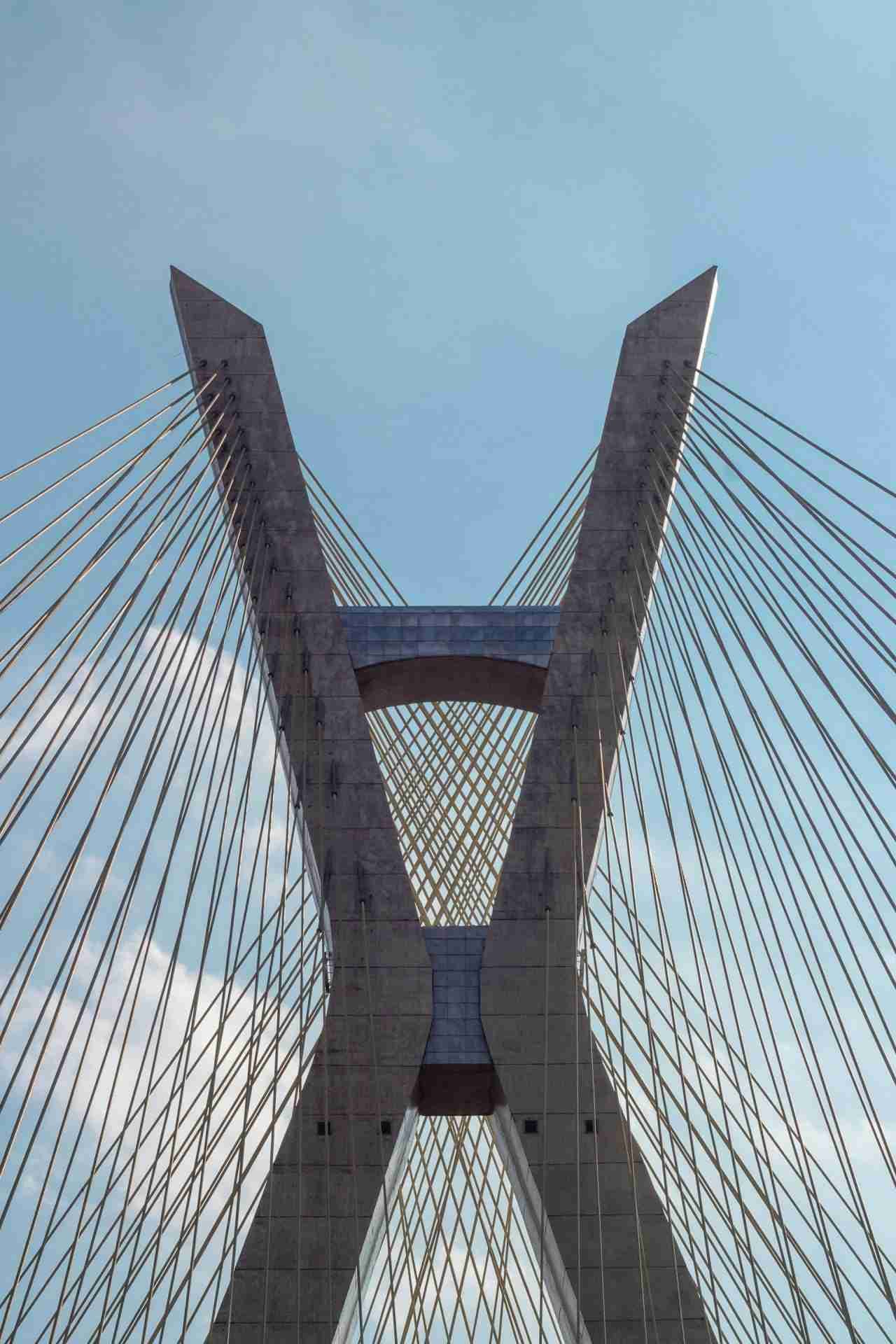
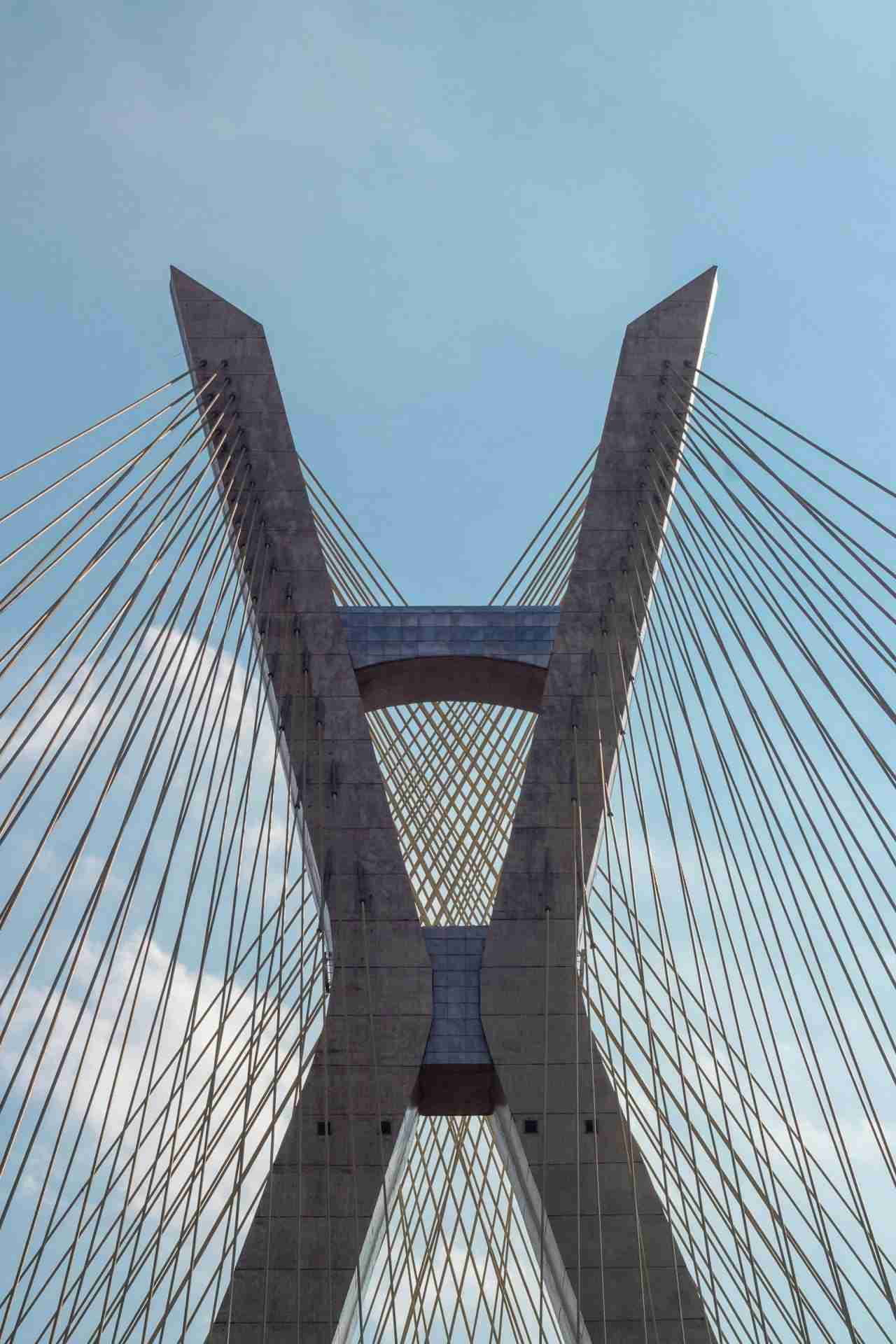
Ponte Estaiada Octavio Frias de Oliveira rises sharply over the Pinheiros River in the heart of São Paulo, cutting clean lines through one of the most visually dense urban corridors in Brazil. Its defining X-shaped central tower splits traffic into two stacked roadways, giving the bridge a sculptural quality that dominates the surrounding skyline. With its cable patterns, reflective surfaces, and shifting light throughout the day, this bridge offers strong subjects for architectural, long exposure, and cityscape photographers. At sunrise, mist and motion blend with morning light. By evening, headlights and building glow transform it into a stage of energy and precision. Ponte Estaiada is not just a traffic hub but a place where geometry and rhythm intersect with São Paulo's nonstop pace.
Best Photography Opportunities
• Frontal Composition from Avenida Roberto Marinho
One of the clearest perspectives comes from just east of the bridge along Avenida Jornalista Roberto Marinho, where you can shoot directly into the X-shaped tower. From this angle, cables stretch outward in symmetrical layers, and the stacked roadway levels create a powerful graphic effect. Use a mid range or short telephoto lens to compress space and minimize surrounding clutter. Morning light adds sharp shadow detail to the concrete surfaces, while evening offers golden tones that fall evenly across the structure. This location is ideal for creating a clean, centered frame with visual balance from top to bottom.
• Reflections on the Pinheiros River
From the opposite bank, the Pinheiros River adds a reflective surface that changes with every shift in light or weather. On calm mornings, the bridge's structure appears mirrored in the water, especially when there is no wind. This scene works well for long exposures, which smooth out the current and intensify the contrast between solid structure and fluid surface. A tripod is essential, and a polarizing filter helps control glare. As the day progresses, light angles shift and abstract the reflection, allowing for creative variations of the same core composition.
• Traffic Trails and Light Patterns at Night
At night, the bridge transforms under architectural lighting that emphasizes cable lines and highlights the shape of the tower. When viewed from walkways or access roads, long exposures allow you to capture streaks of car lights that run across the upper and lower decks. The movement contrasts with the fixed form of the bridge, creating a strong interplay between motion and structure. Blue hour is ideal here, especially just after the lights switch on. Work with a wide angle lens to include both the bridge and background skyline, and adjust exposure times to manage brightness from nearby buildings and streetlamps.
• Overhead Vantage Points from Nearby Buildings
Photographers with access to nearby rooftops or office towers can capture the full scope of the bridge from above, revealing the spiral onramps, surrounding high rises, and the flow of the river below. These views flatten the scene into shape and pattern, ideal for cityscape work or abstract compositions. Clarity is best on dry days with little haze. Use a long lens to compress depth and isolate architectural layers in the city. Sunset and early evening are the best times to shoot from above, as the bridge begins to light up and contrast increases between its concrete surfaces and the city beyond.
• Angled Perspectives from the River Trail
The pedestrian and bike path along the west side of the Pinheiros River allows for more experimental compositions. From here, you can shift position to change the angle of the cables, layer the bridge against the skyline, or focus on the curves of the ramps and roadways. This location is quieter and more flexible for photographers looking to avoid traffic and crowds. It is also a good place to work with leading lines from the path itself. Light is more even in late afternoon, and overcast conditions help manage contrast when shooting architectural detail.
Best Time to Visit
The best time to photograph Ponte Estaiada is early in the morning, when river reflections are clean and the city is quieter. Light at this hour falls gently across the face of the bridge, creating sharp detail and strong definition in the cable lines. Morning mist occasionally drifts through the area, giving a soft haze that adds mood to wide shots or detail work.
Late afternoon into golden hour creates longer shadows and warms up the concrete, offering a more dramatic look without the harsh contrast of midday. As the sun sets, the lights on the bridge begin to glow gradually, and traffic increases, providing more energy to long exposure compositions. Blue hour is especially strong for photographers who want to balance ambient and artificial light.
The dry season from May through September typically has clearer skies and more stable light. Even in the wetter months, moments of bright sun and dramatic clouds can appear quickly, giving you the opportunity to work with high contrast conditions. Rain also adds sheen to the roads and intensifies color in the reflections, though you will need to protect your gear carefully.
How to Get There
Ponte Estaiada is located in the southern part of São Paulo, connecting the districts of Brooklin and Morumbi over the Pinheiros River. The bridge is easily reached by train via CPTM Line 9, with Morumbi Station being the closest access point. From there, you can walk along Avenida das Nações Unidas or Avenida Jornalista Roberto Marinho to reach key photo spots.
Several areas around the bridge are accessible by foot, including pedestrian walkways and riverside paths. Photographers arriving by car can look for parking at nearby shopping centers or hotel garages, though availability may vary depending on the time of day. Access to the river trails is open to the public, and there are no fees required to shoot the bridge from ground level.
If you are planning to photograph from rooftops or office buildings, you will need permission in advance. Some hotels and coworking spaces in the area may offer views if you book a room or make arrangements with the property. The area is generally active during the day, but take care if shooting alone at night, especially along quieter sections of the riverbank.
Recommended Photography Gear
A wide angle lens in the 16 to 24 millimeter range is ideal for capturing the full width of the bridge from river level or roadways. A mid range zoom, such as a 24 to 70 millimeter lens, is useful for framing architectural detail or working from overpasses and pedestrian trails. For elevated views or cityscape compositions, a 70 to 200 millimeter lens will help isolate specific elements and compress the scene.
A sturdy tripod is essential for long exposures, especially when shooting traffic trails or smoothing river reflections. A polarizing filter will help reduce glare from the water and deepen sky tone on clear days. A neutral density filter is useful during daylight if you want to extend your shutter speed for motion blur. Extra batteries and a lens cloth are recommended due to humidity and changing temperatures.
If you plan to move frequently or walk along the river trail, keep your kit portable and secure. A small daypack with weather protection is helpful in case of sudden rain, and quick access to your gear allows you to respond to fast changes in light or conditions.
Nearby Photography Locations
• Pinheiros River Overpasses
These raised roadways provide dynamic angles that include both the bridge and the flow of traffic below. Shooting at sunset or just after dark adds motion to the scene, especially when paired with the city skyline in the background.
• Cidade Jardim Pedestrian Bridge
This footbridge crosses over the river a short distance away and gives a slightly higher view of Ponte Estaiada with leading lines from fences or rails. It is a good option for mid distance compositions or for capturing the full shape of the tower.
• Rooftop Bars and Hotels in Brooklin
Some high rises in the Brooklin area offer public access to rooftops or restaurants with elevated views. From here, you can include foreground buildings, city lights, and the bridge's illuminated form for sweeping panoramas.
A quiet alternative to the dense urban space around the bridge, this park offers natural trails, misty mornings, and subtle views of São Paulo's skyline. It pairs well with a visit to the bridge and provides a completely different texture and tone for photographers.
• Estação Berrini Area
Closer to the train line, this area offers architectural contrast between the older river infrastructure and the more modern buildings near the bridge. Reflections off glass buildings and narrow urban corridors make for interesting city detail work.
Ponte Estaiada is one of the most compelling structures in São Paulo for photographers who work with light, motion, and architectural form. Whether you are shooting it from river level, through a telephoto lens from a rooftop, or capturing the glow of passing cars in a long exposure, the bridge offers a variety of ways to explore both its engineering and its place in the city. With a thoughtful plan and the right conditions, you can walk away with images that show both the scale and the precision of this standout urban landmark.
Comments
Loading comments…