
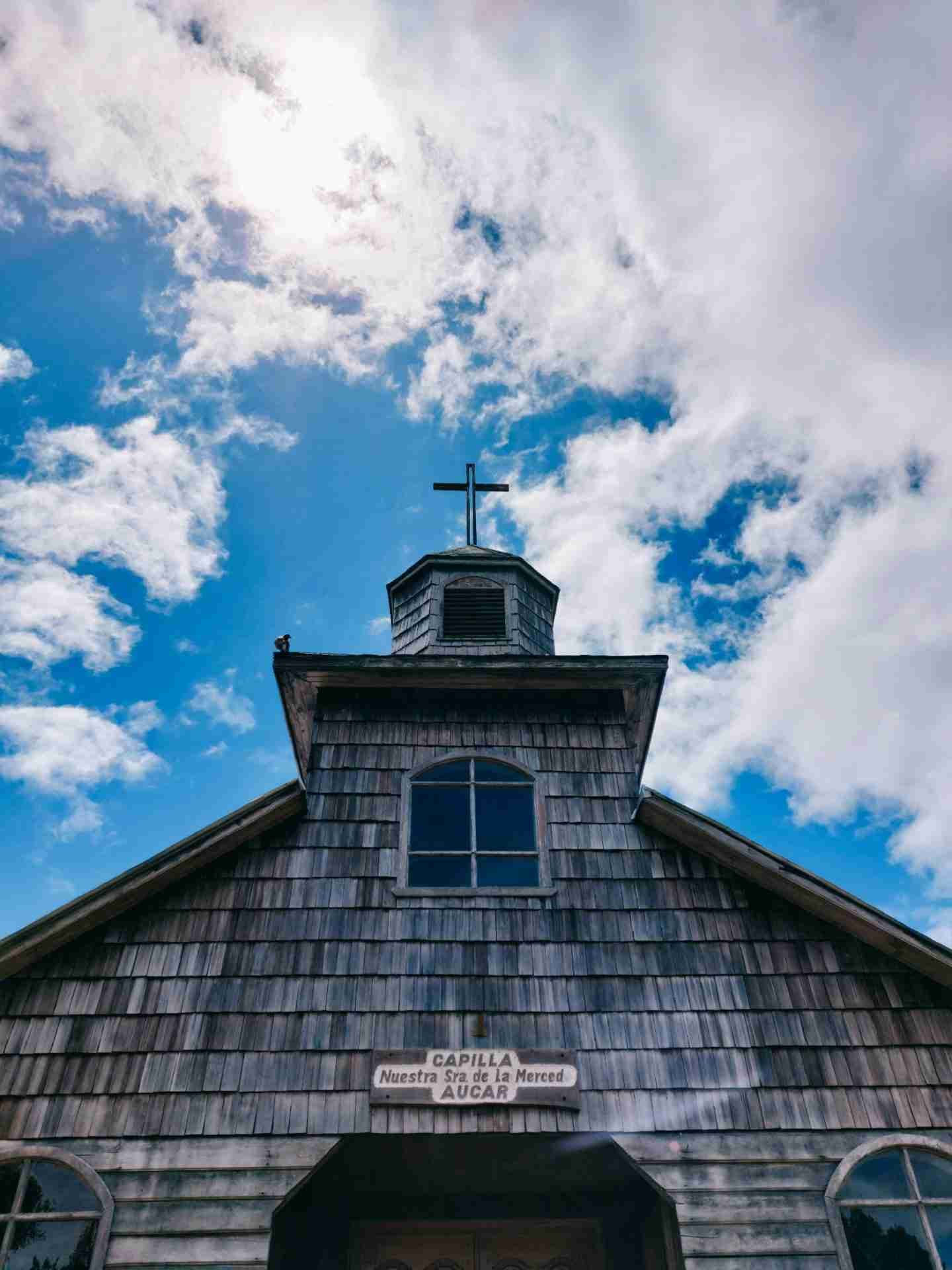
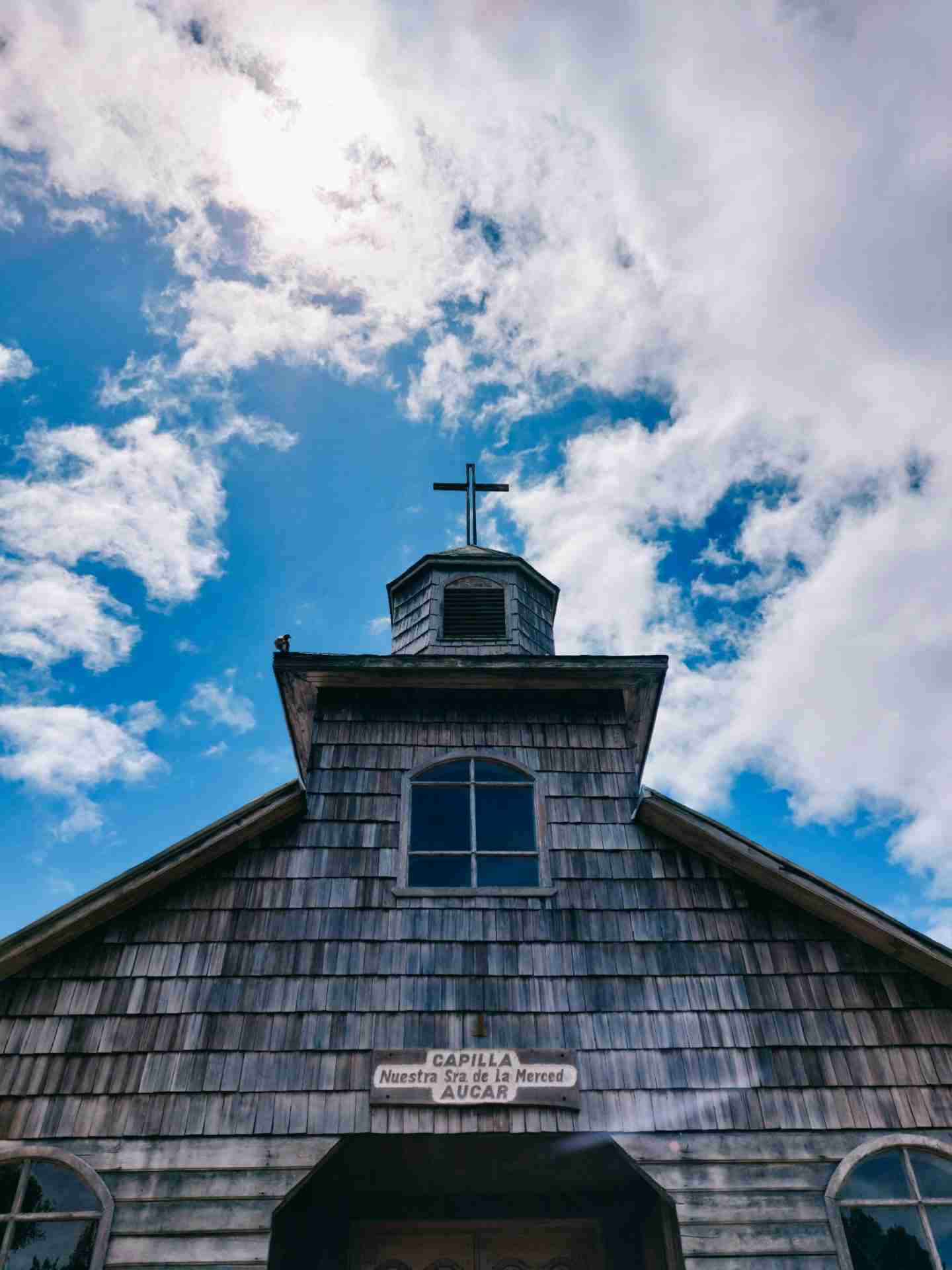
Capilla Nuestra Señora De La Merced sits on Isla Aucar connected to the mainland by a long wooden walkway that stretches across the water. The chapel is part of the long tradition of wooden churches in this region, built by local communities using native timber and simple construction methods that reflect both practicality and craftsmanship. While smaller and less elaborate than some of the more famous churches on Chiloé, it carries the same sense of history and connection to the island's coastal culture. The building itself is modest, with a pitched roof and small bell tower, and it sits tucked within a cluster of trees near the center of the island. You won't see it right away when approaching, which makes the experience feel a bit more personal once you arrive. The island is connected to the mainland by a narrow wooden walkway, and once you cross over, the setting opens up into a quiet mix of shoreline, trees, and simple structures that give you plenty to work with photographically without feeling busy or overdeveloped.
Best Photography Opportunities
• Walkway Leading Across the Water
The wooden walkway is the most visually striking feature before you even reach the chapel, and it works well as a strong leading line across the water. Shooting from the mainland side gives you a clean composition with the walkway pulling the viewer into the scene. The repeating railings add structure and rhythm, helping guide the eye forward. You can adjust your position slightly to control whether the walkway feels centered or more dynamic. Light direction plays an important role, especially when shadows from the railings stretch across the boards. This is a great way to establish the location and create context before focusing on the chapel itself.
• Chapel Framed Naturally by Trees
Once on the island, the chapel sits within a clearing but remains surrounded by dense tree cover, which creates natural framing. The trees act as a boundary that shapes the composition and keeps the focus on the structure. You can move around the clearing to control how open or enclosed the frame feels. Small gaps in the trees allow you to fine tune how much background is visible. Softer light works particularly well here, helping balance shadows and highlight the wood textures. This is one of the most accurate and dependable ways to photograph the chapel.
• Front Facing View in the Clearing
Positioning yourself directly in front of the chapel gives you the cleanest and most direct composition. This is where you can focus entirely on the structure without distractions from the wider environment. You can center the building for a more balanced image or shift slightly to create a more natural feel. The simplicity of the chapel works well in even lighting, especially under soft skies. This approach highlights the shape, proportions, and details of the building. It is the most straightforward way to document the location clearly.
• Foreground Elements Leading Into the Chapel
The ground around the chapel may seem simple, but it offers subtle details that can strengthen your composition. Grass, worn paths, and small variations in the terrain can be used to lead the viewer's eye toward the building. Lowering your camera position helps bring these elements into the foreground without overpowering the subject. Light direction becomes important, as shadows can help define texture and add depth. This technique helps avoid flat images and gives your composition more structure. It is a small adjustment that makes a noticeable difference.
• Telephoto Framing Through Tree Gaps
Using a longer lens allows you to isolate the chapel by shooting through openings in the surrounding trees. This helps simplify the scene and remove distractions from the edges of the frame. You can compress the layers slightly to make the chapel feel more prominent within the composition. Finding the right angle takes some movement, but it gives you more control over how the subject is presented. This approach works especially well in softer light when contrast is reduced. It is a more refined way to capture the chapel in a setting that is otherwise quite enclosed.
Best Time to Visit
Early morning and late afternoon both offer the most reliable conditions for photographing the chapel. Morning light tends to be softer and more even, which works well within the tree covered clearing and helps keep contrast manageable. It is also quieter, giving you more freedom to move around and refine your compositions. Late afternoon adds warmth and can introduce longer shadows across the ground, which helps bring out texture in the foreground. Because the chapel is partially shaded, harsh midday light can create uneven exposure and is generally less ideal.
Tide levels do not directly affect visibility of the chapel, but they do influence the overall feel of the location. High tide keeps the surrounding environment simple and clean, especially around the walkway, while low tide introduces more texture and detail along the edges of the island. Summer brings longer days but also more visitors, while winter is quieter and can offer moodier conditions. Planning around soft light will make the biggest difference here.
How to Get There
The chapel is located on Isla Aucar near Quemchi on Chiloé Island. It is accessible by car, with parking available near the start of the wooden walkway. From there, it is a short and easy walk across to the island. The walkway is flat and well maintained, making it simple to carry camera gear. There are no entrance fees, and the site is open to the public. Once on the island, a short path leads you through the trees to the chapel clearing. The area is exposed to coastal weather, so it is worth being prepared for changing conditions.
Recommended Photography Gear
A standard zoom lens works well here, allowing you to move between wider environmental shots and tighter compositions focused on the chapel. A longer lens is particularly useful for isolating the structure through the trees and simplifying your frame. A tripod is helpful if you plan to shoot in low light or want more control over composition. A polarizing filter can improve contrast and help manage reflections near the water along the walkway. Since access is easy, you can carry a full setup without much difficulty, but keeping things simple will make it easier to move around the clearing and adjust your position.
Nearby Photography Locations
• Plaza de Quemchi
This is the central square of Quemchi and a clearly defined location that works well for photographing local architecture and daily life. The surrounding wooden buildings and open layout give you clean compositions with a strong sense of place. It is especially good in soft light when the tones of the wood and sky balance nicely.
• Muelle de Quemchi
This pier extends into the water and provides strong leading lines with views back toward the town and surrounding coastline. It works well for both minimal compositions and more layered shots that include boats and shoreline details. Early morning and evening light help simplify the scene and reduce distractions.
This wooden church sits in a more open rural setting and offers a larger subject compared to Aucar. The surrounding landscape allows for wider compositions that include both the structure and its environment. It is a good complement if you want another example of Chiloé's church architecture.
• Isla Tac
A quieter island with simple wooden structures and open coastal views. It offers similar elements to Aucar but with fewer visitors and more space to explore. It works well for slower, more deliberate shooting.
This is one of the more visually distinct churches in the area, with its colorful exterior and three towers. The setting is more open, which makes it easier to isolate the structure or include elements of the surrounding village. It offers a different visual style compared to the more subdued tones of Aucar.
Comments
Loading comments…