
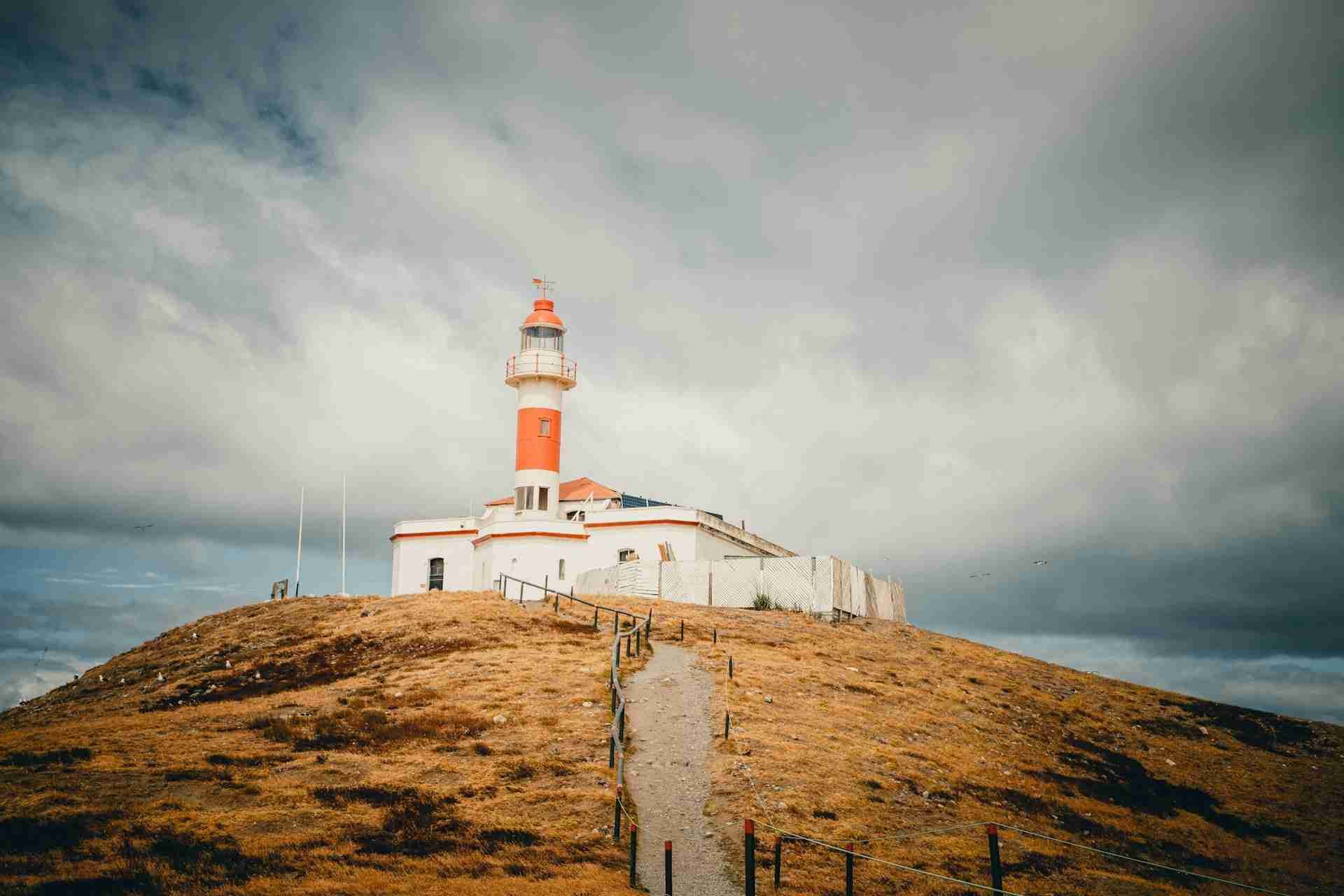
Perched on a windswept hill above the Strait of Magellan, Faro Isla Magdalena stands as a bold, solitary figure against the open sky. This small red and white lighthouse, located on Isla Magdalena near Punta Arenas, is a rewarding subject for photographers who enjoy stark compositions, coastal light, and dynamic skies. The surrounding island is home to thousands of Magellanic penguins, but the lighthouse itself offers a strong architectural counterpoint to the rugged shoreline and constant movement of the sea. With its isolated setting and sweeping 360 degree views, this is a location where even the simplest compositions carry weight. Whether you're shooting wide frames of the structure against sky and sea or working tighter angles that show weather worn details, the site invites a thoughtful approach to balance and scale.
Best Photography Opportunities
• Straight On View with Centered Composition
The most iconic angle is a full frontal view looking directly at the lighthouse from the path leading up the hill. This clean, centered composition puts the red and white stripes in sharp contrast with the surrounding sky and landscape. Use a wide angle lens to include the footpath or hill slope in the foreground, adding depth and a natural lead into the structure. On clear days, the simplicity of this frame works best with a polarizer to deepen the sky. In cloudy or shifting conditions, try a longer exposure to create soft streaks in the clouds and bring movement to an otherwise still scene.
• Side View with Shoreline and Sea Behind
Moving around the hill, you can frame the lighthouse against the backdrop of the Strait of Magellan, with the curvature of the land and ocean stretching toward the horizon. This composition is strongest when the light is low, either early in the morning or late in the day, when it grazes across the landscape and adds texture to the grassy slope. A standard zoom lets you adjust for a wide or tighter crop depending on how dramatic the sky is. If the wind is strong, use it to your advantage by catching the movement in the grass or including windblown penguins in the distance.
• Details of the Structure and Weather Worn Surface
The lighthouse's surfaces, railings, and signage carry plenty of texture that works well in close up detail shots. A short telephoto lens helps isolate these elements, especially in soft light or just after rain, when surfaces are darkened and more reflective. The peeling paint, exposed bolts, and rusted fittings offer strong material contrasts that translate well to black and white. Try shooting from low angles to emphasize the height of the tower or using a shallow depth of field to separate foreground structure from the background sea.
• Environmental Portraits with Scale and Context
Because of the open space surrounding the lighthouse, it works well as a subject placed within a broader scene. Including people walking the path or standing near the base gives a sense of scale and anchors the image. These shots benefit from a mid range lens and work best under softer light conditions. On cloudy days, the presence of a figure adds warmth and balance to an otherwise stark landscape. Use the structure as one point of focus within a wider environmental composition.
• Penguin Activity Around the Base and Hillside
During nesting season, Magellanic penguins are active across the island and often appear in the middle ground or along the walking paths near the lighthouse. These birds add a documentary layer to your compositions, whether you're shooting wide scenes with small figures or isolating a single penguin against the hill or structure. Be respectful of the wildlife, use longer lenses to maintain distance, and take advantage of the low angles they provide to balance movement and stillness in the frame.
Best Time to Visit
The best time to visit and photograph Faro Isla Magdalena is between November and March, when the island is accessible to visitors and the penguin colonies are active. Morning light is typically the most consistent, offering a gentle glow across the landscape and giving good separation between the structure and the sky. Low light in the early hours also helps control contrast between the white tower and darker terrain. On overcast days, the soft light brings out more tonal detail in the surfaces and works especially well for tighter shots or monochrome studies.
Late afternoon can also produce excellent conditions when the sun dips low over the sea, casting long shadows across the hillside and catching the lighthouse with warm side light. However, wind tends to pick up later in the day, so stability and exposure control become more of a concern. Midday is the least rewarding time, with harsh light flattening the scene and making it difficult to control exposure on the building's reflective surfaces. During the summer months, the combination of long daylight hours and shifting weather offers changing conditions throughout the day, so flexibility and patience often pay off.
How to Get There
Isla Magdalena is accessible by boat from Punta Arenas, with regular tours running from the local pier during the summer season. The journey across the Strait of Magellan takes about two hours round trip, depending on sea conditions. Most tours include a set window of time on the island, typically about one hour, so it is important to plan your shooting efficiently. Walking paths are clearly marked and lead from the shore up to the lighthouse and around the main penguin habitat.
There are no entrance fees for the lighthouse itself, but the island is part of a protected reserve. Visitors must stay on marked paths and follow strict regulations designed to minimize human impact on the penguin population and landscape. Tripods are allowed, but because of time constraints and uneven footing, many photographers prefer to work handheld with compact gear. The island is fully exposed to wind and weather, so dress appropriately and bring protection for both yourself and your equipment.
Recommended Photography Gear
A wide angle lens in the 16 to 35 millimeter range is essential for capturing the lighthouse in its environment, especially when working with foreground slopes, sky, or sea in the same composition. A 24 to 70 millimeter standard zoom provides flexibility for tighter compositions, detail work, and scenes with penguins or people in the frame. For wildlife photography or isolating elements against the water or hillside, a 70 to 200 millimeter telephoto lens is useful and allows you to maintain proper distance from the animals while compressing your frame.
A lightweight tripod is helpful if you are planning long exposures or need stability during low light shooting, but it must be easy to set up and carry due to the limited time on site. A circular polarizer helps manage glare on water and boosts sky contrast on clear days, while lens wipes and weather covers are essential due to wind, salt spray, and sudden shifts in weather. Because time is limited, bring a small, organized camera bag that allows fast access to your gear and keeps everything protected during the boat crossing. If you shoot with multiple bodies or lenses, have your most used setup ready before disembarking.
Nearby Photography Locations
• Punta Arenas Waterfront
The city's coastal promenade includes monuments, old piers, and views across the strait. It is best at golden hour when the sea reflects warm tones and the sky fills with color behind anchored ships.
This historic cemetery is filled with ornate statues, alleyways, and tree lined paths that offer a quiet space for detail oriented photography. Cloudy conditions bring out strong shadows and help balance exposure.
Located just outside the city, this reserve includes forest trails, highland views, and seasonal wildlife. It is a good spot for layered mountain shots and macro photography in a more sheltered environment.
Another lighthouse south of Punta Arenas, this location offers a more remote, less visited option with forest trails and beach access. It is ideal for those looking to shoot dramatic coastlines and quiet marine subjects.
Located near Isla Magdalena and often included on the same boat routes, Isla Marta is home to sea lions, cormorants, and other seabirds that gather along the rocky cliffs. From the boat, you can capture wildlife against dramatic rock formations and open sea, with opportunities for layered compositions that mix animal life with the surrounding landscape.
Faro Isla Magdalena is a location where simplicity becomes strength. With its bold design, wild setting, and ever changing sky, it offers opportunities for both structured architectural frames and subtle environmental studies. Whether you have a full hour or just a few quick shots on the move, this small lighthouse can anchor a set of images that feel far from ordinary.
Comments
Loading comments…