
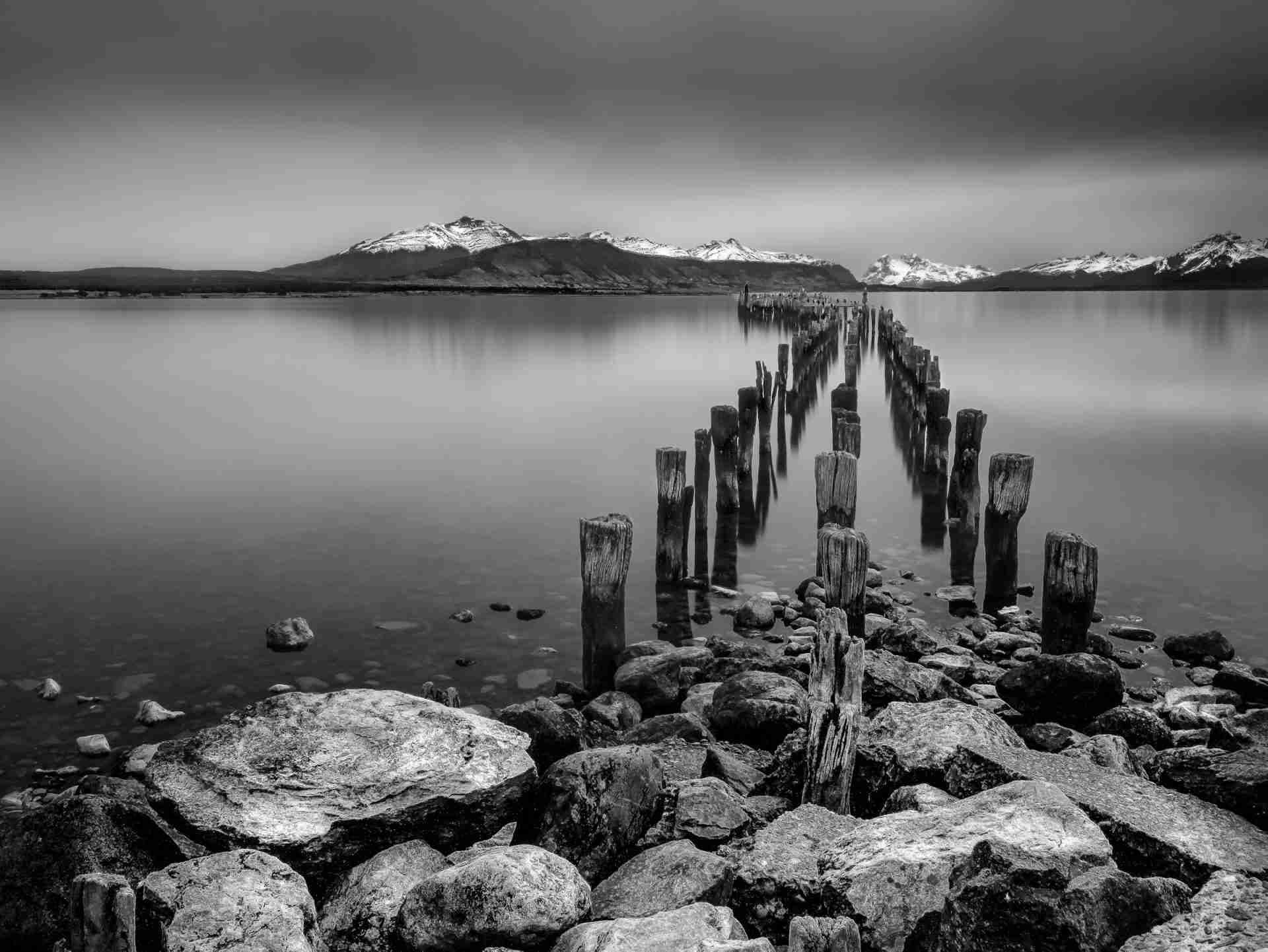
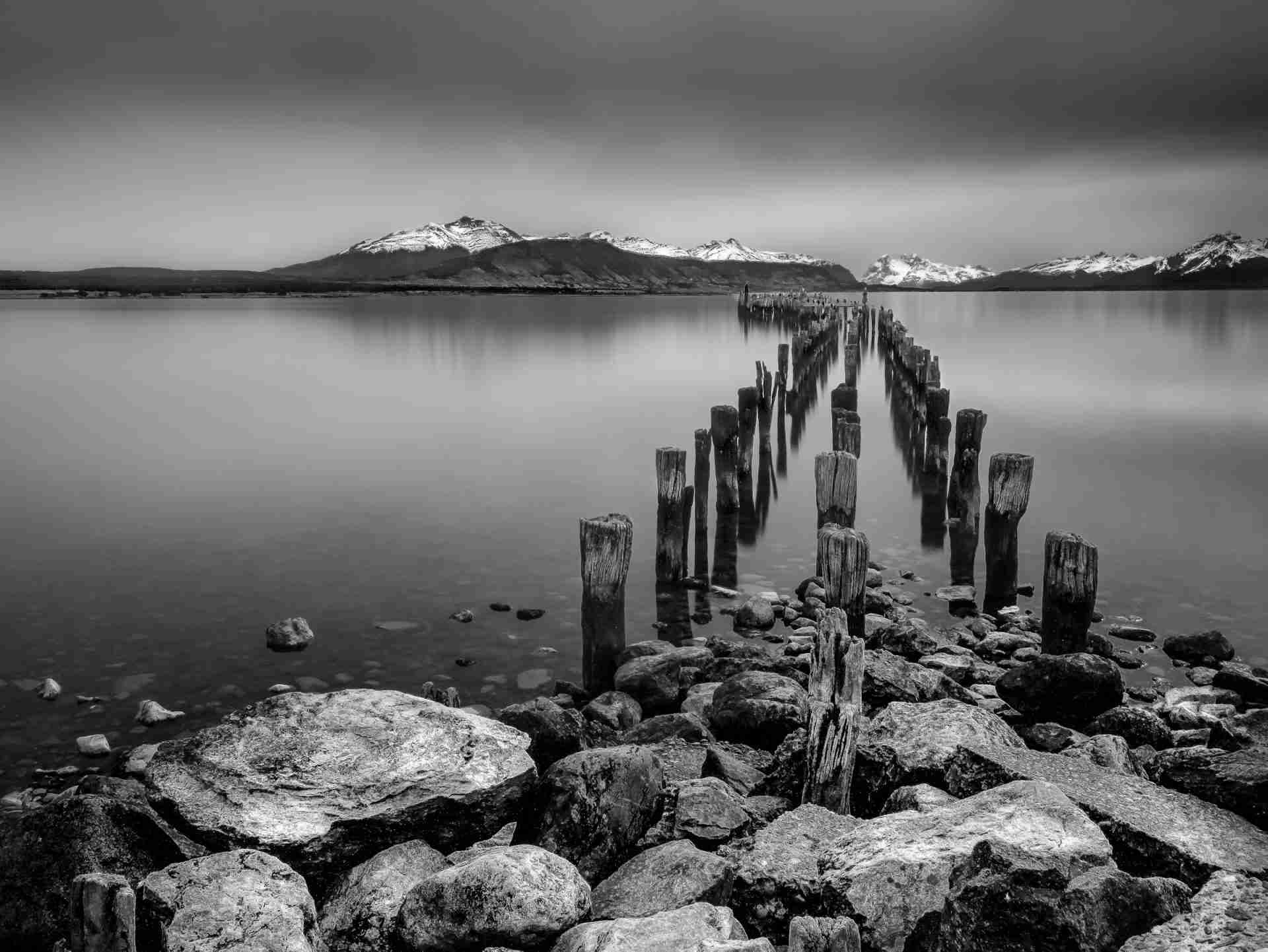
Muelle Histórico sits directly along the waterfront of Puerto Natales, extending quietly into the calm waters of Última Esperanza Sound. What remains of the pier is simple; weathered wooden posts, cross beams, and open gaps where planks once connected shore to sea. The structure feels settled into its environment, shaped by time, wind, and tide. From a photographer's perspective, this is a location defined by restraint. The scene is open, balanced, and easy to read, allowing light, weather, and subtle movement to do the heavy lifting. It is a place where slowing down leads to stronger images.
Best Photography Opportunities
• Bold Vertical Posts Against Open Water
The remaining vertical posts are the most recognizable elements of the pier and work well as graphic subjects on their own. From many angles, they create strong repetition that contrasts with the flat horizon and still water behind them. Careful spacing between posts is important, as uneven gaps can quickly throw off balance. Shooting from a lower position can help isolate the posts against water and sky rather than shoreline clutter. These compositions work best when light is soft and the water surface stays calm.
• Wide Views Showing the Pier Remains in Context
Stepping back allows the pier remnants to sit within the broader setting of the fjord and distant mountains. In these wider views, the structure acts as a grounding element rather than the entire subject. Clean horizons and simple foregrounds are key to keeping the scene readable. Small changes in position along the shore can remove distractions like boats or buildings. This approach is strongest when clouds are simple and evenly spread rather than dramatic.
• Reflections During Calm Conditions
On still mornings or evenings, reflections from the pier posts appear clearly on the water's surface. These reflections add symmetry and depth without needing additional elements. Lower shooting angles increase the role of reflection and help minimize background noise. Even partial reflections can be effective, especially when water movement introduces gentle distortion. Patience is important here, as conditions can shift quickly with wind.
• Details of Wood Texture and Joinery
Closer studies of the pier reveal cracked timbers, worn edges, and connections shaped by years of exposure. These details work well when isolated from the wider scene, focusing on texture and form. Flat or lightly overcast light helps keep contrast under control and preserves surface detail. These images provide a quieter counterpoint to wider views. They are especially useful when broader compositions feel complete.
• Figures for Scale and Subtle Human Presence
Occasionally including a single person near the pier helps communicate scale without overwhelming the scene. This works best when the figure is small and placed deliberately rather than centrally. Timing matters, as multiple people quickly disrupt the calm balance of the setting. Slightly slower shutter speeds can soften movement while keeping the structure sharp. Used carefully, this approach adds context without shifting focus away from the pier itself.
Best Time to Visit
Sunrise and sunset are the most consistent times to photograph Muelle Histórico. Early mornings often bring calmer water, cooler air, and softer color that supports clean compositions and reflections. Evening light can introduce warmer tones and gentle contrast, especially when clouds catch low light over the mountains. Midday is usually less favorable, as stronger light flattens textures and increases visual noise along the shoreline. Weather plays a major role here. Overcast days can be excellent, as they simplify the scene and reduce harsh contrast. Seasonal differences are subtle, though longer days in summer allow extended shooting windows, while winter brings shorter sessions and cooler color. Planning around wind conditions is just as important as planning around light.
How to Get There
Muelle Histórico is located along the main waterfront of Puerto Natales and is easily reached on foot from the town center. A well maintained promenade runs along the shore, making access straightforward with camera gear. There is no fee or restricted access, and the area is open at all hours. The ground near the pier is flat and stable, though surfaces can be slick after rain or frost. Early visits are recommended if you want to avoid people walking along the waterfront. Because the site is exposed, dressing for wind and changing conditions is important.
Recommended Photography Gear
A simple, flexible kit works best at this location. A standard zoom lens covers most needs, from wide shoreline views to tighter groupings of posts. A longer focal length can be useful for isolating details or compressing spacing between vertical elements. A tripod is strongly recommended for low light conditions at sunrise and sunset, especially if you want precise alignment and consistent framing. Filters are optional, though a polarizer can help manage glare on water when conditions allow. Weather protection for gear is important, as wind and moisture are common along the fjord. Comfortable footwear helps when repositioning along the rocky shoreline.
Nearby Photography Locations
The main waterfront promenade runs parallel to Última Esperanza Sound and offers multiple viewpoints looking out toward the fjord and distant mountains. It works well for wide shoreline compositions, especially at sunrise and sunset when light and reflections are calm.
• Plaza de Armas Arturo Prat
Located a short walk from the pier, the main square provides a change in scale with trees, monuments, and everyday town activity. It is useful for adding context and human presence to a broader Puerto Natales photo series.
This viewpoint sits above the town and offers elevated views back toward Puerto Natales, the fjord, and surrounding peaks. It is a strong location for wider landscape images that place the town within its setting.
A short drive from Puerto Natales, Lago Sofía provides open water views, rocky shorelines, and mountain backdrops. It works well as a quieter counterpoint to the town waterfront.
This well known natural monument offers large rock formations and open terrain that contrast with the calm, minimal scenes along the waterfront. It is useful for adding variety and scale to a regional shoot.
Comments
Loading comments…