
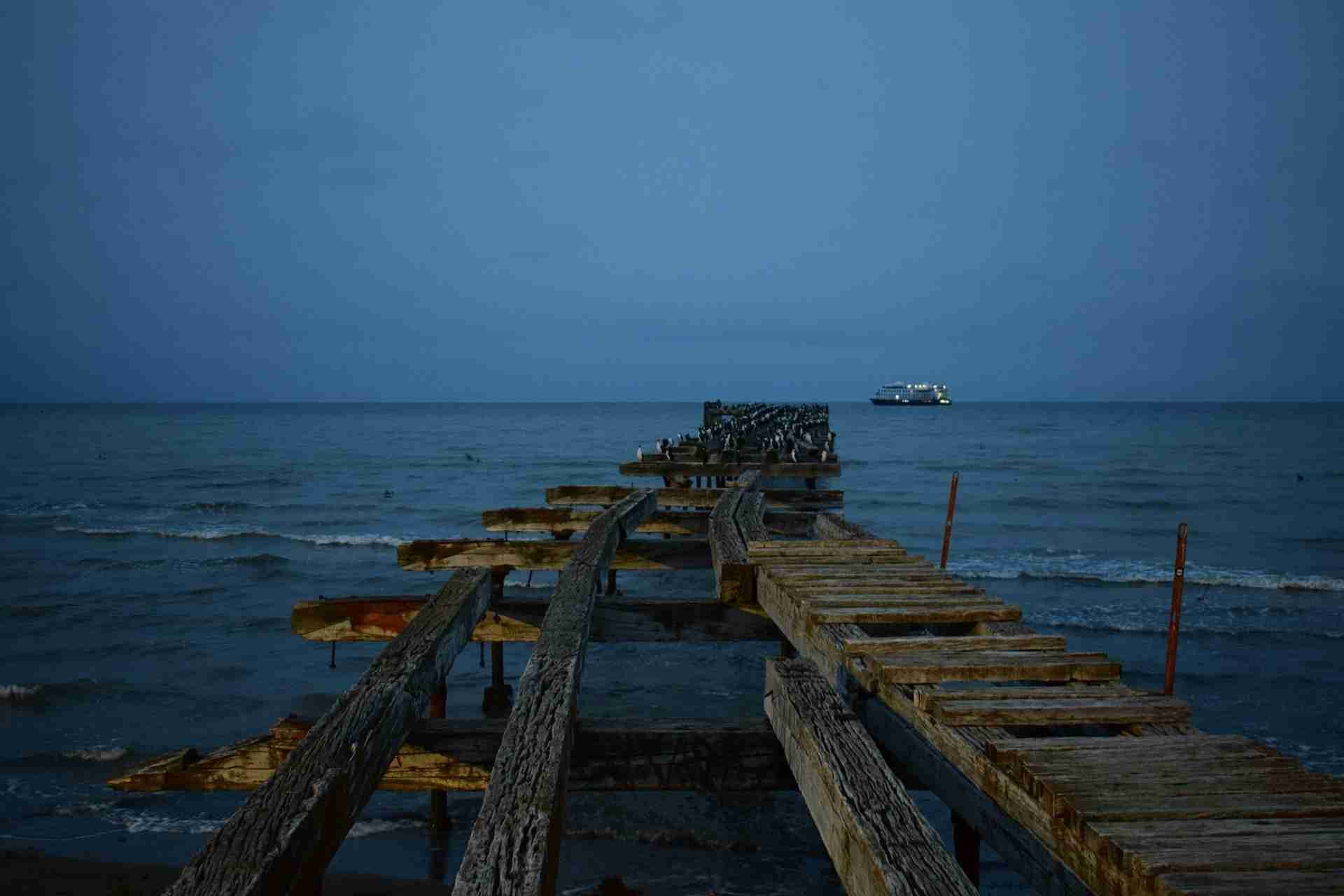
Set against the backdrop of the Strait of Magellan, the weathered remains of the Muelle Loreto stand as a broken line of timber posts stretching out into the cold water. Once part of Punta Arenas' historic port infrastructure, the pier is now an open-air relic that attracts seabirds and photographers more than ships. The structure is skeletal, with only vertical pilings left to mark its original footprint, yet it offers striking visual rhythm and depth, especially when shot at low tide or in soft light. Its location along the waterfront makes it easy to access, and it pairs the region's industrial past with a sense of quiet movement across sea and sky. Whether silhouetted in the evening or reflecting in the morning calm, this site remains a simple but powerful location for long lens work and minimal compositions.
Best Photography Opportunities
• Pier Remains with Lead-In Lines over Water
The line of wood pilings that remains from the original pier makes a strong central subject, especially when photographed from the shoreline using a long focal length. The posts form a natural lead-in line that draws the eye toward the horizon, whether you are shooting in portrait or landscape orientation. Compositions work best when the tide is out or calm, so that reflections and post textures can be clearly defined. A tripod is useful here for long exposures to smooth the water and highlight the geometry. The simplicity of the scene allows for experimentation with negative space, especially when weather and cloud layers add variation.
• Seabird Activity on the Old Pilings
Cormorants and other coastal birds often rest on the wooden posts, creating opportunities to combine wildlife photography with architectural structure. Use a telephoto lens to isolate birds as they perch or take flight, and frame them within the rhythm of the vertical posts. Shooting just after sunrise or before sunset gives warmer light and gentler shadows. These moments work well for both color and monochrome treatments, especially when birds are silhouetted against the water. Be patient and time your shots to catch wing movement or interactions between birds for added interest.
• Reflections and Color Variations at Low Tide
When the tide is low and the water is still, the entire row of pilings reflects cleanly, especially in the early morning when the sky has cooler tones. These reflections create mirrored patterns that are ideal for symmetry focused compositions. Use a wide lens from close to the waterline or shoot further back with a longer focal length to compress the shapes and reduce distractions. A polarizer can help manage glare, but be careful not to erase reflections you want to keep. The scene changes quickly with the tide, so scout ahead if you plan to return for specific conditions.
• Evening Light and Long Exposure Work
Sunset brings out soft color in the clouds and water, and the old pier becomes a strong silhouette against the shifting sky. Long exposures are especially effective at this time of day, smoothing the sea and emphasizing the contrast between static posts and blurred water. Neutral density filters help slow down shutter speeds, even before full twilight. These shots benefit from simple compositions that keep the horizon straight and allow the lines of the pier to guide the frame. Be sure to arrive early to set up, as the light can fade quickly and unevenly depending on cloud cover.
• Contextual Views with Punta Arenas in the Distance
Wider compositions taken from further down the waterfront can place the remains of the pier within the larger scene of the city. Including parts of the shore, street lamps, or distant buildings creates environmental context and shows how the site relates to the surrounding urban edge. These views are strongest in the blue hour or early morning when lights from the city mix with natural light. A standard zoom lens offers enough flexibility to reframe quickly depending on passing traffic or changing light. Reflections on wet sand or shallow water can help fill negative space and balance the frame.
Best Time to Visit
The best time to photograph the remains of Muelle Loreto is during the shoulder light of early morning or late evening, when the structure is bathed in low angled light and water conditions are often calm. Sunrise tends to bring the clearest reflections, especially after a still night. The birds that frequent the posts are also most active at these times, which adds movement and interaction to the frame. Sunset, while often windier, brings warmer tones and silhouetted forms that work well for minimalist compositions or long exposure work.
Seasonally, the summer months from December through February offer the longest shooting windows and most stable weather, though Punta Arenas is known for changeable conditions year round. Winter months have shorter days and colder temperatures but can bring dramatic skies and clear air, especially when storms pass through. Cloudy days are excellent for detail shots and texture focused compositions, reducing harsh contrast and preserving tonal range. Always check local tide charts, as the pier remains are most visible and photographable at mid to low tide.
How to Get There
The remains of Muelle Loreto are located directly on the waterfront in Punta Arenas, Chile, easily accessed by walking or driving along Avenida Costanera. The site is just north of the central business district and a short distance from Plaza de Armas. Parking is available along the street or in nearby lots, and there is no fee to access the area. The shoreline walkway is level and fully paved, making it accessible for rolling camera bags or carrying gear by hand.
The pier structure is visible from multiple points along the waterfront, but the most direct shooting angle is from the southern side, near a small pullout with benches and signage. The site is open to the public at all hours, though morning and evening visits offer the best light. Safety is not a major concern, but always keep an eye on tides and slippery surfaces if venturing closer to the shore. There are no specific restrictions on photography, and the open space makes setup and repositioning easy.
Recommended Photography Gear
A standard zoom lens in the 24 to 70 millimeter range is ideal for shooting the pier remains from the shoreline, offering flexibility between wide and midrange compositions. A telephoto lens, especially in the 100 to 400 millimeter range, is useful for compressing the line of posts, isolating birds, or flattening perspective across water. For long exposures or blue hour work, a stable tripod is essential, particularly when shooting with neutral density filters or at slower shutter speeds.
Include a circular polarizer to manage surface glare and control reflection strength. A neutral density filter allows for smooth water motion during longer exposures, especially around sunset. A microfiber cloth is useful for wiping sea spray or moisture from lenses, and extra batteries are helpful in the colder wind common along the strait. A small camera bag or shoulder sling is sufficient here since the area is compact and requires little walking. A lens hood or shade is helpful to manage glare from angled light during golden hour.
Nearby Photography Locations
This cemetery is known for its dramatic cypress alleys, family mausoleums, and architectural detail. Best photographed in soft morning light when shadows are minimal and detail is crisp.
A popular viewpoint above the city offering wide shots of Punta Arenas, the strait, and distant ships. Blue hour and early morning both work well for capturing city lights against open sky.
• Plaza de Armas and Cathedral Area
In the city center, the plaza includes historical buildings, tree-lined walkways, and people movement that work well for street and architectural photography. Overcast days are best for managing exposure between buildings and sky.
Featuring full scale replicas of historic ships, this open air museum gives a different visual character with wood textures and ship rigging against the sky. Excellent for detail and documentary style shots.
Often reached by boat from the same port area, Isla Marta is home to sea lions and seabirds. It is a good complement to the pier remains and offers strong wildlife opportunities with a telephoto lens.
The remains of Muelle Loreto offer a quiet, structured location for photographers interested in minimalism, texture, and rhythm. With changing light, shifting tides, and subtle wildlife presence, it provides a simple but rewarding subject that holds up well across seasons and conditions. Whether you're focusing on geometry or watching for seabirds, the site offers a versatile place to slow down and work carefully with the scene.
Comments
Loading comments…