
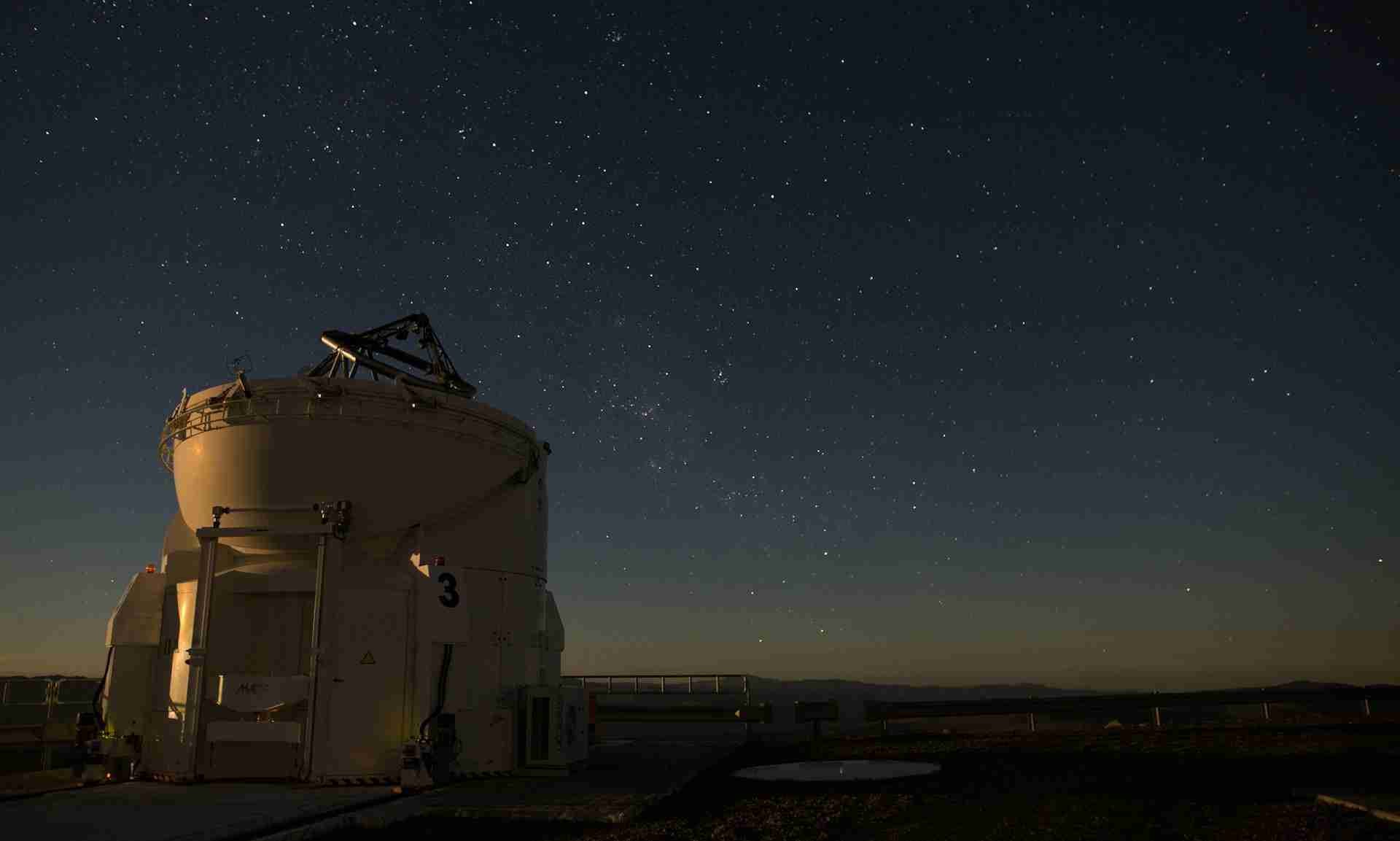
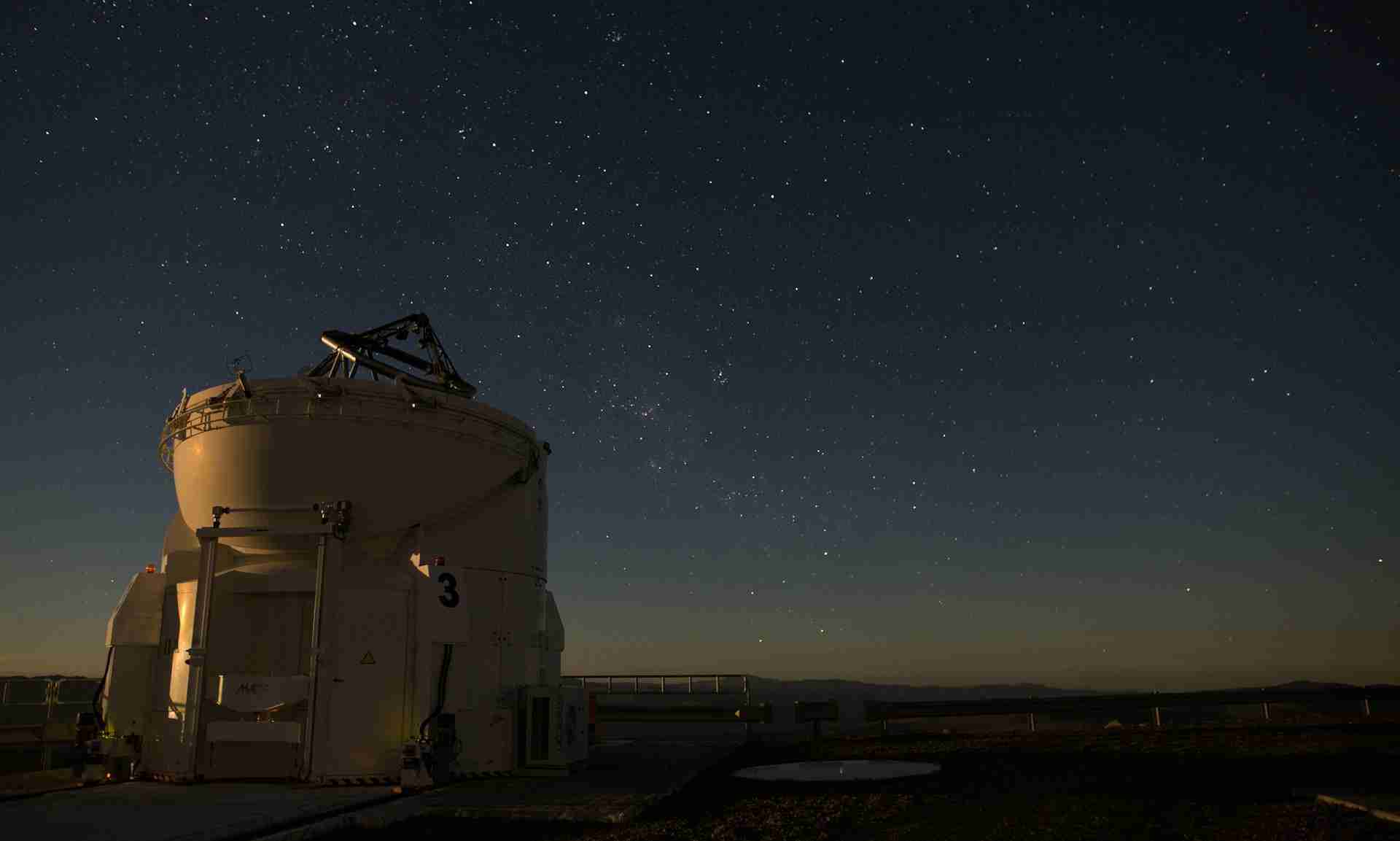
Set at over 2,600 meters above sea level on the Cerro Paranal plateau, the Observatorio Paranal is one of the most visually and scientifically striking places in the world. Operated by the European Southern Observatory, it is home to the Very Large Telescope array, a collection of four massive domes and four movable auxiliary telescopes, all perched high in the Chilean Andes. The facility's precision-engineered forms rise above an utterly barren landscape of red stone and sand, and above that, the clearest skies on Earth. For photographers, this combination of technical architecture, raw geology, and high-altitude atmosphere creates a setting of sharp contrasts and sublime stillness. Whether shooting at sunset, under the Milky Way, or in the long shadows of early morning, Paranal rewards patience, planning, and respect for the work happening onsite.
Best Photography Opportunities
• Golden Hour Across the Plateau
The architecture of the observatory gains dimension and warmth as the sun drops behind the Andes. Long, clean shadows form across the gravel terrain, and the copper tones of the desert floor mirror the colors in the sky. From a slightly elevated viewpoint near the access road, photographers can frame all four telescope domes against the wide open sky, with no visual clutter. Use a mid-range zoom for balanced compositions and control over scale. As light fades, the metal surfaces reflect color subtly, especially when haze builds on the horizon.
• Night Sky and Milky Way Arcs
Paranal is considered one of the finest locations on Earth for astrophotography. The high elevation, extreme dryness, and lack of light pollution make it possible to capture deep sky detail with minimal exposure noise. The Milky Way often arcs directly over the telescope domes, and on moonless nights the galactic core is clearly visible to the naked eye. A wide, fast lens such as a 14 to 24 millimeter at f/2.8 or faster is essential. For still compositions, use a tripod and exposures under 25 seconds. For tracked shots, bring a portable equatorial mount and plan compositions that merge telescope structures with celestial movement.
• Architectural Studies of the VLT
The individual telescope enclosures are massive yet minimal in form, with strong lines, subtle curves, and surface texture that changes in different lighting. These structures photograph well in overcast light during the day, where shadows are soft and contrast is low. A 70 to 200 millimeter lens is excellent for isolating corners, repeating forms, and symmetrical relationships between units. Framing detail shots with symmetry in mind reflects the scientific precision of the site. Clean compositions with simple backgrounds reinforce the industrial beauty of the observatory.
• Desert Landscape Context
From outside the facility perimeter, the full scale of the observatory becomes apparent in the surrounding emptiness of the Atacama Desert. A wider perspective from the hillside to the southeast allows the observatory to appear dwarfed by its surroundings. Including sections of the switchback road, dust trails, or desert flora adds contrast between human presence and extreme natural environment. Sunset and sunrise enhance color and create raking shadows that emphasize the barren terrain.
• Time-Lapse and Environmental Motion
The predictable weather and minimal cloud cover make Paranal ideal for controlled time-lapse photography. Movement of the domes, shifting stars, and transitions from daylight to astronomical twilight create layered, rhythmic sequences. Set up with a sturdy tripod and intervalometer and plan your timing to coincide with telescope rotations or sunrise emergence. Foreground stability is key, so position away from public walkways to avoid vibrations. These sequences are especially strong when they show interaction between engineered and natural time.
Best Time to Visit
The Atacama Desert experiences extraordinarily stable weather, making the observatory accessible nearly year-round. Skies are typically clearest and driest between April and December, with July through September being peak months for deep sky clarity and minimal atmospheric interference. Summer months (December to February) bring slightly higher humidity and rare cloud cover, though visibility usually remains excellent.
For astrophotography, plan visits around the new moon to maximize contrast and avoid overexposure of foreground elements. Nighttime temperatures can drop quickly, especially in winter, so layered clothing and cold-weather protection for gear are important. Daylight sessions are best in the first hour after sunrise and the hour before sunset, when the landscape color peaks and the metal structures catch sidelight.
The light at this altitude is stronger than it appears. Midday light can be harsh and unflattering to both structure and sky, with flat shadows and blown-out highlights. Early morning and late afternoon are far better for balanced contrast and low-angle definition.
How to Get There
Observatorio Paranal is located in northern Chile, approximately 120 kilometers south of Antofagasta and accessible via the Pan-American Highway (Ruta 5). From the highway, a paved access road leads 12 kilometers east into the desert, gradually climbing to the observatory plateau. Private vehicles are permitted on this road, but access beyond the security checkpoint is restricted.
Visits must be arranged in advance through the European Southern Observatory, which offers limited public tours on weekends. These tours allow access to certain areas and may include guided walks near the telescopes, depending on operational schedules. Photography is permitted in designated zones but must not interfere with observatory functions. Tripods are generally allowed during tours, though nighttime access is usually not part of public visits.
There are no services at the observatory, and visitors should bring all necessary food, water, and fuel. Cellular signal is limited, and conditions can change quickly with altitude, so all visitors should prepare accordingly. Guided astrophotography workshops are sometimes offered by private operators with permits and logistical support.
Recommended Photography Gear
A wide-angle lens, such as a 14 to 24 millimeter, is essential for capturing the night sky and full building compositions. A mid-range zoom (24 to 70 millimeter) provides flexibility for framing groups of telescopes and including both structure and landscape in balanced proportion. A 70 to 200 millimeter telephoto lens is ideal for isolating architectural details or compressing perspective when photographing from a distance.
For astrophotography, fast prime lenses at f/2.8 or wider help reduce exposure time and maximize detail. A sturdy tripod, intervalometer, and extra batteries are critical for long-exposure work in cold air. A portable star tracker can dramatically increase exposure times and star sharpness, though it requires practice to align correctly at this latitude.
Bring lens hoods and cloths to protect against dust and wind, which are common at altitude. A headlamp with red-light mode is useful for navigating terrain during night sessions without interfering with vision adaptation. Lightweight backpacks with hydration storage are ideal for moving between points during long sessions in dry air and open sun.
Nearby Photography Locations
Just east of Paranal, this peak is the future site of the Extremely Large Telescope. Though construction limits access, the ridgeline is visible from nearby roads and creates a dramatic silhouette at sunrise. The surrounding slopes offer excellent compositions of geological formations with strong sidelight.
The rocky coastline near Antofagasta features cliffs, sea stacks, and wave patterns that contrast with the dryness of Paranal. Golden hour here produces layered compositions with warm light and long surf trails. The contrast between ocean and desert works well in broad landscape frames.
Further south, this older observatory sits at a slightly lower altitude but still offers exceptional sky conditions. It includes dome clusters and access roads that curve along mountain ridges, ideal for long lens compositions and layered perspectives.
Located near San Pedro de Atacama, this moonscape-like region offers high-contrast ridgelines, salt flats, and sculpted rock formations. Its surreal geology makes it one of Chile's most photographed landscapes, and it complements the futuristic feel of Paranal with a completely natural counterpart.
Although farther inland, the salt flats offer expansive, flat compositions under endless sky, with occasional pools that reflect light and form. These are best photographed at dawn or dusk, when the color contrast is strongest and temperatures are manageable.
Observatorio Paranal is one of the few places on Earth where the built environment harmonizes with the cosmos, both in function and in form. For photographers, it is not only a subject but a reminder of scale, precision, and the quiet, infinite reach of light.
Comments
Loading comments…