
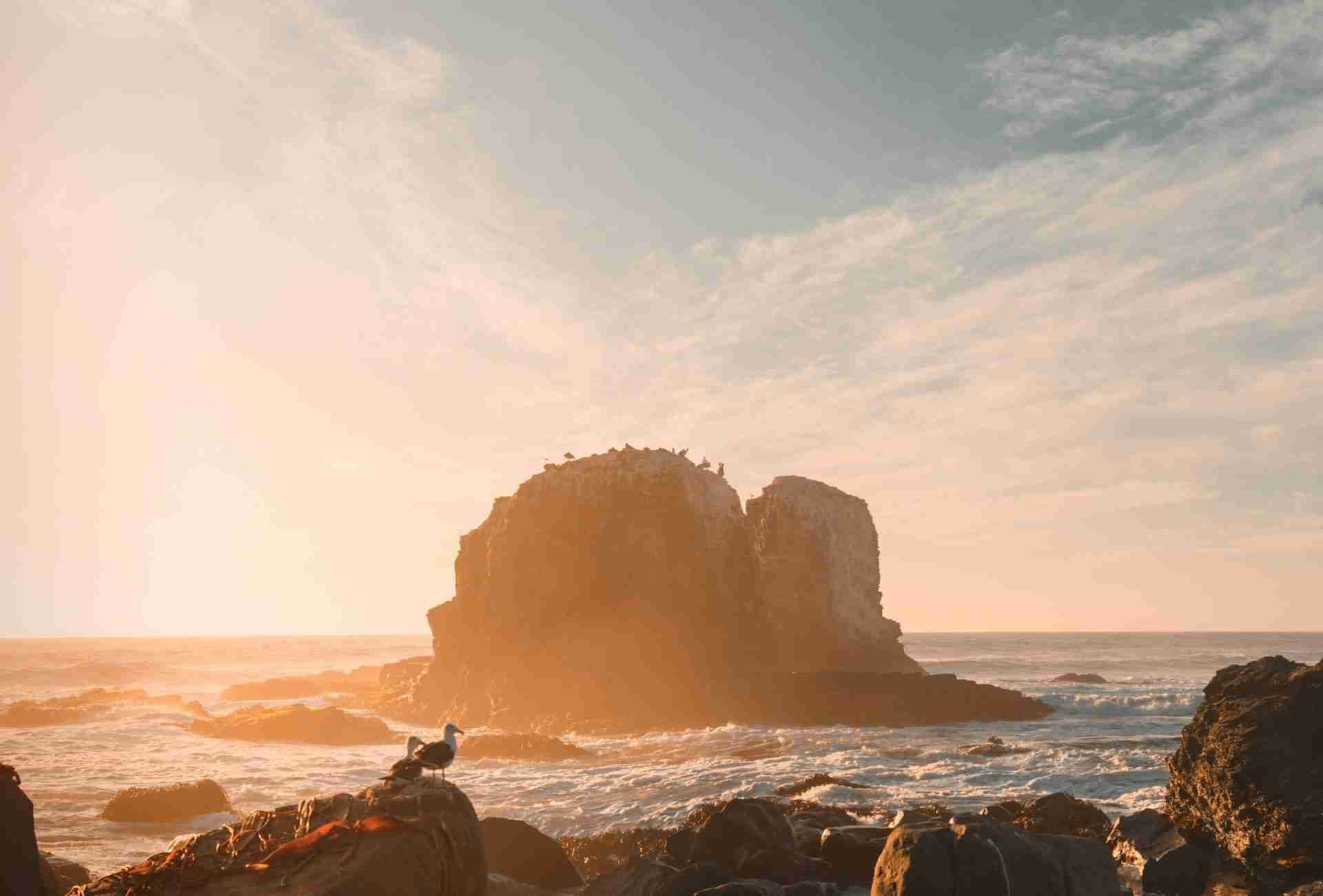
Punta de Lobos, just south of Pichilemu on Chile's central coast, is a striking headland that rises above the Pacific with a raw and sculptural presence. Known to surfers for its amazing point break, it also draws landscape and seascape photographers with its layered cliffs, crashing waves, and sea stacks that rise from the ocean like dark sentinels. The coastline here is rugged but accessible, with multiple elevated viewpoints, cliffside trails, and lower vantage points offering a mix of wide panoramas and tight wave action shots. The setting is dynamic and always changing. From violent surf under overcast skies to calm, golden sunsets with soft reflections on the wet sand, Punta de Lobos offers photographers a chance to work with motion, atmosphere, and elemental texture.
Best Photography Opportunities
• Sea Stacks from the Cliffside Trails
The massive sea stacks just offshore are the natural focal point at Punta de Lobos. From the walking trails that line the upper cliffs, you can frame them with crashing surf below and often spot seabirds or even sea lions on the rocks. A lens between 70 and 200mm is ideal here for isolating the stacks against the ocean or compressing the layers of sea and stone. These shots work best in the morning or late afternoon when the low sun brings out texture in the rock and reveals detail in the surf below.
• Long Exposures of Waves Rolling into the Cove
From lower viewpoints closer to sea level, you can set up for long exposures that soften the motion of incoming waves as they wrap around the rocks. These compositions benefit from heavy cloud cover or shooting at the edges of the day when light levels are lower. Neutral density filters are essential for extending exposure time. Use rocks or tide pools in the foreground to add structure and help guide the eye into the frame. Wave motion here is strong, so always be mindful of tides and splash zones.
• High Vantage Wide Shots at Sunset
Climb to one of the open promontories above the beach and set up with a wide angle lens to take in the full arc of the coast. From this elevation, the lines of the cliffs and the rhythm of the surf are visible from above, with the sea stacks adding depth and balance to the frame. Sunset is ideal from this position, as the sun drops directly into the ocean and the cliff walls pick up warm color. A polarizer can help balance reflections in the water and reduce glare from sea spray.
• Surfer Action from Distance or Detail
Punta de Lobos is one of the most photographed surf spots in South America, with consistent swell and experienced surfers riding dramatic, curling waves. A long telephoto lens allows you to isolate individual riders with the sea stacks in the background or to zoom in on clean wave shapes and splash detail. Early morning and late afternoon give you directional light on the faces of the waves. A fast shutter speed is essential for freezing motion, or you can slow things slightly for intentional blur if you want to convey flow and movement.
• Detail Studies of Rock, Lichen, and Salt Air Textures
In addition to grand views, Punta de Lobos rewards attention to detail. The cliff edges are covered in interesting lichen patterns, salt-worn wood fences, and wind-shaped vegetation. These textures are ideal subjects on cloudy days when diffused light brings out the detail. Use a macro lens or standard prime and shoot with shallow depth of field to isolate form and pattern. These smaller frames work well as part of a larger story about the place, providing quiet contrast to the broader seascapes.
Best Time to Visit
Punta de Lobos is photogenic year round, but the conditions vary with the seasons. The best light typically occurs during the shoulder hours of sunrise and sunset, with sunset being the most dramatic due to the western-facing ocean views. Spring and summer months bring longer light and easier coastal access, but also more visitors. Winter offers moodier skies and larger surf, which can add energy and atmosphere to seascapes. Mornings often bring lower wind and cleaner wave conditions, which helps with clarity when shooting surfers or reflections. Overcast skies are common and helpful for long exposure work and color saturation. Plan for changing weather and bring gear that can handle sea spray and shifting light.
How to Get There
Punta de Lobos is located about 6 kilometers south of Pichilemu in the O'Higgins Region of central Chile. Camino Punta de Lobos leads directly to the headland. There are several informal parking areas near the entrance to the beach and along the upper cliffs. From there, walking paths branch out toward the various viewpoints, with some leading down toward the sand or rocky ledges. No entrance fee is required, though parking near the point may be limited during weekends or holidays. Most of the site is accessible on foot, though some areas near the edge of the cliffs require care and proper footwear due to loose rock and exposed drop offs.
Recommended Photography Gear
A sturdy tripod is essential for long exposure work along the coast and for maintaining sharpness during golden hour light. A wide angle lens is useful for expansive seascapes and cliffside shots, while a mid to long telephoto lens allows you to capture detail in the sea stacks and surf. Bring neutral density filters for motion blur and a polarizer to manage reflections and increase contrast in cloud-heavy skies. A lens cloth or weather sleeve is helpful for dealing with salt spray, and waterproof footwear is a good idea if you plan to move along rocky areas near the tide line. A remote shutter or timer will help reduce shake for longer exposures or layered bracketing.
Nearby Photography Locations
The main beach in town offers wide open sand, traditional fishing boats, and a laid-back coastal feel. It is excellent for golden hour silhouettes and street style photography of surf culture and local life.
• Playa La Puntilla
A more sheltered beach area near the town center where waves break around smaller rocks and tidal pools form at low tide. Great for slow shutter studies of water movement and reflections on the wet sand.
• Playa Hermosa
Located just a short drive south of Punta de Lobos, this beach is quieter and less developed, with clean wave lines and dunes that shift with the wind. It offers a more minimal coastal composition style with less foot traffic.
Inland from the coast, this small lagoon area is good for bird photography and calmer water reflections, especially during early morning when the surface is still. It offers a break from the rough surf and salt air of the coast.
• Cerro La Cruz Viewpoint
High above Pichilemu, this overlook provides broad views of the town and coastline. It's a good location for scouting or for wide establishing shots, especially at sunrise when the town is quiet and the light sweeps in across the land.
Comments
Loading comments…