
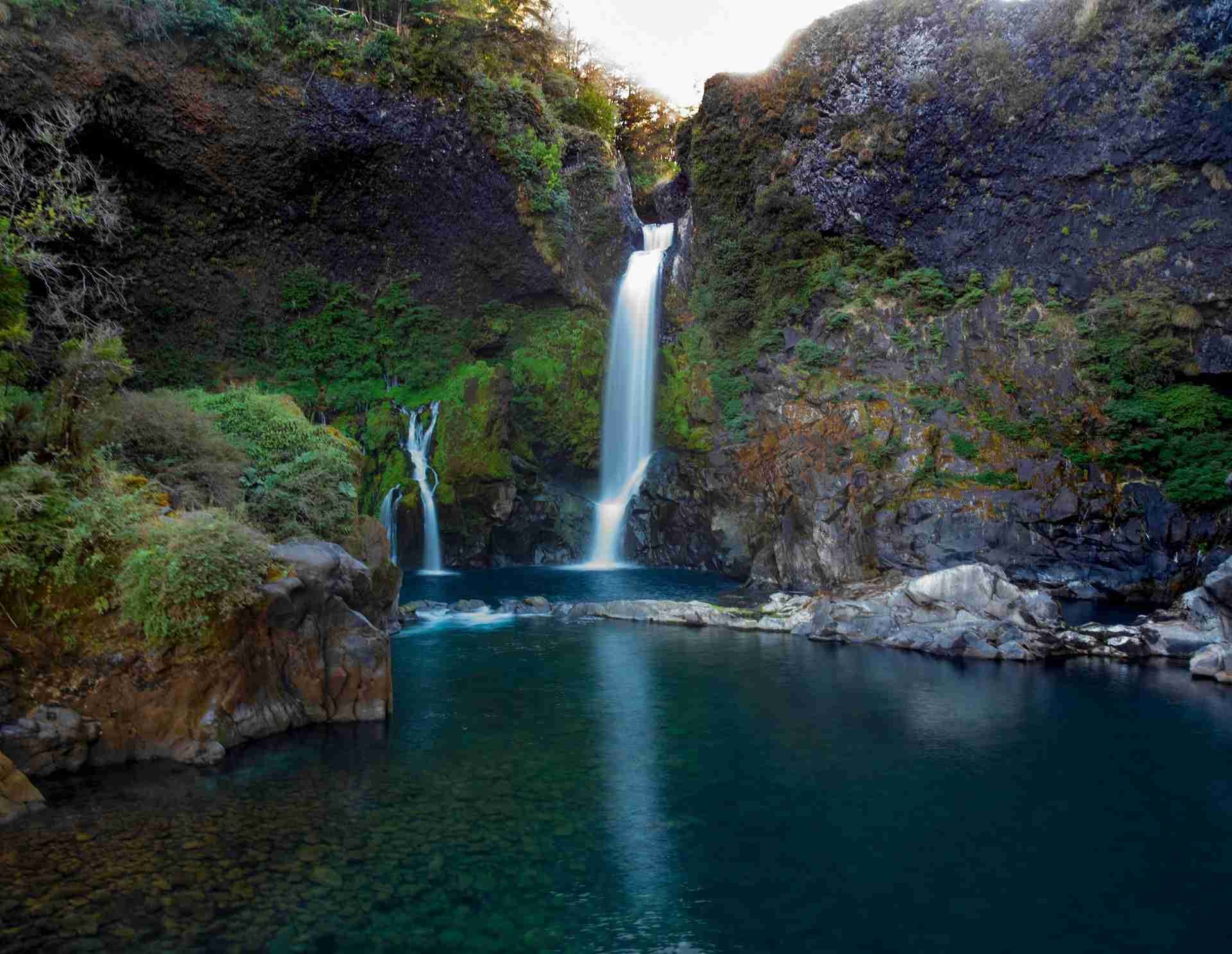
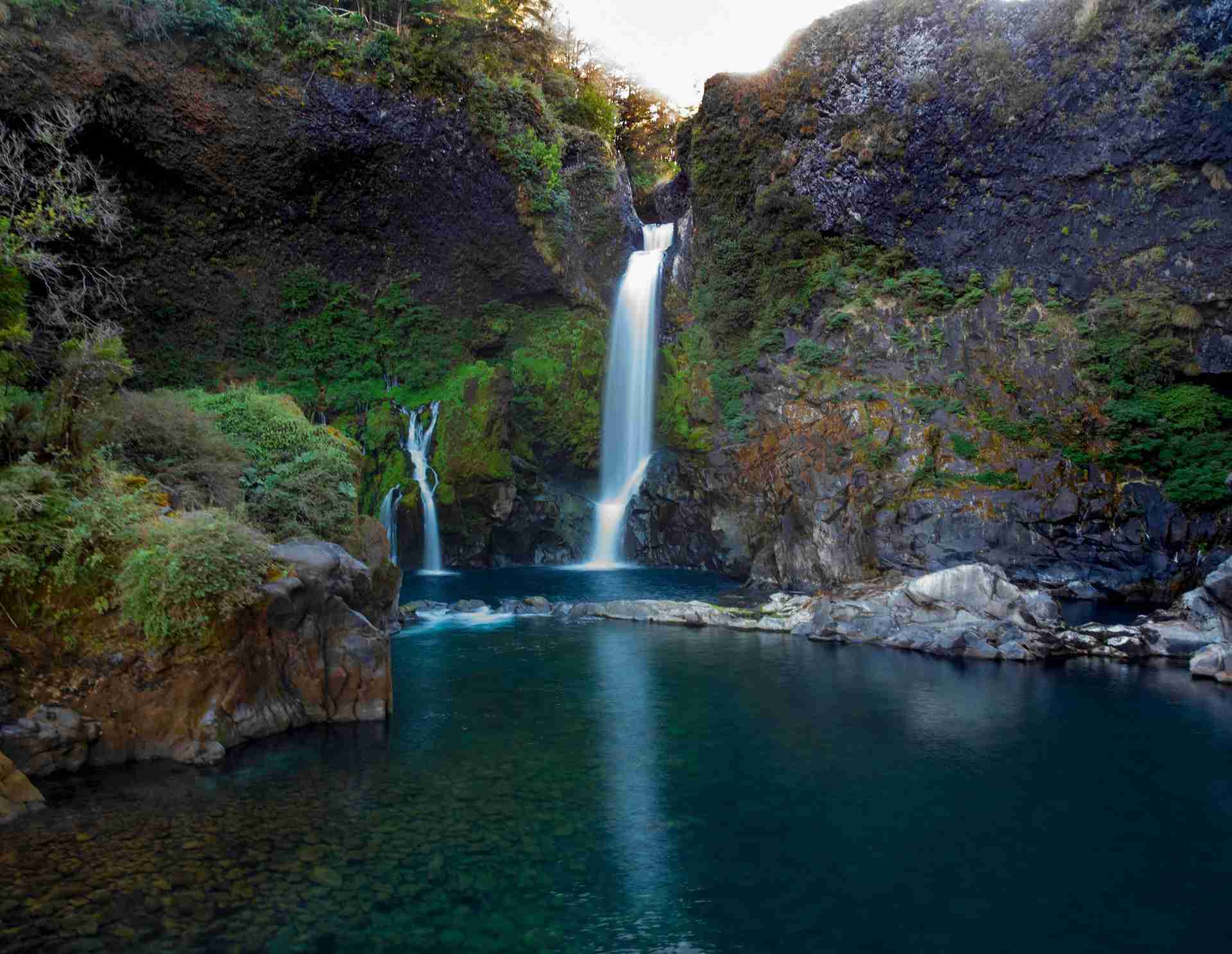
Salto del Huilo Huilo is a picturesque waterfall in the Huilo Huilo Biological Reserve of Chile's Los Ríos Region. Surrounded by temperate rainforest, the falls drop roughly 40 meters into a deep, rocky basin, sending up plumes of mist that catch the light on sunny days. The river feeding the falls flows from glacial sources in the Andes, giving the water a clear, cold character that can range from turquoise to deep green depending on the season. The lush vegetation, dramatic rock formations, and constantly moving water make this location a rewarding subject for both landscape and detail photography. The sound of the falls also creates an immersive atmosphere that is as much a part of the experience as the visuals.
Best Photography Opportunities
• Main Viewpoint of the Falls
: The primary viewing platform offers a direct, unobstructed look at Salto del Huilo Huilo's full drop. From here, you can capture the waterfall's height and volume while including the surrounding rainforest as a frame. Arriving early in the day often means softer light filtering through the trees, which helps balance exposure between bright water and shaded forest. A wide-angle lens allows you to take in the full breadth of the scene, but stepping back with a mid-range zoom can create a more balanced composition that avoids distortion. Mist from the falls can be heavy here, so a lens cloth is essential to keep the front element clear for sharp images.
• Long Exposures from the Lower Path
: A trail leading downriver from the main viewpoint gives access to angles where the waterfall is partially framed by rocks and vegetation. This location is ideal for long exposures that smooth the water's motion into silky streams, emphasizing flow and contrast against the dark volcanic rock. A tripod and neutral density filter are key to slowing shutter speeds during daylight. Composing to include overhanging ferns or moss-covered stones adds foreground depth and a sense of place. On cloudy days, the even light brings out the greens and textures of the surrounding forest.
• Detail Shots of Water and Rock
: The force of the falls creates constantly shifting spray patterns and water textures. Using a telephoto lens, you can isolate sections of falling water or the point where it meets the pool below, capturing abstract patterns of foam and turbulence. These tight shots work well for emphasizing the power of the water without showing the full scene. In bright light, a faster shutter speed freezes the droplets, creating a sharp, energetic effect. In softer light, slower speeds can reveal the movement and flow within the cascade.
• Forest Trail Leading to the Falls
: The approach to Salto del Huilo Huilo winds through dense, mossy forest that is a subject in itself. Diffused light through the canopy creates subtle highlights on ferns, lichens, and tree trunks. Shooting along the trail with a wide lens can create inviting lead-in lines toward the falls. The damp conditions enhance colors and textures, making even small details in the undergrowth stand out. This section is also excellent for macro work, with countless opportunities to capture the smaller elements of the rainforest ecosystem.
• Mist and Rainbows in Afternoon Light
: On sunny afternoons, the spray from the waterfall often produces rainbows near its base. These are most visible from certain angles at the main viewpoint, and they can add a vibrant focal point to your composition. A polarizing filter can help control glare from the water while deepening the colors in the rainbow. Capturing both the falls and the rainbow in a single frame works well with a mid-range lens, while isolating the rainbow itself can make for a more abstract image. Timing is important, as the angle of the sun changes the visibility and position of the rainbow throughout the day.
Best Time to Visit
Salto del Huilo Huilo can be photographed year-round, but the mood and flow of the falls change significantly with the seasons. In late spring and early summer, snowmelt from the Andes feeds the river, producing the most powerful flow of the year. This is when the falls are at their most dramatic, and the spray can be intense near the viewing platforms. Mid-summer through early autumn offers a more moderate flow, which can make long-exposure work easier and reveal more detail in the rock formations.
Winter brings cooler, wetter weather and frequent rainfall, which deepens the greens of the forest and can create misty, moody conditions. These months are excellent for soft, diffused light, though the trails may be muddy and slippery. Mornings tend to be quieter, with fewer visitors and a higher chance of catching low, angled light filtering through the trees. Afternoons in sunny weather can produce rainbows in the spray, adding another element to your images. Overcast days are ideal for controlling contrast and capturing rich, even tones in both the waterfall and the surrounding vegetation.
How to Get There
The Huilo Huilo Biological Reserve is located near the town of Neltume, about 55 kilometers from Panguipulli in Chile's Los Ríos Region. The reserve is accessible by car, with well-maintained roads leading to the main entrance. From Panguipulli, the drive takes around an hour and passes through scenic landscapes of lakes and forested hills. Once inside the reserve, clearly marked trails lead from the visitor area to the waterfall viewpoints.
There is a fee to enter the reserve, which includes access to multiple trails and viewpoints. The path to Salto del Huilo Huilo is well maintained and relatively short, though it can be slippery in wet conditions. Tripods are permitted, but be mindful of space on narrower sections of the trail and platforms. Facilities, including restrooms and small cafes, are available near the entrance.
Recommended Photography Gear
A wide-angle lens in the 16 to 35 millimeter range is useful for capturing the full height of the waterfall along with its surrounding forest. A 24 to 70 millimeter zoom offers flexibility for mid-range compositions, while a 70 to 200 millimeter telephoto lens works well for isolating details in the water and rock. A sturdy tripod is essential for long exposures, and a neutral density filter will help achieve slower shutter speeds in daylight.
A polarizing filter is helpful for reducing glare on wet rocks and enhancing the greens of the vegetation. Because of the heavy spray near the falls, carrying a microfiber cloth or lens wipes is essential to keep your lens clear. Waterproof protection for your gear is recommended, especially during periods of high flow. Comfortable, non-slip footwear will make navigating the damp trails safer and more comfortable.
If you enjoy macro photography, bringing a dedicated macro lens can be rewarding, as the surrounding forest is full of interesting textures, fungi, and small plants that make excellent close-up subjects. Extra batteries and memory cards are also recommended, as the reserve offers multiple photo-worthy spots beyond the main waterfall.
Nearby Photography Locations
: Another waterfall within the Huilo Huilo reserve, Salto del Puma is set deeper in the forest and offers a more secluded atmosphere. The trail leading to it provides rich opportunities for photographing rainforest details.
: A glacial lake with calm waters that often reflect the surrounding mountains and forest. Morning light is especially good for capturing mirror-like reflections here.
: A forest trail in the reserve featuring wooden sculptures and installations inspired by local myths. It combines cultural elements with natural scenery for varied compositions.
: Visible from certain points in the area, this volcano offers dramatic landscapes, especially when snow-capped. It can be photographed from the surrounding hills or during hikes in the reserve.
: Located in the nearby town of Panguipulli, this lakefront area has beautiful sunset views with the mountains in the distance. The pier and surrounding shoreline make excellent foregrounds for wide shots.
Salto del Huilo Huilo is more than just a waterfall; it is part of a richly textured landscape where rainforest, river, and volcanic geology come together. With a variety of vantage points, seasonal changes, and surrounding natural beauty, it offers photographers the chance to capture both the raw energy of moving water and the quieter details of Chile's southern wilderness.
Comments
Loading comments…