
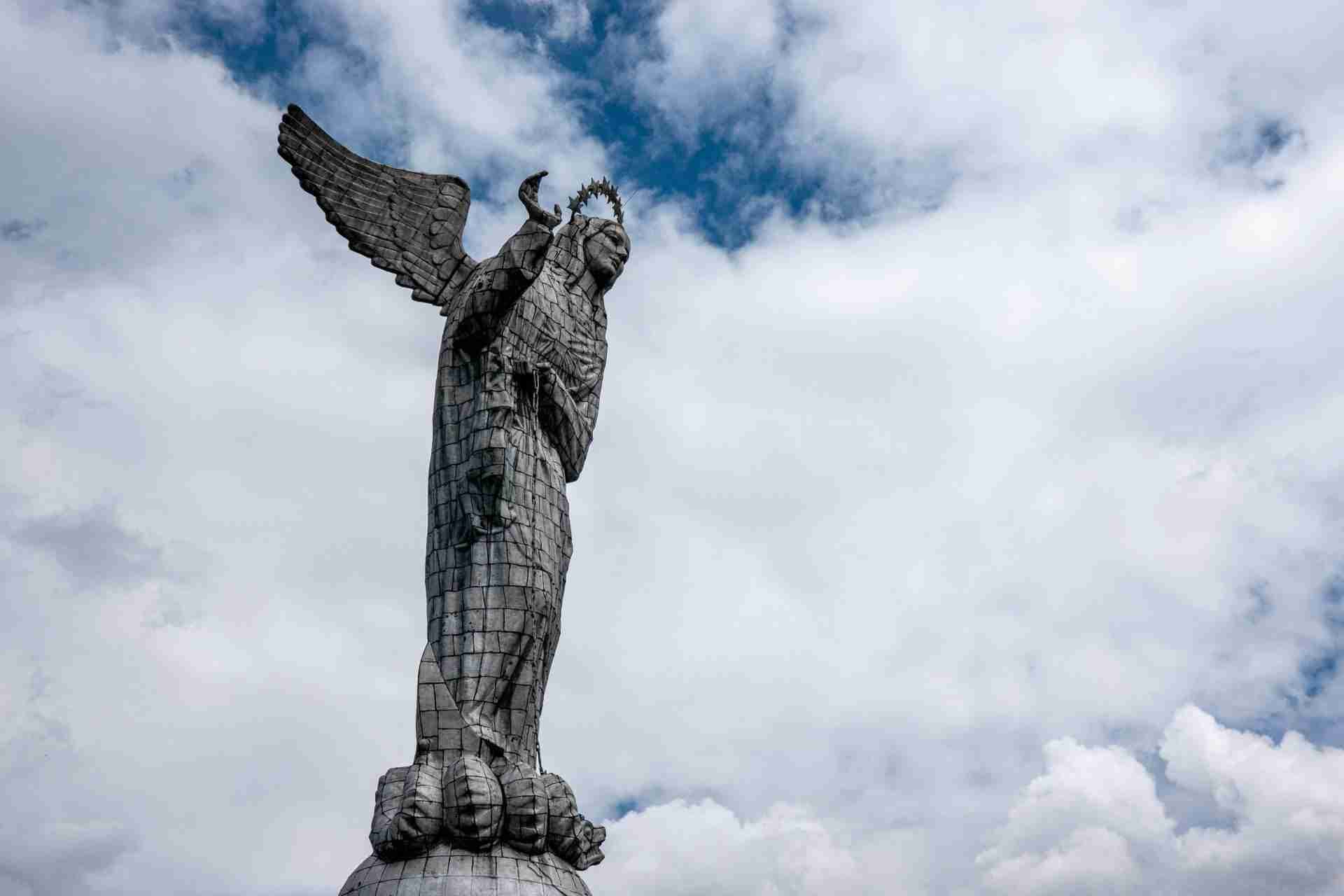
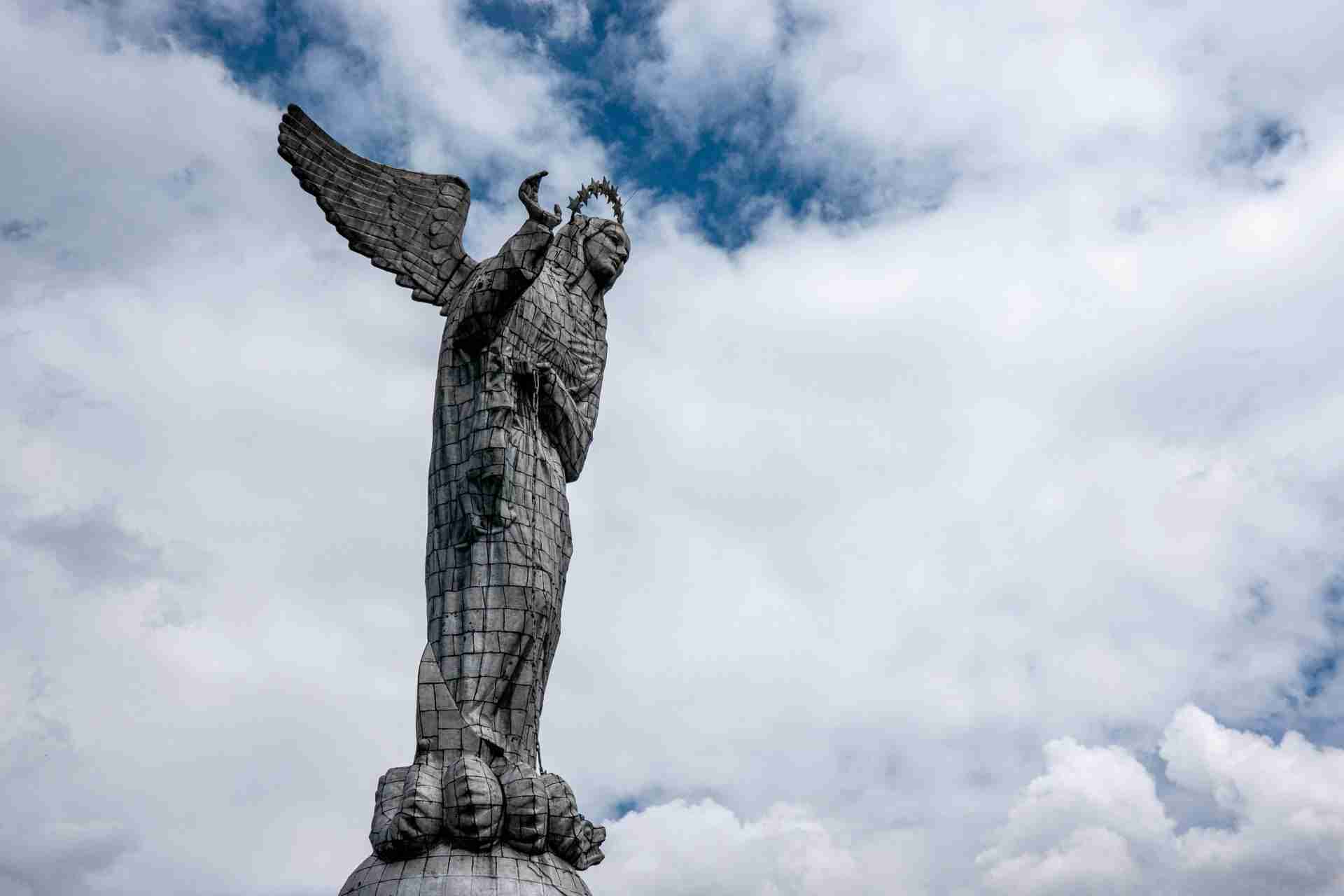
The Virgin of El Panecillo stands high above Quito on a rounded hill in the center of the city, offering one of the most comprehensive panoramic views of the Ecuadorian capital. This statue rises nearly 135 feet from its base, depicting the Virgin Mary with wings, standing on a globe and a chained serpent. For photographers, the site offers two layers of opportunity: one in capturing the statue itself from creative angles, and another in using the hill's elevation to frame the sprawling city and surrounding Andes. Whether you're shooting early morning light spilling over the rooftops, dramatic clouds rolling across the mountains, or the statue lit up against the night sky, El Panecillo provides a dependable base for urban and landscape photography with rich historical context.
Best Photography Opportunities
• Wide Views Over Historic Quito
From the platforms around the statue, photographers get a full 360 degree view of the city, with the colonial center directly below and the city extending into the valleys and hills beyond. Early morning is one of the best times to shoot, when soft light cuts across the rooftops and low fog sometimes gathers in the lower neighborhoods. These images benefit from longer focal lengths that compress the urban layers and show the density of the city against the mountainous backdrop. On clear days, distant peaks such as Cayambe or even Cotopaxi may be visible depending on atmospheric conditions, giving the frame extra depth.
• The Statue from Below and Side Angles
The Virgin of El Panecillo is made of over seven thousand aluminum pieces and was designed with dynamic posture and detail in mind. Rather than standing still, the figure leans slightly and opens its arms in motion, creating interesting lines from different angles. Shooting from below or to the side exaggerates these features, especially when framed against an early morning or late afternoon sky. A wide lens works well here to fit the full figure into the frame while emphasizing the statue's movement and texture. Cloudy conditions can enhance the mood and bring out the metallic surface without harsh contrast.
• City Lights and Urban Layers at Blue Hour
As the sun sets behind the western hills, the city lights begin to turn on, creating a soft network of glow across the valley. Shooting at blue hour from El Panecillo allows you to capture this transition, with the statue itself illuminated in warm tones while the city spreads out below in cooler ambient light. Using a tripod is essential here for longer exposures and careful framing, especially when balancing the brightness of the statue against the wider scene. Compositions that place the statue in the foreground and the lit up city behind are particularly effective in showing scale and setting.
• Architectural Details and Symbolism
The base of the statue contains architectural details, reliefs, and religious symbols that can be isolated for tighter frames or detail shots. These are especially effective when working with side light or partial shadows that highlight texture and depth. The serpent, globe, and wings each offer chances to build abstract images or close ups that focus on design rather than overall form. These images work well in black and white or muted color grading to highlight shape and surface rather than literal representation.
• Aerial Perspective of the Hill and City Layout
If flying a drone from nearby legal locations outside the immediate statue area, the layout of El Panecillo becomes a useful compositional element when viewed from above. The circular plaza, roads winding up the hill, and dense neighborhoods below all offer strong geometry. The position of the hill within the broader grid of Quito reveals the contrast between the historic center and more modern expansions, especially in early morning light when shadows are long. Always confirm local drone laws and fly responsibly with awareness of crowds and protected airspace.
Best Time to Visit
The clearest conditions at El Panecillo tend to occur early in the morning, particularly between June and September, when the dry season brings cooler air and better visibility. Mornings offer soft light across the city and a greater chance of catching fog or low cloud in the surrounding hills, which can add atmosphere and layering to urban scenes. Midday light can be harsh, especially on the statue's reflective surface, but cloud cover often returns in the afternoon to soften highlights. Sunset and blue hour are excellent for capturing light transitions, especially with the city illuminated and the statue glowing against the sky. Rain is more common from October through May, especially in the afternoons, though this also brings dynamic skies and fast moving light patterns. Weather changes quickly in Quito due to its elevation, so it is worth arriving early and being flexible with shooting plans.
How to Get There
El Panecillo is located in central Quito, rising between the historic center and the southern parts of the city. The hill is easily accessible by taxi or rideshare from most neighborhoods, and private vehicles can park in the designated lot near the base of the statue. While the road to the top is paved and direct, walking up from the city center is not recommended due to safety concerns along certain parts of the route. Visiting during daylight hours is advised, and going with a group is ideal if shooting near sunset or into the evening. There is no entrance fee to access the viewpoint outside the statue, though the interior lookout tower may charge a small fee to climb. The statue and plaza are open throughout the day, but weather and light conditions vary widely, so checking local forecasts is helpful before visiting.
Recommended Photography Gear
A wide angle lens is essential for photographing the statue and its surrounding plaza, especially when shooting from below or fitting the structure into vertical frames. A telephoto lens is helpful for compressing city scenes or isolating mountain peaks in the distance. A tripod is strongly recommended for early morning, blue hour, or low light shooting, especially when photographing city lights or using long exposures. A circular polarizer can help manage glare on the statue's metallic surface but should be used carefully to avoid uneven effects against the sky. Weather conditions change quickly, so bring lens wipes, a rain cover, and layers for cooler temperatures and sudden wind. If you are shooting into the evening, pack a headlamp or small flashlight for the return walk to your vehicle or transport pickup.
Nearby Photography Locations
One of Quito's most visually striking buildings, this neo-Gothic cathedral offers tower access with panoramic views over the city and strong leading lines throughout the interior. The stone gargoyles shaped like native Ecuadorian animals add unique character to architectural detail shots.
This baroque church in the heart of the historic center is known for its intricate gold interior and layered columns. It offers strong interior low light opportunities and tight symmetry that suits both handheld and tripod-supported shooting in controlled conditions.
A narrow, historic street filled with colonial buildings, shops, and cafes. It works well for capturing street level detail and night scenes, especially when decorated during festivals or holidays. The light is soft in early morning or evening, and the area is best explored on foot.
Located northeast of El Panecillo, this park provides another elevated view of the city and is often less crowded. The modern glass structure at the top makes a good contrast with the colonial grid of Quito below, and the light is excellent in the early morning hours.
For a more expansive mountain view, the TelefériQo cable car lifts you up the slopes of Rucu Pichincha. From the top, you can photograph both Quito and the surrounding Andes under changing light. It is ideal for wide landscapes and layered atmospheric shots when clouds roll through.
Comments
Loading comments…