
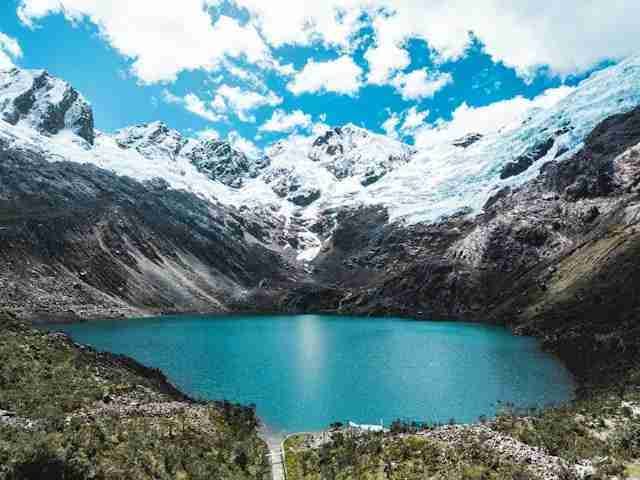
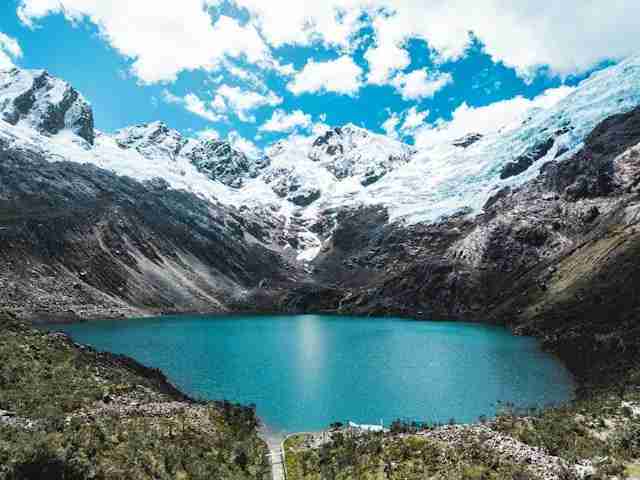
Rocotuyo Lake sits high in the Andean landscape of southern Peru, surrounded by jagged rock, loose scree, and wide open sky. Tucked away from major roads and distant from populated centers, this remote alpine lake provides a quiet, isolated setting for landscape photographers seeking high-altitude compositions with strong geometry and minimal distraction. The water remains calm under most conditions, creating a natural mirror for the rocky slopes and occasional snow patches above. This is a place where form and light take the lead, and where patience with weather and timing pays off in scenes that feel balanced and expansive. The area around the lake is sparse, with little vegetation or human impact, which allows clean, uninterrupted framing whether you're shooting low across the water or working with long lenses toward distant ridgelines.
Best Photography Opportunities
• Early Reflections across the Water
The surface of Rocotuyo Lake is often glassy in the early morning before wind picks up. This is the ideal time to capture full reflections of the surrounding rock faces and sky. A wide-angle lens lets you include foreground elements like boulders or shoreline texture, while still fitting the full shape of the lake and its mirrored scene. Use a tripod to frame precisely and to handle slower shutter speeds during low light. If you arrive just before sunrise, you can catch soft ambient tones in the sky that double across the water. These conditions rarely last beyond mid-morning, so it's worth arriving early and scouting your composition in advance.
• Rock Patterns and Foreground Structure
The lake is lined with loose rock, ledges, and occasional slabs of weathered stone that break into the shoreline. These make excellent foreground anchors for wide compositions and can be used to create depth when placed along a leading line into the lake or toward the ridges beyond. Shoot in soft light to preserve texture in the rock, or wait for cloud cover to reduce harsh contrast. A polarizing filter can help reduce reflections on wet surfaces and emphasize detail in the stone.
• Compression of Ridges and Slopes
From various points along the lake's edge, you can use a longer focal length to compress the jagged ridgelines into layered backdrops. These shots work best during the late afternoon when side light carves shape into the terrain. A 70 to 200 millimeter lens will let you isolate peaks or pick out sections of rock that catch highlights. The minimal vegetation and high contrast make this a strong location for black and white interpretations as well, especially when clouds pass through and break the light into clear sections.
• Color and Contrast Under Changing Weather
Weather in this part of the Andes can shift quickly, and moments of sun breaking through overcast skies often create dramatic contrast between land and water. The rocks pick up color fast when they dry, and the blue of the lake deepens under filtered light. These moments are brief but visually striking. Keep your gear ready, as compositions can change dramatically within minutes. If you see a patch of light moving across the ridges or water, position yourself to follow it into your frame.
• Minimalist Frames of Water and Sky
Because the landscape around Rocotuyo Lake is open and undeveloped, it allows for minimalist compositions built on clean lines and repeated tones. Use a long lens to flatten the horizon and separate color blocks between water, rock, and cloud. These scenes benefit from simple exposure and careful balance, especially in overcast or low-contrast conditions. The visual quiet of the lake lends itself to this style, particularly when wind dies down and the water forms a seamless surface.
Best Time to Visit
The best window for photography at Rocotuyo Lake falls between May and September, during the dry season in southern Peru. These months offer clear skies, predictable light, and relatively stable conditions for accessing high mountain terrain. Mornings are typically calm and cold, with the clearest reflections and most manageable contrast. As the sun rises, light moves quickly across the rock faces, and mid-morning brings more intense shadow edges along the slopes.
Afternoons can be windy, which breaks up the surface of the lake and softens reflections. However, the side light during this time is strong and often adds shape to otherwise flat scenes. Late afternoon through golden hour offers good directional light, but conditions can change fast as clouds build in the cooler air. Evenings are colder, and access can become more difficult depending on your route, so plan to leave in time for a safe return if you are hiking in.
Avoid the wet season between November and March, when rain and cloud cover can obscure the peaks and make trails unstable. Early season visits in April or late season trips in October may still offer workable conditions, but expect colder temperatures and less predictable skies.
How to Get There
Rocotuyo Lake is located in a remote section of southern Peru, in the high Andes northeast of Arequipa. There is no direct public transport to the lake, and access requires either a high-clearance vehicle or guided support depending on your route. The most common approach is from the Cotahuasi or Chivay region, often as part of a broader trekking or highland photography trip. From Arequipa, expect a full day of travel to reach the nearest trailhead.
If you are working with a local guide, they will likely include Rocotuyo as part of a multi-day itinerary, combining other nearby lakes, passes, or peaks. The trail itself is not difficult but sits at high altitude, so acclimatization is essential. Plan for limited facilities and bring all necessary food, water, and layers with you. Cell service is unreliable in the area, and weather can shift quickly, so prepare with paper maps or offline GPS navigation.
There are no entrance fees or restrictions on photography for personal use, but drone operation may be regulated under local or national rules. If you plan to fly, check the latest UAV requirements and avoid disturbing wildlife or entering protected airspace.
Recommended Photography Gear
Because of the altitude and conditions, your gear choices should focus on durability, range, and light control. A wide-angle lens is important for capturing the full lake and surrounding ridgelines, especially during calm light. A mid-telephoto zoom allows for compression and detail work across the landscape. A tripod is essential for early morning reflections and long exposures, and should be sturdy enough to handle wind without vibration.
A circular polarizer is helpful for reducing glare on rock and water, but be cautious of uneven polarization in wide scenes. A six-stop neutral density filter is useful if you want to smooth the water surface in brighter light. Bring multiple lens cloths, as dust and moisture are common. Batteries drain more quickly at altitude, so carry extras and keep them insulated during cold mornings.
Pack your gear in a weatherproof backpack, and include a rain cover and protective layers for yourself as well. A small, collapsible stool or pad can be helpful if you plan to wait for light or shoot at ground level for long stretches. Gloves, sun protection, and hydration systems are all important for safety and comfort in high alpine conditions.
Nearby Photography Locations
One of the deepest canyons in the world, Cotahuasi offers expansive vertical shots, strong shadow play, and river compositions with dramatic backdrops. Sunrise brings high contrast and directional light across the canyon walls.
This dormant volcano provides strong profile shots, especially when clouds wrap around its summit. The slopes are often lit in golden light during early morning, and long lenses let you isolate structure and shadow.
• Valley of the Volcanoes
Located south of Rocotuyo Lake, this area includes dozens of small volcanic cones rising from the plains. It is best shot from an elevated position or at sunset when the light stretches across the land and defines each peak.
• Andean Terraces near Chivay
The agricultural terraces around Chivay provide clean graphic compositions when viewed from above. These are most effective under side light, which reveals texture in the earth and separation between rows.
• Lake Chachas
This high lake offers reflective opportunities similar to Rocotuyo but with more open terrain and background ridges. Visit early to catch soft light across the water and low fog along the shoreline.
Rocotuyo Lake is the kind of location that reveals more with time. At first glance, it may appear stark and simple, but careful composition and changing light unlock a range of possibilities. For photographers who work deliberately and value quiet terrain, it offers a stillness that translates directly into the frame.
Comments
Loading comments…