
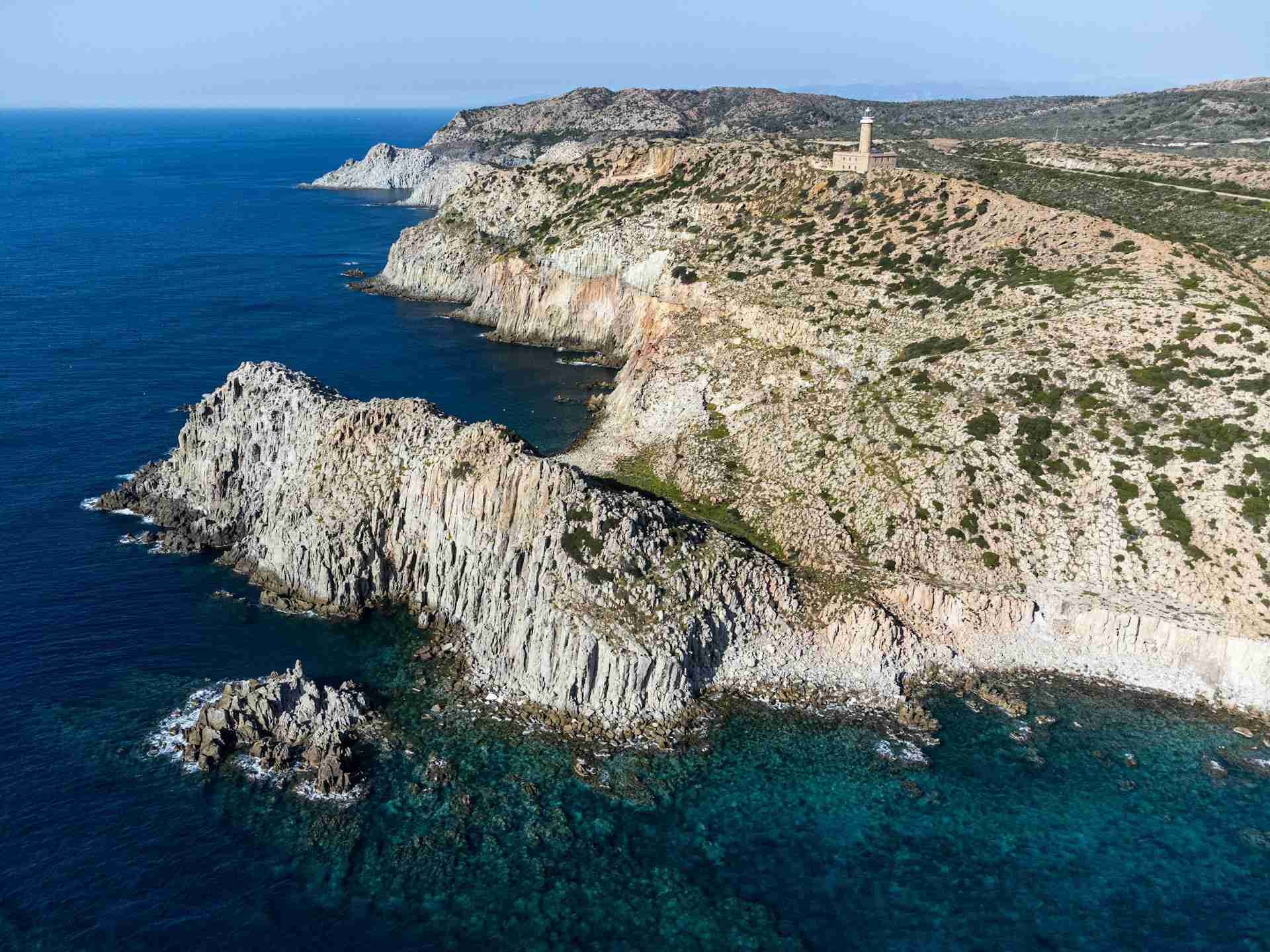
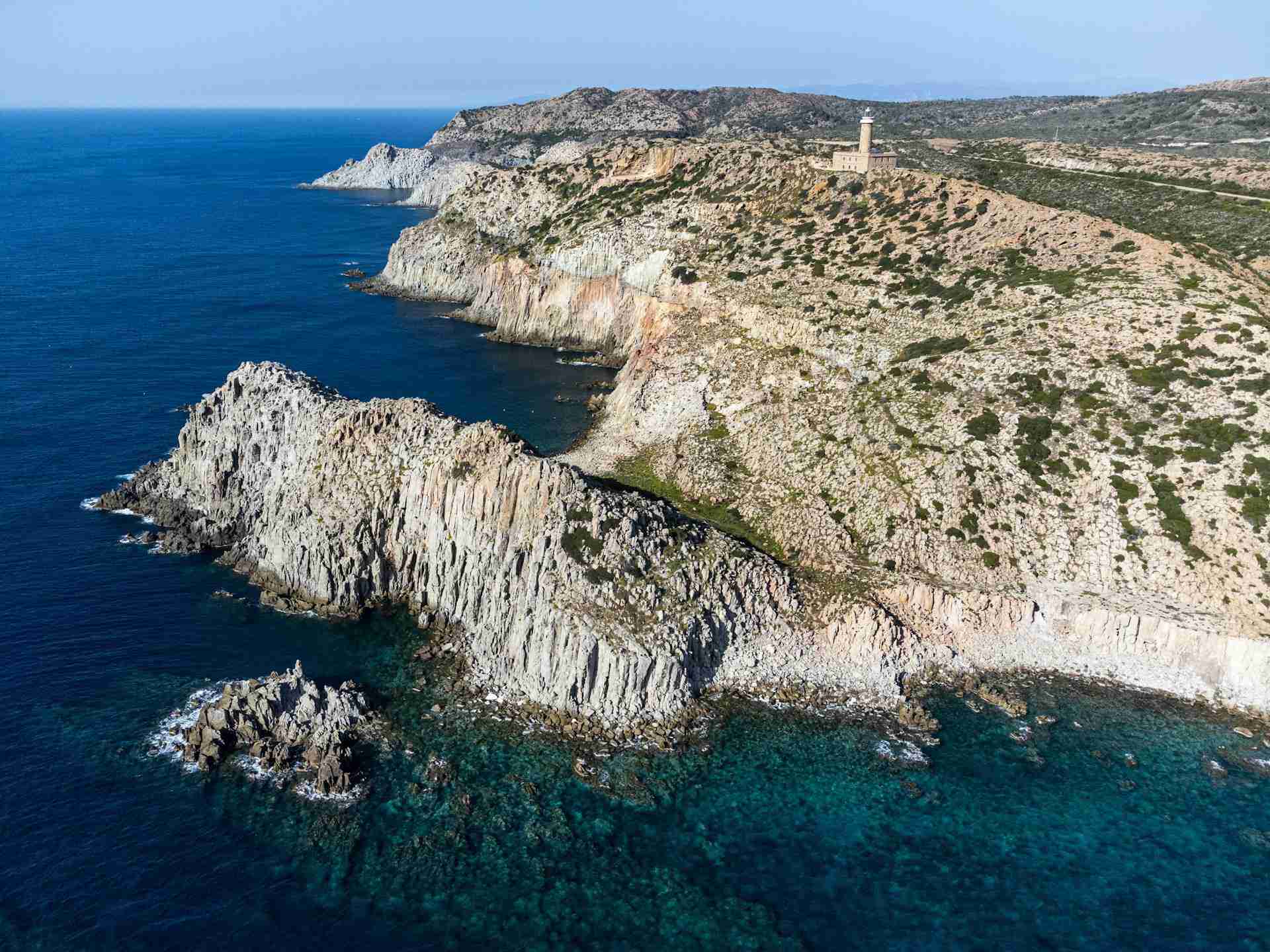
Perched at the far western edge of San Pietro Island, off the coast of South Sardinia, Faro Capo Sandalo stands as one of the most isolated and visually compelling lighthouses in the Mediterranean. Surrounded by rugged cliffs and facing endless sea, this lighthouse is both a beacon and a photographic anchor. The contrast between its manmade structure and the surrounding raw landscape creates a dramatic setting for photographers drawn to coastal light, weathered textures, and dynamic seascapes.
Best Photography Opportunities
• Clifftop panorama of lighthouse and sea
From the higher ridges north of the lighthouse, you can frame Faro Capo Sandalo perched above the sea, surrounded by sculpted rock formations. A wide-angle lens works well here to exaggerate the curves of the landscape and include sea and sky. Late afternoon light is best for side illumination and long coastal shadows.
• Golden hour with sun behind the lighthouse
As the sun sets to the west, it drops directly behind the lighthouse during parts of the year. This allows for strong silhouettes and lens-flare effects with a clean horizon line. Use a small aperture for sun-star effects and bracket exposures to balance the bright sky with shadowed foreground.
• Detail shots of weathered stone and equipment
Closer to the structure, you'll find worn textures in the lighthouse walls, iron railings, and signal equipment. Shoot these with a mid-range zoom or short telephoto lens to isolate patterns and surfaces. Side lighting brings out the fine relief in chipped paint and rusted metal.
• Waves crashing against the base of the cliffs
On windy days, the coastline becomes energetic, with foamy waves slamming against the base rock. Use a fast shutter speed to freeze the moment, or a long exposure to smooth out the sea and create contrast with the jagged cliffs. A tripod and ND filter are key tools for controlling shutter time.
• Blue hour and nighttime long exposures
Once the sun has set, the lighthouse beacon becomes the star of the composition. Blue hour adds gradient color to the sky, while the light beam traces its arc through long exposure. Include the horizon and sea for a simple, open composition. Consider incorporating foreground rock shapes for depth.
Best Time to Visit
The most reliable seasons for photography at Capo Sandalo are spring and autumn. From April through June and again from late September through October, you'll find manageable weather, fewer tourists, and ideal lighting angles throughout the day. The sea often takes on rich blue and green tones during these periods, and low sun angles give form to the cliffs and vegetation.
Summer light is intense and harsh at midday but provides stunning clarity. Plan for early morning or evening sessions during hotter months to avoid heat haze and strong contrast. Winter visits can be moody and atmospheric, with stormy skies and powerful sea conditions. These make for dramatic images, but trails may be slippery and winds severe.
Golden hour is the best time to work the lighthouse into west-facing compositions, especially when shooting from cliff edges. Blue hour allows for long exposures and captures the function of the beacon itself. Cloudy days also work well for shooting the weather-beaten surfaces and giving the scene a more subdued palette.
How to Get There
Faro Capo Sandalo is located near the town of Carloforte on San Pietro Island. The island is accessible by ferry from Portovesme or Calasetta on the southwest coast of Sardinia. Once in Carloforte, the lighthouse is about a 15-minute drive west. There is no public transport to the site, so driving or biking is required.
A narrow paved road leads close to the lighthouse, where parking is available a short walk from the cliffside paths. The final approach to the best viewpoints requires walking on uneven, rocky terrain. Wear sturdy footwear, especially if carrying gear. There are no entry fees or restrictions for external photography, but the lighthouse itself is not open to the public.
There are no facilities at the site, so bring water and protection from the sun or wind. Cell signal is generally available, and the walk to the cliffs is short enough to carry a full kit if needed. Watch for high winds, particularly near the cliff edges.
Recommended Photography Gear
A wide-angle lens (16–35mm) is essential for full scenes of the lighthouse and surrounding cliffs. A mid-range zoom (24–70mm) provides flexibility for detail work and mid-distance compositions. A telephoto lens (70–200mm) helps compress the lighthouse with background waves or isolate sea textures and headlands.
Bring a tripod for golden hour, long exposures, and night shots. A circular polarizer helps with sea surface glare and enriches sky color. ND filters are useful for controlling shutter speed when shooting moving water or managing exposure in bright conditions.
Pack light but stable—wind can be strong here. Use a weather-resistant backpack and consider lens hoods to block flare. A cloth for wiping sea spray and a sealed bag for gear are useful on stormy days.
Nearby Photography Locations
, with its pastel buildings, narrow lanes, and fishing harbor, offers colorful street photography and maritime textures, especially in morning light.
, on the southern shore, presents soft dunes and calm surf, best photographed at sunrise with a warm eastern glow.
, which loops along the edge of the headland, features natural arches, layered rock, and sea-facing perches ideal for long-lens coastal work.
, a quiet cove with turquoise water and pine-backed dunes, provides a contrast to the cliffs and is excellent for relaxed compositions and intimate shoreline details.
• Punta delle Colonne
, on the southern tip of the island, includes dramatic rock formations that rise vertically from the sea—especially striking at sunset or under cloud-filled skies.
Comments
Loading comments…