
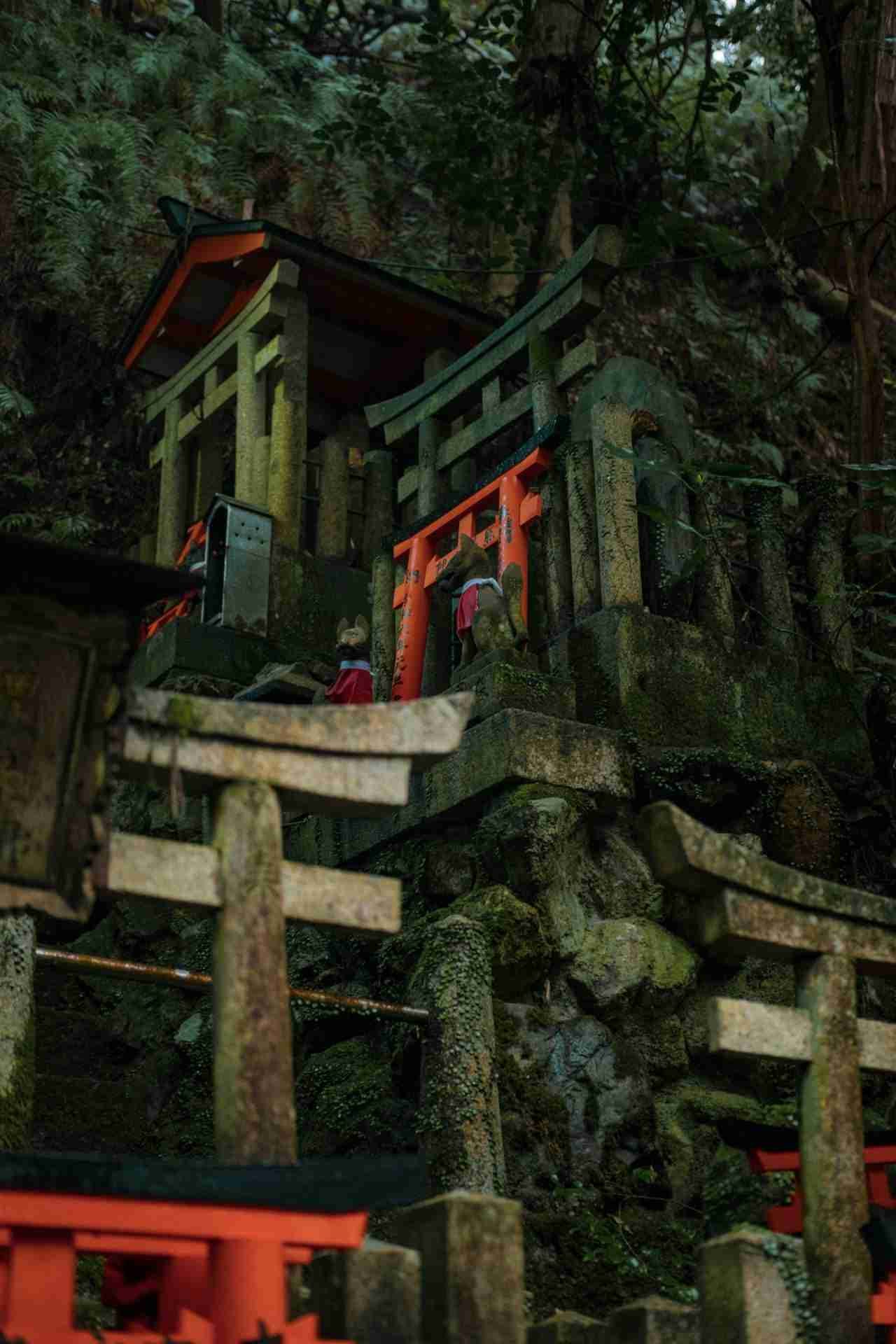
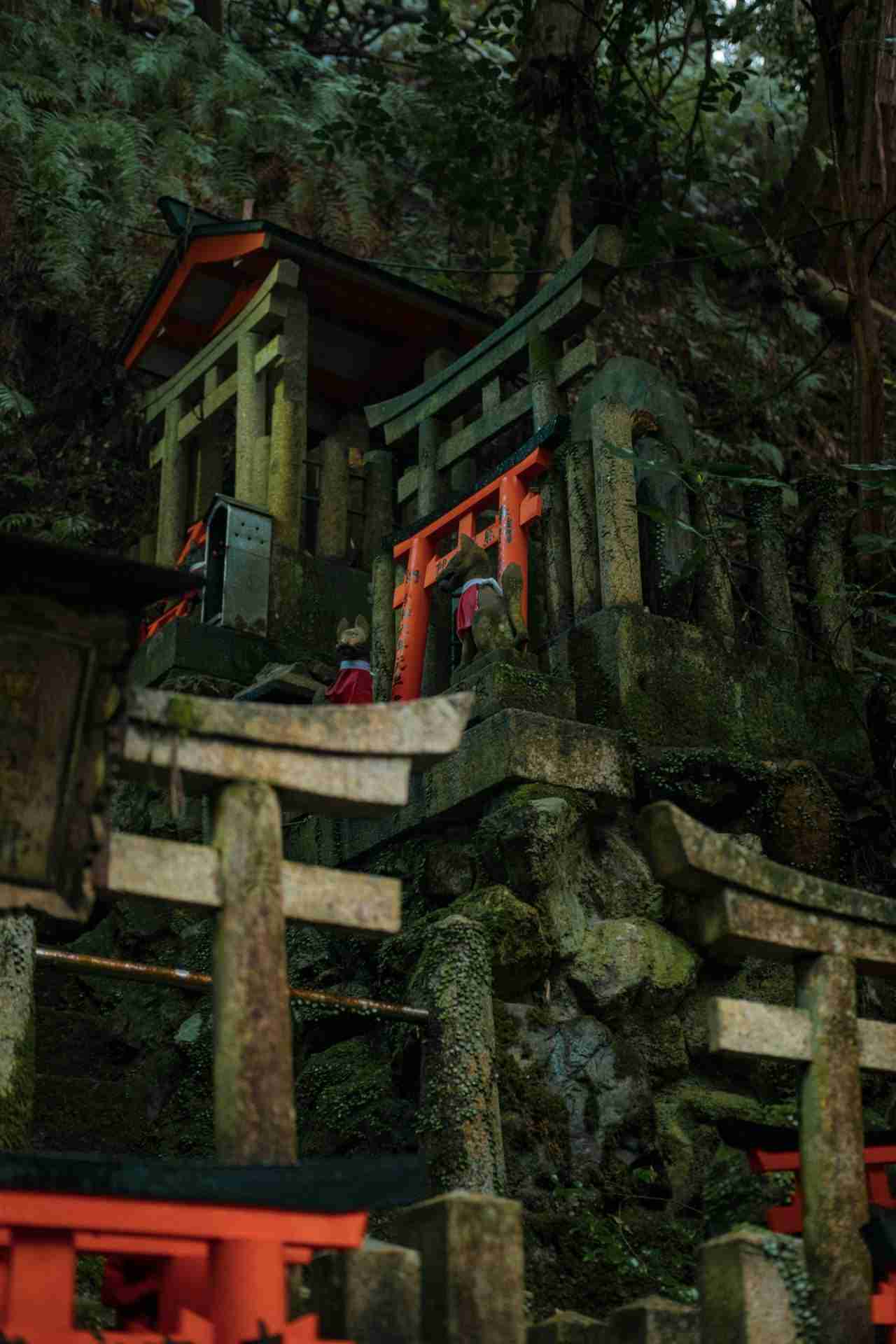
The summit of Mt. Inari, located within Kyoto's iconic Fushimi Inari Shrine, offers photographers a unique blend of cultural and natural beauty. As the highest point of the sacred mountain at 233 meters, the summit is reached by following the famous Senbon Torii, a mesmerizing tunnel of vermillion gates that winds through the dense forest. Along the way, stone fox statues, moss-covered shrines, and panoramic views of Kyoto provide countless opportunities for capturing Japan's timeless spiritual atmosphere.
Best Photography Opportunities
• Senbon Torii Leading to the Summit
– The thousands of vermillion torii gates that line the path to the summit create one of Kyoto's most recognizable photographic compositions. Early morning or late afternoon light filtering through the gates enhances the contrast between shadow and vibrant orange tones, adding depth and texture to each shot.
• Summit Shrines and Stone Monuments
– While the summit itself is relatively modest, it features sacred shrines and stone markers covered in moss and weathered by time. These details provide excellent subjects for close-up and atmospheric photography, particularly in misty or overcast conditions that heighten the mystical ambiance.
• Panoramic Views of Kyoto
– Several viewpoints along the trail leading to the summit offer breathtaking vistas of Kyoto's cityscape framed by lush forest. Yotsutsuji Intersection, located about halfway up, provides one of the most stunning lookout points, making it an essential stop for photographers seeking a mix of urban and natural scenery.
• Fox Statues and Hidden Shrines
– The mountain is dotted with countless small altars and fox statues, representing the messengers of the deity Inari. These statues, often adorned with red bibs, create striking focal points for storytelling compositions that highlight Kyoto's deep spiritual heritage.
• Seasonal Beauty and Misty Mornings
– Spring and autumn transform Mt. Inari into a dreamlike setting. Cherry blossoms along the lower trails in spring and vibrant red maple leaves in autumn provide seasonal framing for the torii gates. Foggy mornings add an ethereal quality to the path, creating an otherworldly effect that enhances the shrine's mysticism.
Best Time to Visit
For the best lighting and minimal crowds, photographers should visit early in the morning, ideally before 8 AM, or in the late afternoon. The golden hour provides a warm glow that enhances the torii gates and casts beautiful shadows along the winding path. Nighttime photography is also rewarding, as lanterns illuminate the shrine paths, offering a different and more atmospheric perspective.
Spring (March to April) and autumn (October to November) are the most photogenic seasons, with cherry blossoms and autumn foliage adding vibrant colors to the scenery. Summer brings lush greenery, while winter offers crisp air and the occasional dusting of snow, creating a rare and serene scene.
How to Get There
Fushimi Inari Shrine, the starting point for the hike to Mt. Inari's summit, is easily accessible via public transportation. The nearest station is Inari Station on the JR Nara Line, just a two-minute walk from the shrine entrance. Alternatively, Fushimi-Inari Station on the Keihan Main Line is a five-minute walk away.
The hike to the summit takes approximately 45 to 60 minutes at a steady pace, though photographers will likely take longer due to frequent stops for capturing the scenery. The trail is well-marked and consists of paved paths and stone steps, making it accessible for most visitors. There is no entrance fee to access Fushimi Inari Shrine or the summit of Mt. Inari.
Exploring Mt. Inari and the Surrounding Area
Beyond the summit, Mt. Inari's trails continue through quiet wooded areas, offering secluded paths that lead to lesser-known shrines and statues. These hidden spots provide excellent opportunities for photographers looking to escape the crowds and capture the shrine's spiritual essence in a more intimate setting. The descent offers a different perspective of the torii gates and shrines, with soft afternoon light creating a warm and inviting atmosphere.
Nearby, the streets surrounding Fushimi Inari Shrine are lined with traditional food stalls and shops selling souvenirs and locally made crafts. Photographers interested in cultural street photography can capture the vibrant energy of visitors enjoying Kyoto's famous inari sushi and other delicacies.
Nearby Photography Locations
– Just a short walk from Fushimi Inari, this Zen temple is famous for its sprawling rock gardens and the iconic Tsutenkyo Bridge, which offers breathtaking views of maple trees in autumn. The temple's wooden walkways and moss-covered grounds make for beautifully composed architectural and landscape shots.
• Kiyomizu-dera Temple
– One of Kyoto's most celebrated temples, Kiyomizu-dera offers stunning views over the city, particularly at sunrise and sunset. The temple's wooden stage, supported by towering pillars, is an iconic vantage point for capturing Kyoto's skyline framed by cherry blossoms or autumn leaves.
– Located nearby, this historic area is home to traditional sake breweries and picturesque wooden buildings. Photographers can explore the canals, bridges, and white-walled warehouses that reflect Kyoto's rich brewing history, making for excellent cultural and documentary-style shots.
– Kyoto's famous geisha district is a must-visit for photographers interested in capturing the timeless streets lined with wooden machiya houses and tea shops. Evening walks through Hanamikoji Street often reveal glimpses of geisha and maiko, adding to the district's authentic old-world charm.
– Though farther from Mt. Inari, this iconic location is worth the trip for its towering bamboo stalks that create an enchanting tunnel of green light. Arriving early in the morning is essential to avoid crowds and capture the tranquil beauty of the grove.
The summit of Mt. Inari is more than just a destination—it is an immersive journey through Kyoto's rich spiritual and natural landscapes. With its iconic torii gates, serene shrines, and panoramic views, it offers photographers endless opportunities to capture the harmony between tradition and nature in one of Japan's most beloved locations.
Comments
Loading comments…