
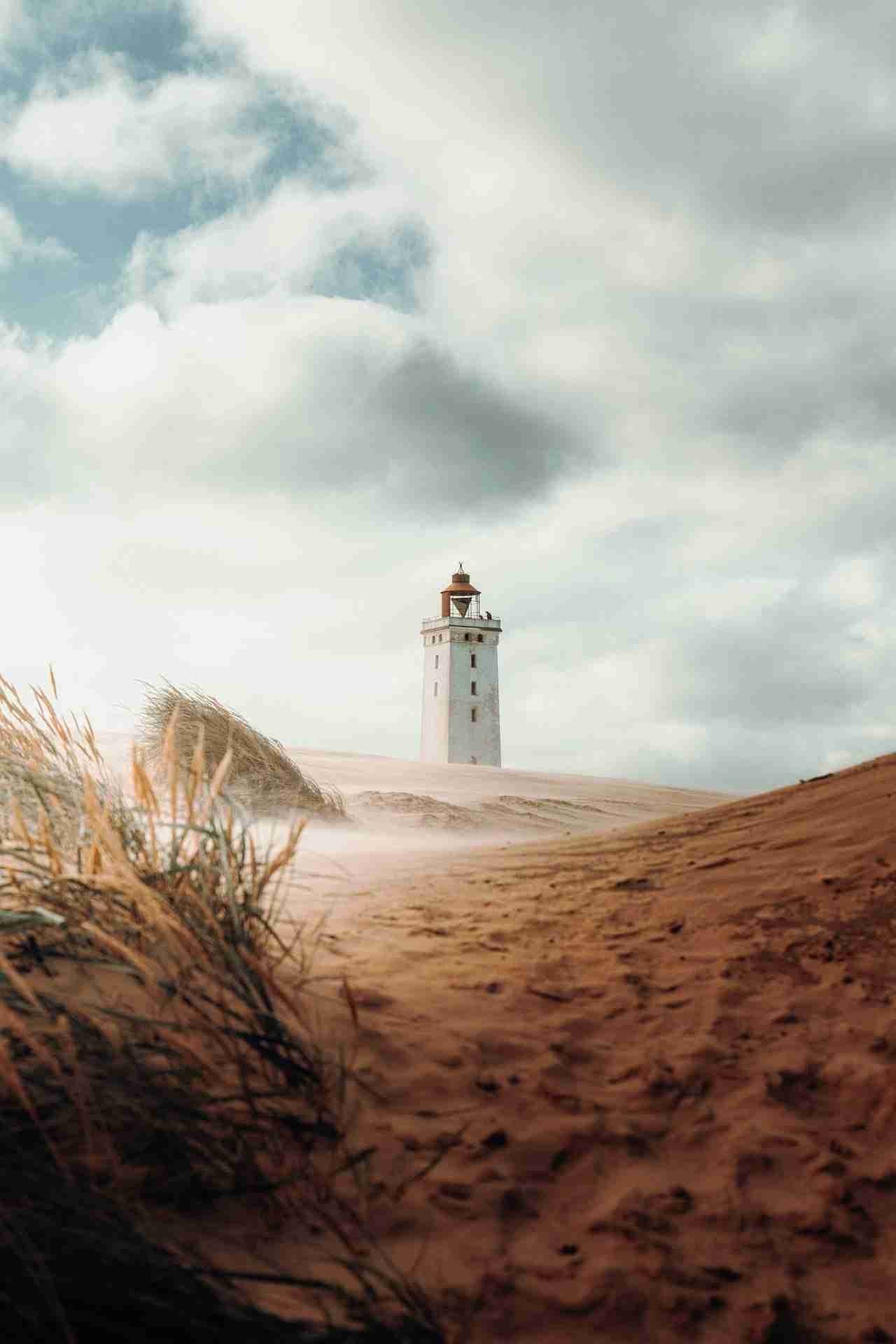
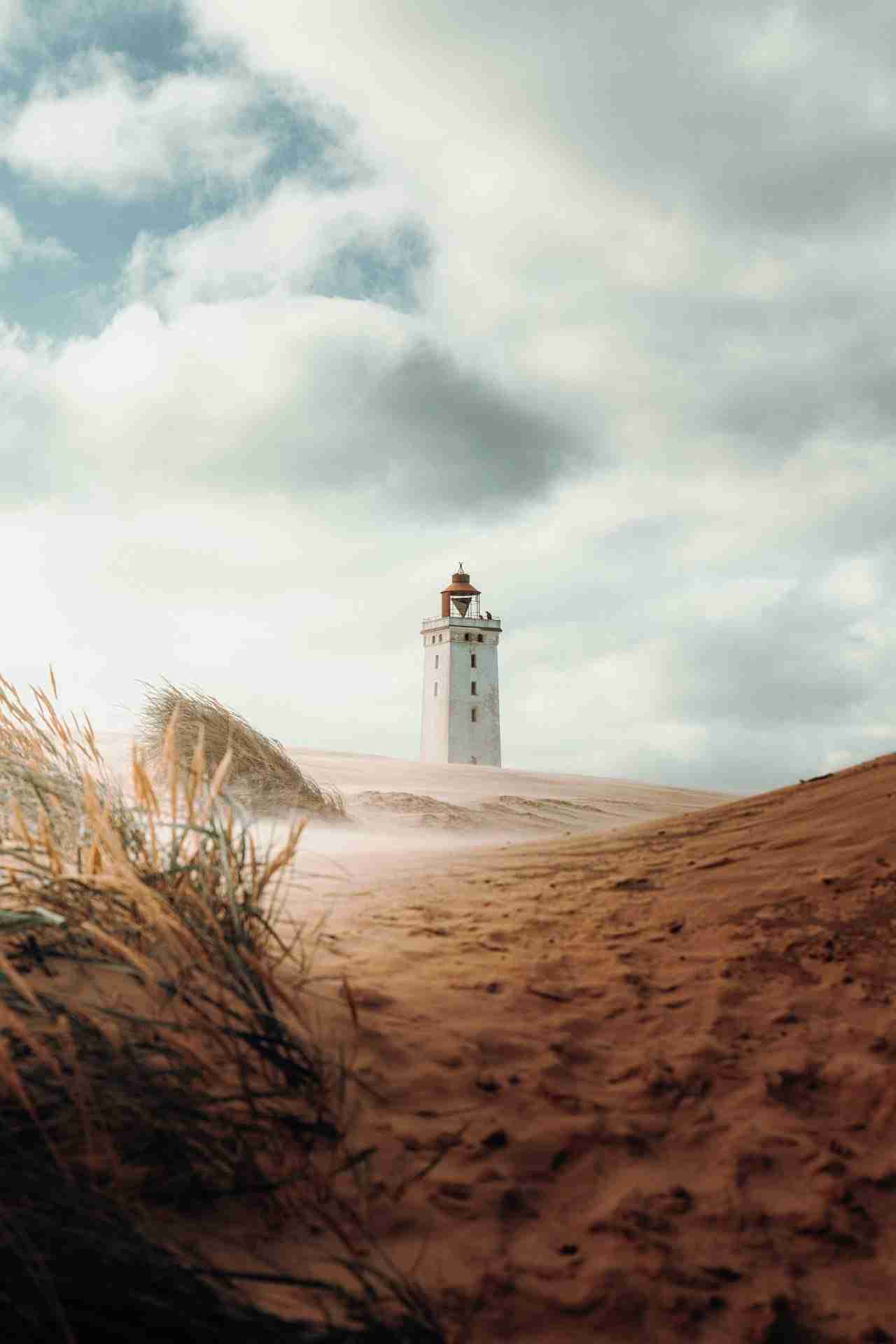
Rubjerg Knude Fyr is one of Denmark's most dramatic and photogenic landmarks. Perched atop a vast sand dune on the North Sea coast, this abandoned lighthouse stands as a testament to the relentless power of nature. Once in danger of toppling into the sea due to coastal erosion, it was famously relocated inland in 2019 to preserve its legacy. The surrounding landscape of shifting sands, rugged cliffs, and panoramic ocean views creates a dynamic setting for photographers. Whether capturing the golden light of sunrise, the dramatic windswept dunes, or the haunting isolation of the lighthouse at night, Rubjerg Knude Fyr offers endless visual inspiration.
Best Photography Opportunities
• The Lighthouse Against the Sand Dunes
– The stark contrast between the whitewashed lighthouse and the undulating dunes makes for striking compositions. Shooting at different angles can emphasize the textures of the wind-sculpted sand and the lighthouse's weathered exterior. Incorporating footprints or wind trails in the foreground can add a sense of scale and movement to the image.
• Golden Hour and Sunset Over the North Sea
– The soft, warm tones of golden hour beautifully highlight the textures of the sand and the lighthouse's facade. At sunset, the sky bursts into vibrant hues of orange, pink, and purple, creating a perfect backdrop against the lighthouse's silhouette. Positioning the lighthouse slightly off-center can enhance the visual balance and make use of the rule of thirds.
• Aerial Photography of the Moving Landscape
– Drone photography reveals the true scale of the shifting dunes and their dramatic encroachment on the lighthouse. From above, the patterns in the sand and the isolated structure make for breathtaking images. Aerial shots taken at different times of the year can document the ever-changing landscape and highlight the effects of coastal erosion.
• The Lighthouse and the Cliffs of Lønstrup
– Capturing the lighthouse from the cliffs to the north provides a different perspective, with the vastness of the North Sea stretching endlessly into the horizon. This composition emphasizes the vulnerability of the lighthouse to coastal erosion. Including crashing waves or storm clouds in the background can enhance the dramatic effect of the scene.
• Long Exposure of Wind and Sand Movement
– The strong coastal winds constantly reshape the dunes, making long-exposure photography an excellent technique to capture the movement of blowing sand. This can create a dreamlike effect, with soft streaks of sand contrasting against the solidity of the lighthouse. Using a tripod and ND filter helps smooth out the motion, creating a surreal and artistic effect.
• Night Photography with the Milky Way
– Due to its remote location, Rubjerg Knude Fyr is an excellent spot for astrophotography. On clear nights, the lighthouse can be framed against a sky filled with stars, and during the right conditions, the Milky Way adds an extra layer of drama to the composition. Light painting techniques can be used to subtly illuminate the lighthouse while keeping the night sky as the primary focus.
Best Time to Visit
The best time to visit Rubjerg Knude Fyr depends on the type of photography you wish to capture. Sunrise and sunset offer the most dramatic lighting, with the warm tones casting long shadows across the dunes. Autumn and winter bring stormy skies, adding a moody atmosphere perfect for dramatic seascapes. Spring and summer provide longer daylight hours and clearer conditions for capturing the lighthouse against bright blue skies. For night photography, visiting during a new moon will yield the best results, with minimal light pollution allowing for stunning astrophotography. Wind conditions can be strong, so bringing weatherproof gear is recommended.
How to Get There
Rubjerg Knude Fyr is located on the northwest coast of Denmark, near the town of Lønstrup in Hjørring Municipality. The site is accessible by car, with parking available at a designated lot about one kilometer from the lighthouse. From there, a well-marked trail leads through the dunes to the lighthouse. The hike is relatively easy, though the shifting sand can make walking more challenging. Public transportation options are limited, but the nearest train station is in Hjørring, from where buses connect to Lønstrup. For those driving from Aalborg, the journey takes approximately one hour.
Exploring Rubjerg Knude Fyr and the Surrounding Area
Beyond the lighthouse, the surrounding coastal landscape offers endless opportunities for exploration and photography. The rolling dunes shift constantly, creating new compositions each time you visit. Walking along the cliffs of Lønstrup provides breathtaking views of the North Sea, while the nearby fishing village of Lønstrup offers charming streets, local art galleries, and coastal cottages perfect for capturing Denmark's maritime culture. The erosion of the coastline is visible in various spots, showcasing the raw power of nature that has shaped this region over centuries.
Nearby Photography Locations
– The towering cliffs near the lighthouse offer sweeping views of the North Sea and dramatic landscapes shaped by erosion. The contrast between the rugged cliffs and the vast sky makes for stunning compositions, particularly when captured with a wide-angle lens.
– A traditional Danish fishing village where boats are pulled directly onto the sandy shore, creating a unique and picturesque scene. This location is perfect for capturing maritime culture, with colorful fishing boats, rustic equipment, and dramatic coastal landscapes providing plenty of visual interest.
• Løkken Beach
– This wide, sandy beach is famous for its colorful beach huts and crashing waves. It's an ideal location for minimalist compositions, as well as long-exposure shots of the water meeting the shore. The repeating patterns of the beach huts create a strong sense of symmetry and order in compositions.
• Bulbjerg Cliff
– Located further along the coast, this massive limestone cliff provides another stunning viewpoint over the North Sea. It's a great location for bird photography, as many seabirds nest along the cliffs. A telephoto lens is useful here for capturing detailed shots of the birds against the textured rock face.
• Hirtshals Lighthouse
– Another impressive lighthouse on Denmark's northwest coast, Hirtshals Fyr offers a different perspective of the region's coastal beauty. The cliffs and surrounding dunes provide excellent foreground elements for landscape photography. During stormy weather, the waves crashing against the shore add an extra layer of drama to the scene.
Rubjerg Knude Fyr is a truly unique location where the forces of nature and human history collide, creating a constantly evolving landscape. Whether capturing the lighthouse in the warm glow of sunset, experimenting with long exposures of shifting sand, or framing the structure beneath a starry sky, photographers will find endless creative opportunities at this breathtaking Danish landmark.
Comments
Loading comments…