
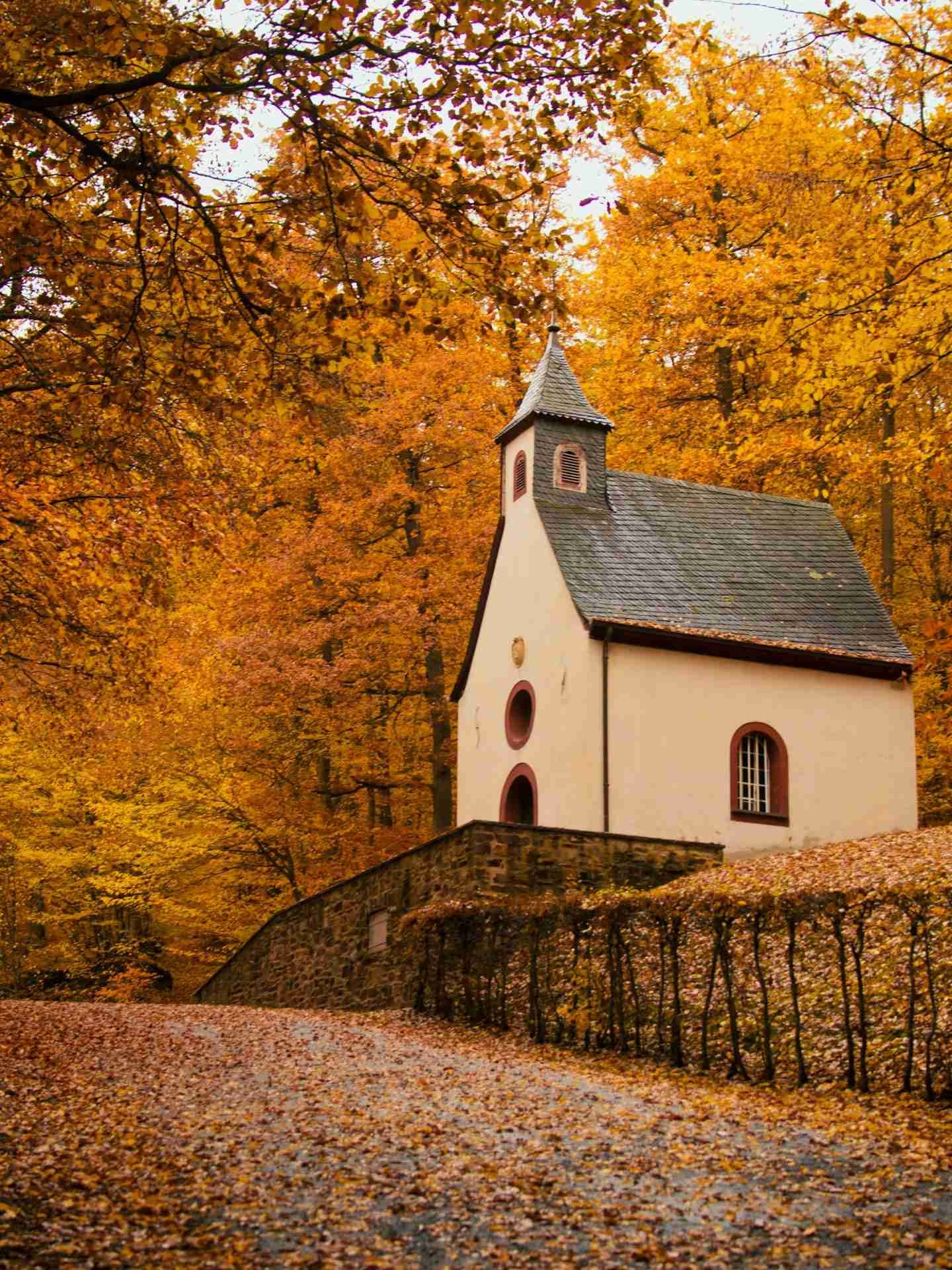
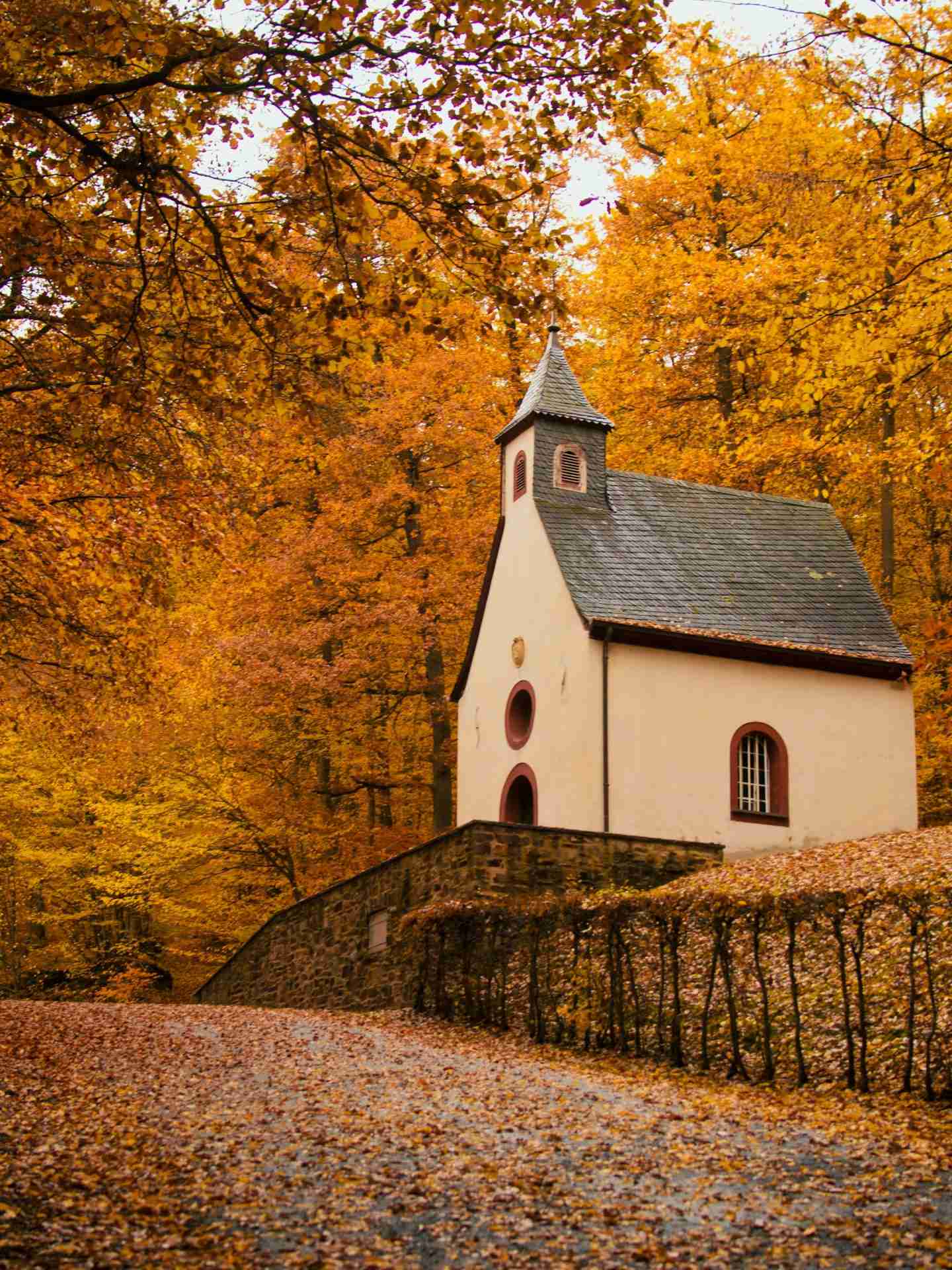
Kapelle St. Antonius sits quietly along the wooded paths that lead toward Burg Eltz in the Elzbach valley. While most visitors focus on the castle, this small hillside chapel offers a quieter and more intimate subject surrounded by forest. Its white walls, dark roof, and red trimmed windows stand out clearly against the greenery, especially when light filters through the trees. The structure is modest in scale, which makes it easy to compose without feeling overwhelmed by its surroundings. For photographers, it offers a calm counterpoint to the dramatic architecture of the nearby castle and rewards a slower, more deliberate approach.
Best Photography Opportunities
• Chapel Framed by Forest Path
One of the strongest compositions places the chapel slightly off center with the walking path leading toward it. The curve of the trail naturally guides the eye and helps anchor the building within the woodland setting. Shooting from a lower position can emphasize the slope of the hillside and give the chapel more presence. Early light filtering through trees adds depth without overpowering the white façade. Careful framing avoids clutter from signage or passing hikers.
• Isolated View Against Dense Greenery
From certain angles, the chapel can be framed tightly against the surrounding forest, minimizing sky and distractions. This approach emphasizes the contrast between white walls and dark foliage. A moderate focal length works well to simplify the background and compress the scene slightly. Even light conditions help maintain detail in both the building and shaded trees. These compositions feel calm and grounded when kept clean and balanced.
• Seasonal Color in Autumn
In autumn, the surrounding forest shifts to warmer tones that frame the chapel naturally. Reds, yellows, and browns contrast gently with the building's white exterior. Positioning the chapel where colored leaves fill the background creates depth and context. Overcast days are particularly effective for preserving subtle color variation. This is one of the most visually rewarding times to photograph the location.
• Detail Studies of Windows and Trim
Closer compositions focusing on red window trim, doorways, and small architectural details provide intimate images. These tighter frames remove the broader forest context and emphasize texture and proportion. Soft side light enhances detail without creating harsh contrast. This approach works well when foot traffic makes wider shots difficult. It adds variety to a set built around broader woodland views.
• Layered Composition With Hillside Slope
Because the chapel sits on a slope, you can use elevation changes to build layered compositions. Shooting slightly above or below alters how the roofline intersects with tree trunks and canopy. Including a small amount of foreground vegetation can create depth without distraction. This approach works best when light is even and controlled. It highlights the chapel's placement within the terrain rather than isolating it completely.
Best Time to Visit
Soft morning and late afternoon light provide the most flattering conditions for photographing Kapelle St. Antonius. Morning often brings quieter trails and filtered light through the trees, which adds subtle depth to the scene. Late afternoon can introduce warmer tones, especially in autumn when leaves shift color. Midday light may create stronger contrast between bright walls and shaded forest, requiring careful exposure control. Overcast conditions are often ideal, as they soften shadows and preserve detail in both foliage and architecture. Seasonal changes significantly affect the surrounding forest, with autumn offering the richest color and spring providing fresh green contrast.
How to Get There
Kapelle St. Antonius is located near Burg Eltz in the Elzbach valley and is reached on foot via the same network of walking paths that lead to the castle. Visitors can park at the designated Burg Eltz parking area and take the shuttle toward the castle, followed by a short walk along marked trails. The chapel sits along these forest routes and is clearly visible from the path. There is no fee to access the exterior of the chapel from public trails, though parking fees may apply at the main Burg Eltz lot. Good walking shoes are recommended due to uneven and sometimes muddy terrain.
Recommended Photography Gear
A standard zoom lens provides flexibility for both wider woodland scenes and tighter architectural details. A short telephoto lens is helpful for isolating the chapel against dense foliage and reducing background distractions. A tripod can be useful in shaded forest conditions, particularly during early morning or late afternoon when light levels are lower. A polarizer may help manage glare on leaves and enhance color saturation when conditions allow. Keeping gear compact is advisable due to the walk required to reach the chapel. Since the setting is wooded, weather protection for equipment is also recommended in damp conditions.
Nearby Photography Locations
The castle itself offers dramatic architecture perched above the valley. It contrasts strongly with the simplicity of the chapel and provides expansive views.
The forested valley surrounding the castle features streams, bridges, and wooded trails. It offers natural landscape compositions away from built structures.
This nearby village provides access points to hiking trails and quiet rural scenes. It works well for contextual images of the region.
Located along the Moselle River, this castle offers a more prominent hilltop profile. It adds variety to a regional architectural series.
• Moselle River
The river corridor features vineyards and small towns that complement the woodland atmosphere near Burg Eltz. It broadens the visual story beyond the forested valley.
Comments
Loading comments…