
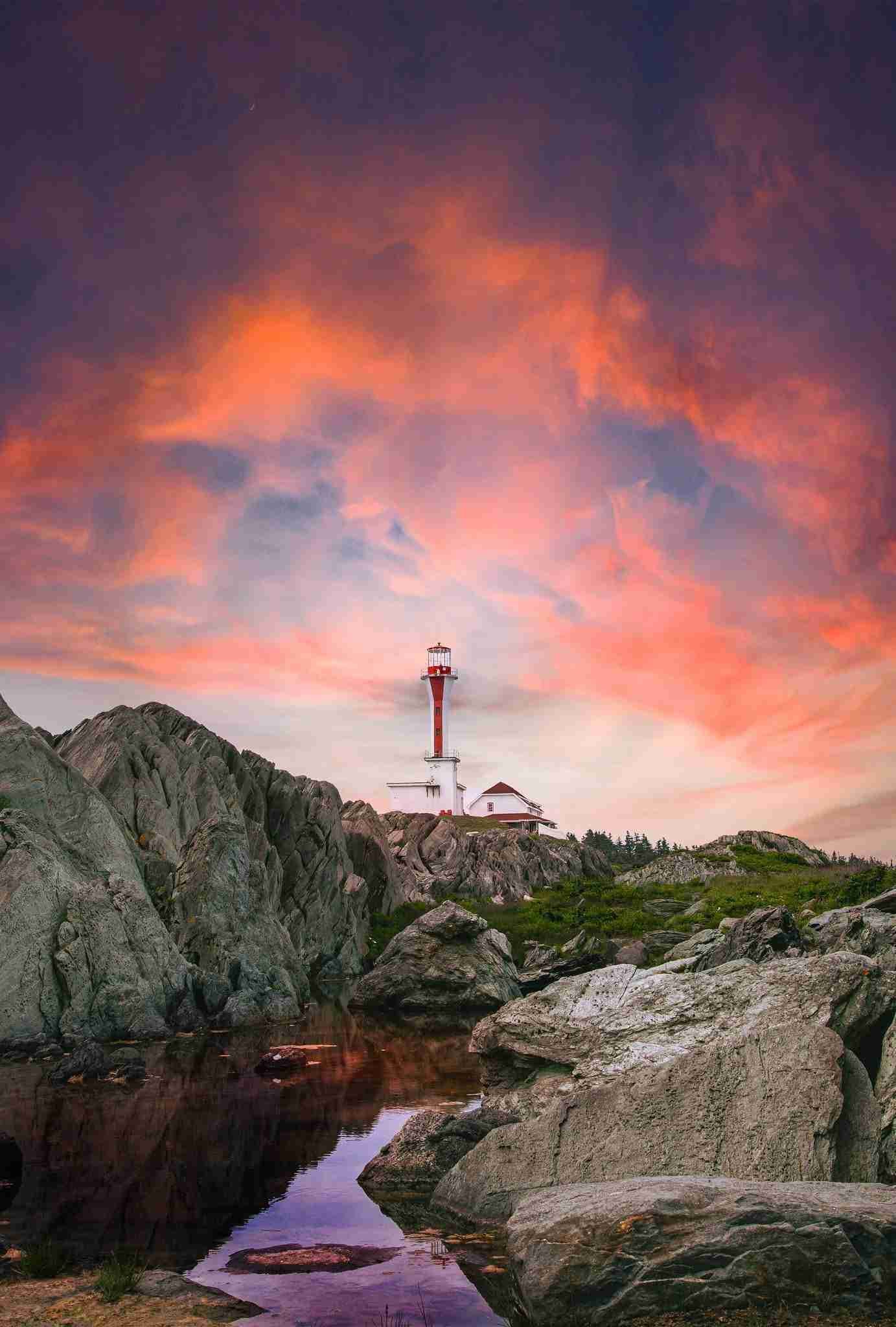
Cape Forchu Lighthouse: Capturing the Wild Beauty of Nova Scotia's Coast
Cape Forchu Lighthouse, located in Nova Scotia near the town of Yarmouth, is one of Canada's most striking coastal landmarks. Perched on a rugged headland surrounded by the Atlantic Ocean, this "apple-core" lighthouse is famed for its unique shape, dramatic seascapes, and ever-changing weather conditions that create stunning photographic opportunities. The surrounding rocky coastline, crashing waves, and vibrant sunsets make it a dream location for landscape and seascape photographers. Whether capturing long exposures of the ocean, wide-angle views of the lighthouse, or aerial perspectives, Cape Forchu offers endless inspiration.
Best Photography Opportunities
• Sunset and Sunrise over the Lighthouse
– The elevated position of Cape Forchu Lighthouse provides breathtaking views of the horizon, making it an ideal location for sunrise and sunset photography. The golden light enhances the red-and-white tower, while the sky transforms into a stunning palette of warm hues.
• Dramatic Seascapes and Long Exposures
– The rugged coastline and crashing waves offer incredible compositions, especially with a long exposure technique. Using a neutral density (ND) filter can smooth out the ocean's movement, creating a dreamy, mist-like effect around the rocks.
• Aerial and Drone Photography
– A drone perspective reveals the lighthouse's striking placement on the narrow headland, surrounded by endless ocean views. This angle captures the full scale of the landscape and highlights the contrast between the land and sea.
• Rock Formations and Coastal Textures
– The shoreline around Cape Forchu features jagged rock formations and tide pools that add depth and detail to compositions. Shooting close-up textures of the rock surfaces at golden hour enhances their patterns and colors.
• Milky Way and Night Photography
– With minimal light pollution, Cape Forchu is a fantastic spot for astrophotography. Capturing the Milky Way above the lighthouse or using the tower's beacon as a focal point creates stunning nightscape images.
• The Lighthouse in Foggy Conditions
– Fog often rolls in from the Atlantic, creating a moody and atmospheric setting. A soft, diffused light gives the lighthouse an eerie, mysterious quality, making for dramatic and cinematic shots.
Best Time to Visit
The best time to visit Cape Forchu Lighthouse for photography is during late spring to early fall when the weather is mild, and the skies are often clear for dramatic sunrises and sunsets. Summer offers beautiful golden light, while autumn brings rich coastal colors and unpredictable waves that enhance seascape shots. Winter can be challenging due to strong winds and cold temperatures, but stormy conditions create powerful and dramatic compositions. Night photography is best during new moon phases when the sky is darkest, offering spectacular views of the Milky Way.
How to Get There
Cape Forchu Lighthouse is located about 10 km (6 miles) southwest of Yarmouth, Nova Scotia. From Yarmouth, take Highway 304, which leads directly to the lighthouse parking area. The site is easily accessible by car, with plenty of parking available. A short, well-maintained trail from the parking lot leads to the lighthouse and surrounding coastal viewpoints. There is no entrance fee to visit, but donations are encouraged for maintenance of the site.
Exploring Cape Forchu Lighthouse and the Surrounding Area
Beyond the lighthouse itself, the surrounding landscape provides additional photographic opportunities. The "Leif Erikson Trail" winds through the rocky terrain, offering stunning perspectives of the coastline. Nearby, the Yarmouth waterfront is home to colorful fishing boats, historic buildings, and charming maritime scenery. Visitors can also explore the Acadian fishing villages along the coast, capturing traditional lobster traps, wharves, and rugged Atlantic views.
Nearby Photography Locations
– A picturesque harbor featuring fishing boats, historic architecture, and vibrant reflections on the water. The ever-changing tides create dynamic compositions, making it a great spot for sunrise or twilight photography. Capturing the glow of docked vessels at dusk adds depth and contrast to images.
– A scenic coastal area with sweeping views of the Atlantic, perfect for capturing minimalist seascapes. The isolated and tranquil setting offers unique perspectives of Nova Scotia's rugged coastline, especially during early morning light or stormy weather.
– A short drive from Cape Forchu, this charming Acadian fishing village offers opportunities to photograph traditional lobster traps, wooden piers, and fishing vessels. Early morning visits capture the harbor bathed in soft, golden light, while mist rising from the water adds a moody effect.
– This long sandy beach offers stunning ocean views, rolling dunes, and a perfect foreground for dramatic sunset compositions. During low tide, reflections in the wet sand create striking mirror-like effects, enhancing both wide and close-up compositions.
– A collection of small islands off the coast of Yarmouth, accessible by boat tours. These islands feature abandoned fishing shacks, seabirds, and pristine waters, making them an ideal location for wildlife and maritime photography. Sunset boat tours provide golden light over the water, offering unique opportunities for capturing the coastal environment.
Comments
Loading comments…