
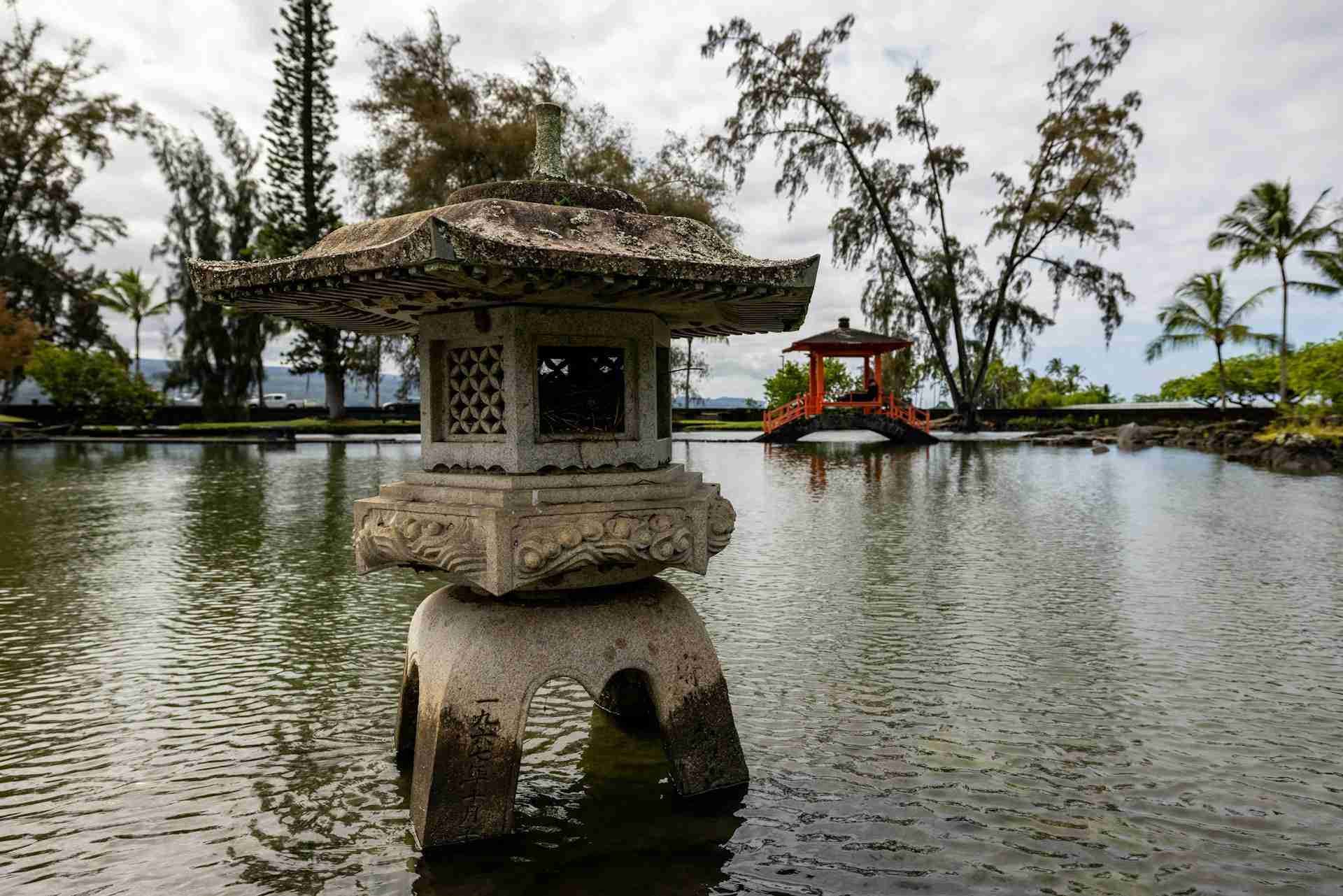
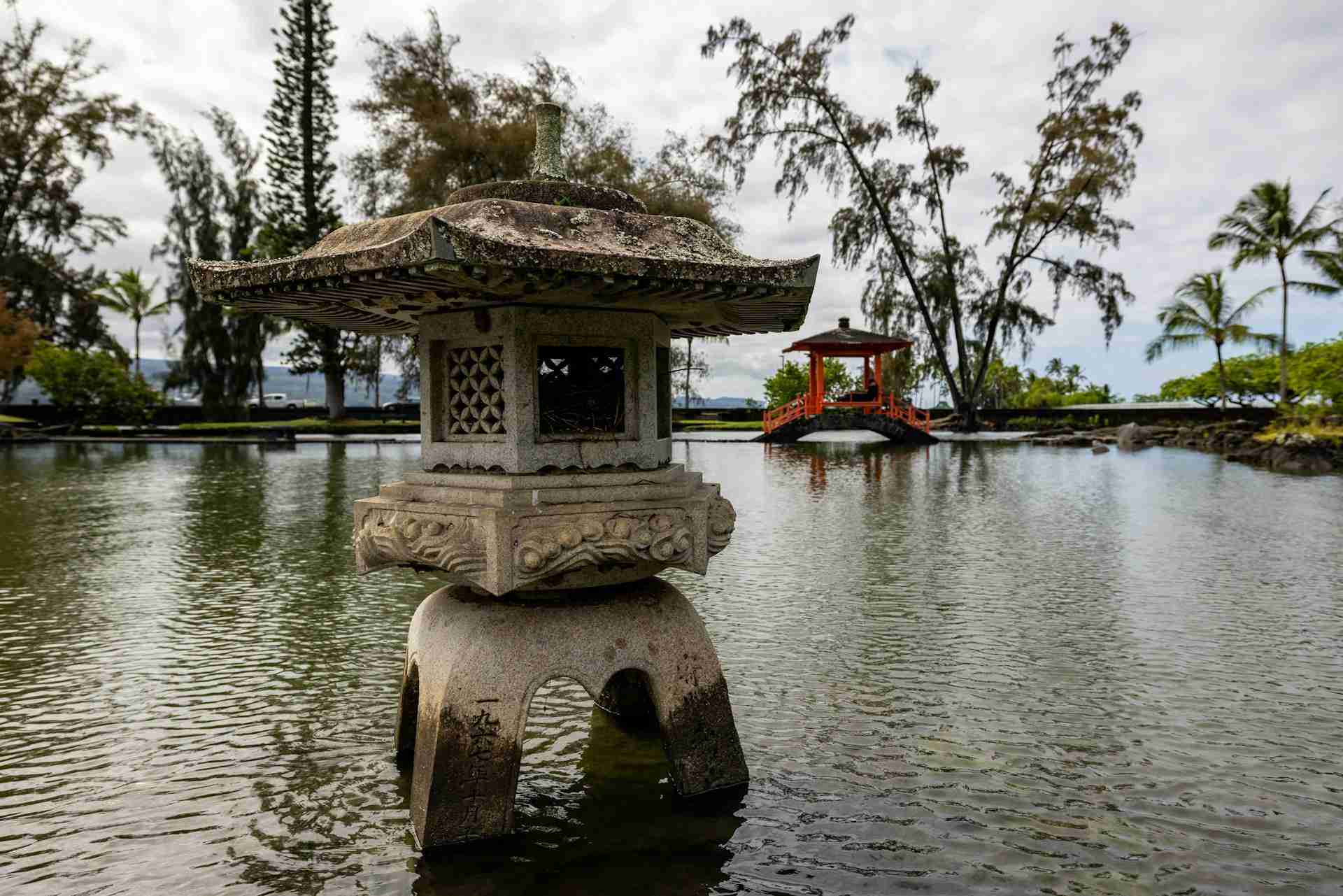
Liliʻuokalani Gardens, a 30-acre Japanese garden in the heart of Hilo, is a serene and photogenic space where cultural design meets island landscape. Dedicated in 1917 and named after Queen Liliʻuokalani, the last reigning monarch of Hawaii, the gardens combine traditional Japanese features such as stone lanterns, koi ponds, and arched bridges with the tropical backdrop of Hilo Bay. The result is a location filled with symmetry, reflection, and atmosphere, offering photographers opportunities for both wide landscape compositions and intimate detail studies. With its coastal views, changing skies, and seasonal blooms, the gardens encourage slow, thoughtful photography that balances design with natural light.
Best Photography Opportunities
• Arched Bridges and Stone Lanterns
The red arched bridges and traditional stone lanterns are signature features of the gardens. They create strong focal points that can be photographed alone or integrated into broader landscape scenes. A wide-angle lens captures the bridge's curve reflected in the water, while a standard zoom allows tighter compositions that emphasize detail and symmetry. Morning light often reflects softly on the ponds, while golden hour creates warm highlights on the structures. Including foliage or flowers in the foreground adds depth and contrast.
• Ponds and Reflections
The interconnected ponds throughout the gardens provide excellent opportunities for reflection photography. Calm mornings are best, when the water surface is undisturbed and the bridges, lanterns, and surrounding trees appear mirrored. A polarizing filter can be used selectively to either emphasize or reduce reflections depending on the desired effect. Long exposures with a tripod help smooth water surfaces when light breezes create ripples. These reflection shots are particularly effective when paired with cloud-filled skies or colorful plantings along the banks.
• Floral and Seasonal Detail
The gardens feature a rotating palette of tropical and ornamental plants, including hibiscus, orchids, and azaleas. These blooms provide bursts of color that contrast with the muted tones of stone and water. A macro lens or a telephoto zoom is ideal for isolating floral details. Early morning or overcast light helps maintain color saturation and avoid harsh highlights on petals. Including flowers as framing elements in broader compositions adds vibrancy and context to structural images.
• Views Toward Hilo Bay and Coconut Island
The eastern edge of the gardens opens onto Hilo Bay, with Coconut Island (Mokuola) visible across a footbridge. Wide compositions here combine water, island, and distant Mauna Kea or Mauna Loa when skies are clear. Shooting in the late afternoon emphasizes warm tones on the bay, while sunrise provides soft pastels over the ocean. A standard zoom lens balances both the gardens in the foreground and the bay beyond, creating layered compositions that situate the gardens within Hilo's larger landscape.
• Night and Blue Hour Ambience
Though less frequently photographed at night, the gardens can be highly atmospheric after sunset. Streetlamps and surrounding lights cast soft illumination on the ponds and bridges. Long exposures with a tripod allow for calm, reflective compositions with glowing highlights. Blue hour is particularly rewarding, with the sky's cool tones contrasting against the warm light of lanterns and lamps. Shooting at this time also minimizes crowds, providing clean, uninterrupted scenes.
Best Time to Visit
Liliʻuokalani Gardens can be photographed year-round, thanks to Hilo's consistently lush climate. Mornings are generally calmest, with softer light and fewer visitors. Early morning mist or light rain often adds texture and atmosphere to the gardens. Midday light can be harsh but works for detail shots in shaded areas beneath trees. Late afternoon and golden hour provide excellent light across the ponds, bridges, and bay.
Hilo is known for frequent rainfall, which can be used to advantage. Wet conditions enhance color saturation and create reflective surfaces on stone paths and bridges. Overcast skies provide even illumination for balanced exposures, particularly useful for photographing foliage, water, and stone elements. Seasonal events, such as cherry blossoms in spring or holiday lantern displays, add additional visual variety.
How to Get There
Liliʻuokalani Gardens is located along Banyan Drive in Hilo, Hawaii, directly on the waterfront of Hilo Bay. The gardens are easily reached by car, just minutes from downtown Hilo and less than 10 minutes from Hilo International Airport. Parking is available along Banyan Drive and adjacent lots. The gardens are free to enter and open daily from dawn to dusk, with footpaths and bridges accessible throughout the grounds.
The site is compact and level, making it easy to explore on foot while carrying photography equipment. Coconut Island, connected by a short pedestrian bridge, is directly adjacent and provides additional perspectives of both the gardens and Hilo Bay. Restrooms and picnic areas are available nearby, and the gardens are within walking distance of hotels and restaurants along Banyan Drive.
Recommended Photography Gear
A wide-angle lens is essential for capturing bridges, ponds, and broad landscape views. A standard zoom lens provides flexibility for mid-range compositions, while a macro lens is ideal for floral and texture studies. A telephoto lens can be useful for isolating views of Hilo Bay or focusing on Coconut Island from within the gardens.
A tripod is recommended for reflection shots, long exposures, and low-light conditions at sunrise or sunset. A circular polarizer helps manage glare on water and deepens foliage color. A rain cover or waterproof bag is strongly advised, given Hilo's frequent showers. Comfortable footwear is helpful for walking across damp grass and stone paths.
Nearby Photography Locations
Directly accessible from the gardens, this small island offers panoramic views of Hilo Bay, the gardens, and the distant mountains. It's particularly photogenic at sunrise and sunset.
Located just a few minutes inland, this wide waterfall framed by rainforest is one of Hilo's most famous natural attractions. Morning light often produces rainbows in the mist, offering dramatic compositions.
Further upstream from Rainbow Falls, this section of the Wailuku River features lava rock pools and cascades, best photographed after rainfall when water flow is strongest.
A short drive north along the coast, this lush garden features winding trails, rare plants, and ocean viewpoints. It's an excellent location for macro and flora photography.
For those seeking a completely different environment, Mauna Kea offers stark volcanic landscapes and one of the world's best stargazing locations. Sunrise and sunset here provide dramatic contrasts to the tropical gardens below.
Liliʻuokalani Gardens rewards careful observation and patience, offering a space where cultural design, natural beauty, and shifting island light converge. Whether focusing on reflective ponds, intricate stone lanterns, or the broader setting of Hilo Bay, the gardens provide endless opportunities for both creative expression and quiet photographic study.
Comments
Loading comments…