
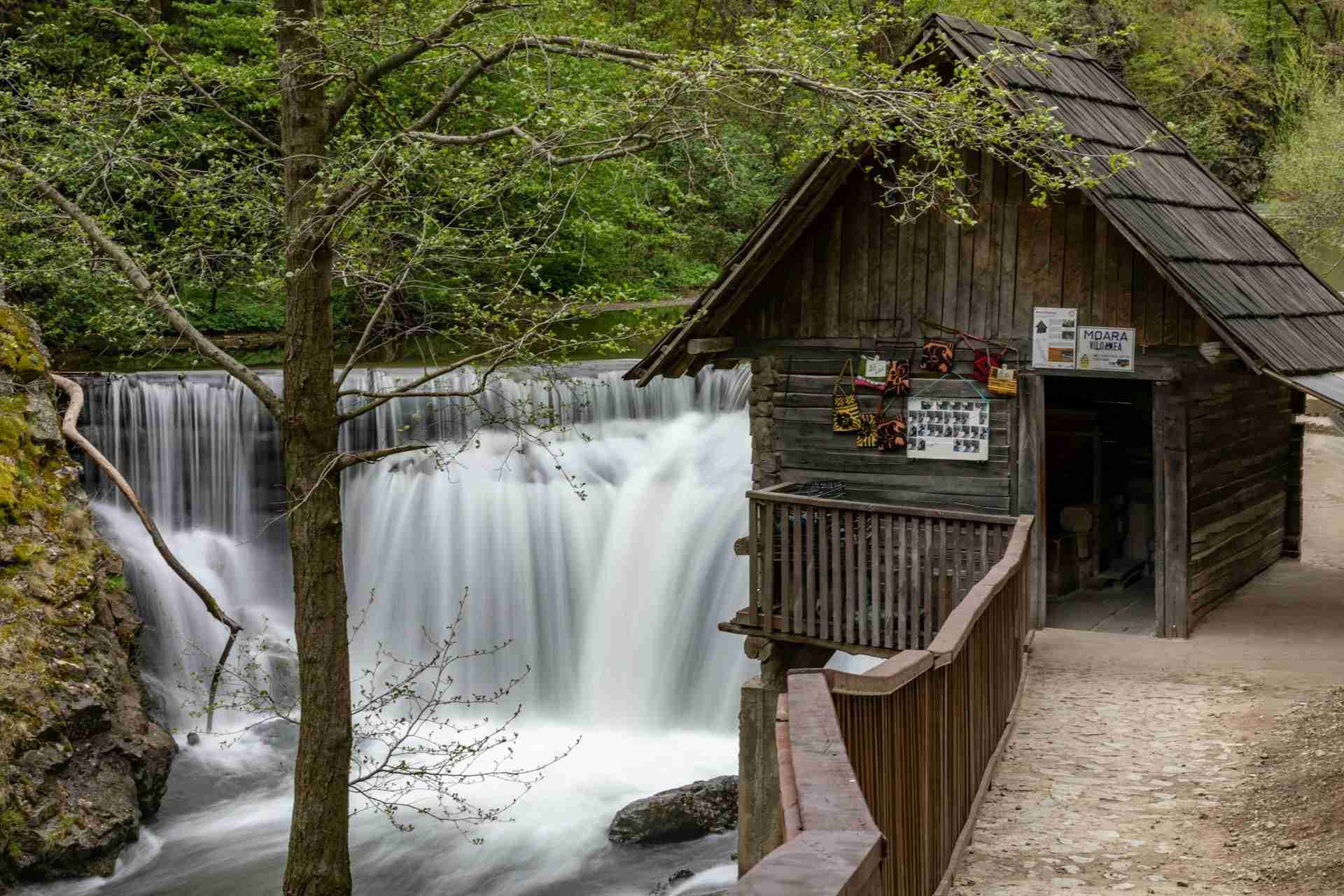
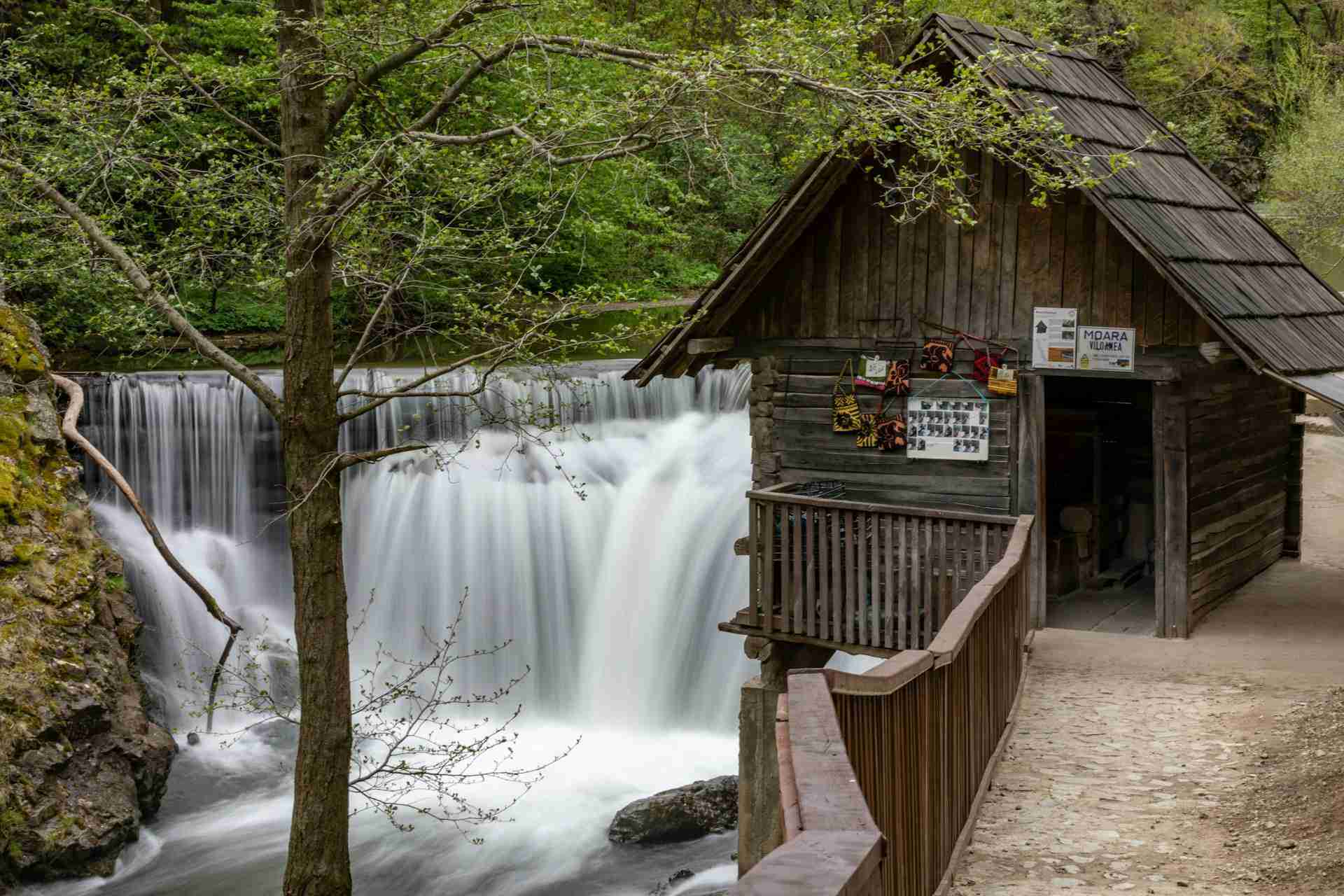
The watermills of Rudăria, found in the small village of Eftimie Murgu, offer a rare chance to photograph a living tradition set within a natural river gorge. Lined up like forgotten relics along the Rudăria River, these wooden mills blend craftsmanship and utility, still turning with the same water that has powered them for centuries. The area feels frozen in time, where every structure is part of a still-functioning system shaped by generations of hands. Surrounded by low hills and shaded forests, the mills invite a slower pace and reward a patient eye. This is a location where the movement of water, texture of wood, and quiet rhythm of rural life combine into a story waiting to be told through your lens.
Best Photography Opportunities
• Millhouse Craftsmanship
Each of the 22 watermills along the Rudăria River is a working structure built almost entirely from hand-hewn wood. The aged surfaces show a patchwork of repairs and reinforcements that speak to decades of use. Framing tight compositions on joinery, handmade shingles, and lichen-covered beams reveals the detail and durability of these humble structures. Shooting early in the morning allows side light to sculpt out these textures, making them stand apart from the darker riverbanks. Bring a macro lens if you want to capture the rivets, grains, and small metal fittings that hold each mill together.
• Long Exposure River Shots
The stream that powers the mills flows gently for much of the route, offering excellent chances for long exposure photography. Using a tripod and neutral density filter, you can slow the water down to a silky ribbon that threads between the structures. Reflections in the calm sections of the stream are especially clear in the early morning or after light rain. For best results, walk the path between mills to find where light breaks through the tree cover and hits the water at a shallow angle. These spots often give a glassy surface and soft lighting perfect for smooth, layered compositions.
• Drone Perspectives Over the Mills
The mills stretch along a narrow valley, which looks especially impressive from above. Flying a drone at low altitude in the early morning or just before sunset can reveal the S-curve of the river and how the mills align with its course. Overhead shots can also capture the dense vegetation around the structures, creating visual contrast between the ordered manmade elements and the tangled tree lines. Check local regulations before flying, and stay well above any footpaths or homes to respect the community. A wide-angle drone lens can help capture more of the valley without flying too high.
• Documenting Traditional Use
These mills are still used by locals, especially on weekends, to grind corn or wheat. If you arrive at the right time, you might be able to photograph the interior of a mill in action. The movement of belts and wooden gears inside offers opportunities for motion blur and storytelling shots. Be sure to ask for permission before shooting people, and try to keep your gear minimal inside the tighter interiors. Use a fast lens with good low-light performance, since most interiors are dim and lit only by narrow windows.
• Seasonal Landscape Context
While the mills are the main subject, the setting around them changes significantly with the seasons and can influence your framing. In spring, you will find wildflowers along the riverbank and bright greens that add life to wide shots. During fall, the mix of yellow and red leaves brings contrast to the dark wood of the mills. Summer offers clearer paths and stronger light for shadow play, while winter gives the chance to photograph frozen mill wheels and snow-covered rooftops. Adjust your shooting approach depending on the season to best match the story you want your images to tell.
Best Time to Visit
The most photographically productive seasons at Rudăria are spring and autumn. From late April to early June, the surrounding trees fill in with bright green growth and the river usually runs high from snowmelt, offering strong flow for long exposures. Early mornings during this time often come with ground fog and soft light that filters through the trees, ideal for moody compositions. Autumn, particularly mid to late October, brings a patchwork of orange and yellow that sets off the worn wood tones of the mills. Light during this season is lower and more golden throughout the day, extending your shooting window.
Summer can be bright and more crowded with visitors, but the clear paths and dry weather make it easier to move between mills and shoot interiors. Winter is more difficult due to road conditions and icy trails, but if you can make the trip safely, snow and frost transform the mills into a unique, more graphic subject. Light is weakest in winter months, so plan for longer exposures and bring gear that performs well in low light.
How to Get There
Rudăria's mills are located in the village of Eftimie Murgu, in Caraș-Severin County. The most direct route is from the town of Băile Herculane, located about 45 kilometers south. From there, take the DN57B to Bozovici, then follow DJ571F into the village. The roads are paved but narrow and winding in parts, especially near the village. Parking is available near the first few mills and is a convenient place to start your walk along the river. There are no entrance fees for visiting or photographing the mills, as they are part of a public open-air ethnographic site.
The mills are spaced along a two-kilometer walking route that follows the river. The path is mostly flat but uneven in places and can be muddy after rain. Wear shoes with good grip and consider packing a lightweight tripod. The area is rural, so facilities are limited. Bring water, snacks, and any lens-cleaning gear you might need, especially in misty or wet conditions.
Recommended Photography Gear
A full-frame camera with interchangeable lenses is ideal for capturing both wide environmental shots and detailed studies of the mill structures. Bring a wide-angle lens in the 16–35mm range for capturing the full scene and river context, especially when working in tighter areas. A 50mm or short telephoto lens is useful for isolating details and composing tighter scenes of craftsmanship or flowing water. A sturdy tripod is essential for long exposure work along the river, as well as for early morning or low-light situations inside the mills.
A circular polarizer can help control reflections on water surfaces and saturate greenery during spring and summer. If you are planning drone work, bring spare batteries and make sure your controller is GPS-synced before arriving, as signal in the valley can be unreliable. Weather-sealing is helpful in spring and autumn due to frequent dampness and mist. Lastly, pack an ND filter for smoothing the water's movement without overexposing in daylight conditions.
Nearby Photography Locations
This rugged natural park lies to the west and includes steep gorges, colorful pools, and hidden waterfalls like Beușnița and Ochiul Beiului. The limestone walls and clear water create striking compositions, especially when framed from the riverbed or during foggy mornings. The trail system offers access to several shooting spots, though some sections may be slick or muddy depending on recent weather.
This spa town combines historical architecture with dramatic cliffs and river views. Many buildings date back to the 19th century and show signs of age, making them compelling subjects for decay and texture studies. The surrounding Cerna Valley is also a great spot for sunrise and sunset photography, with high overlooks that give wide views of the river winding below.
• Semenic Mountains
North of Eftimie Murgu, the Semenic range features high meadows, dense spruce forests, and open ridgelines. The light here changes quickly with the altitude, and early morning shoots often bring cloud inversions in the valleys. Trails lead to panoramic views that contrast well with the more enclosed scenes at the mills, offering a different kind of subject for landscape work.
Although the original waterfall partially collapsed, the nearby river gorge and upper springs still provide natural photography opportunities. The mossy rocks and layered streambeds photograph well in soft light, and visiting during or after rain can add depth to the stream's appearance. Use a mid-telephoto lens to frame interesting sections of the cascade from a safe distance.
Located northeast of Eftimie Murgu, this pairing of gorge and waterfall gives you vertical rock walls, forest tunnels, and dynamic water movement in one location. The trail to Cascada Șușara is short and accessible, leading to a striking drop that photographs well both wide and tight. The gorge itself twists through tall cliffs with light filtering down from above, making timing and angle important for clean shots.
Rudăria rewards a patient photographer with scenes that feel both grounded and timeless. Whether you are focused on craft, landscape, or rural documentation, this location offers a rare blend of subject matter within walking distance. With careful planning and a flexible kit, the mills and surrounding river corridor offer enough variety to fill a full day with images that tell a deeply rooted story.
Comments
Loading comments…