
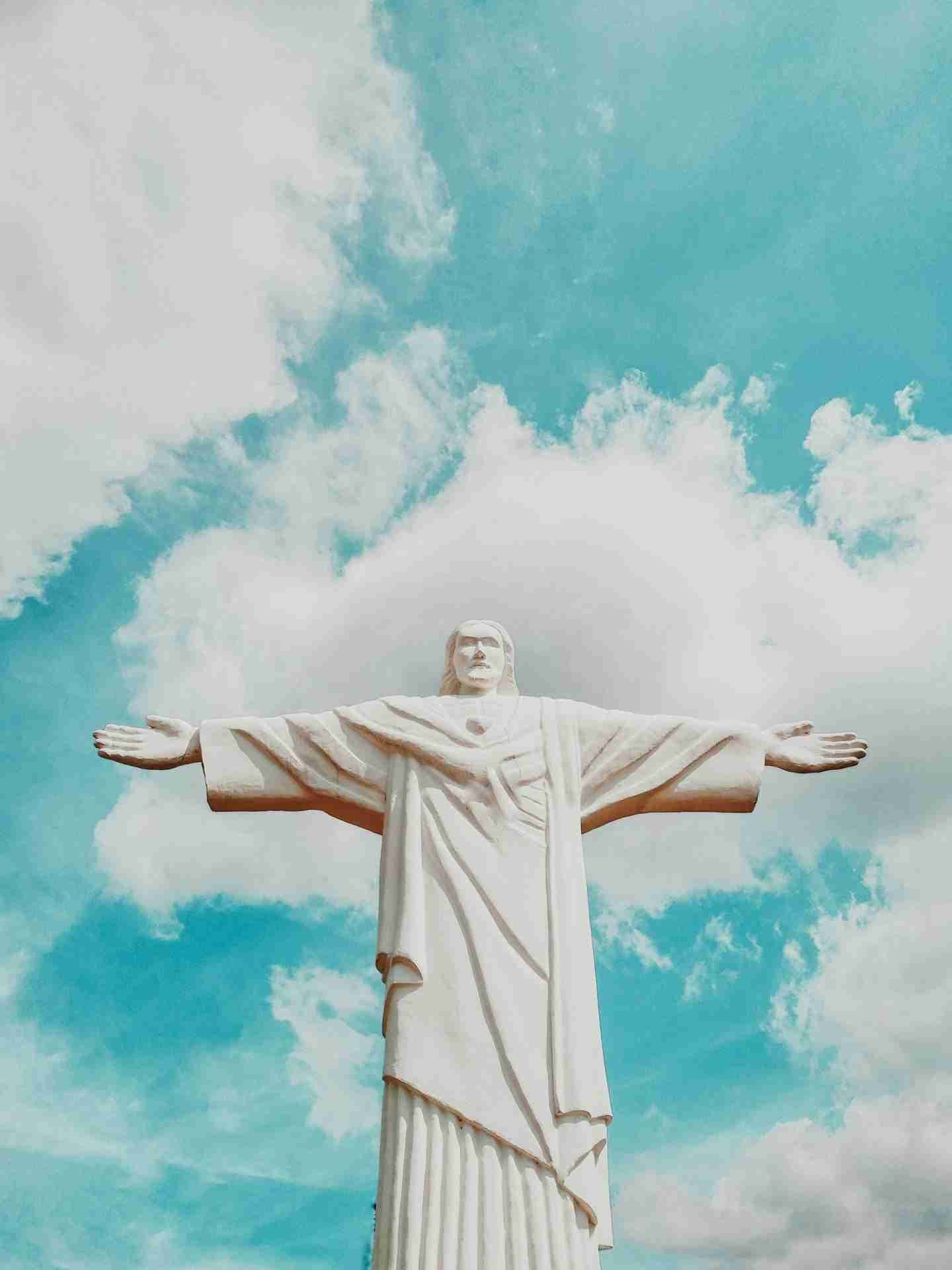
Standing high above the village of Klin in northern Slovakia, Ježiš Kristus – Rio de Klin is a towering statue of Christ modeled after the famous Christ the Redeemer in Rio de Janeiro. This Slovak version is smaller in scale but no less compelling in its landscape setting. Surrounded by forested hills, open pastures, and a wide horizon to the south, the statue becomes a focal point for minimalist compositions, seasonal contrast, and symbolic framing. For photographers, this location offers an uncommon mix of spiritual monument and natural serenity, making it ideal for wide-angle landscapes, atmospheric portraits, and sunrise or sunset studies.
Best Photography Opportunities
• Sunrise Silhouette from Below
Arriving before dawn allows you to position yourself on the slope below the statue, facing east where the sun rises behind the figure's outstretched arms. With the monument backlit, the silhouette becomes clean and bold against warming skies. Use a wide-angle lens to include the slope and any mist or low cloud that collects in the valley. The most effective images feature subtle gradients of pink, gold, and blue layered behind the statue. A tripod helps stabilize early exposures, especially in low light, and bracketed shots may be useful to retain detail in both sky and ground.
• Golden Hour Side Light on the Statue
The statue's west-facing front captures soft golden hour light in the late afternoon. This warm side lighting brings out the texture of the concrete and adds volume to the folds of the robes and face. Shooting from slightly below or at an angle avoids the typical frontal perspective and reveals more of the surrounding hillside. A 24 to 70 millimeter lens allows flexibility to capture both portrait-style details and broader context with depth and color. As the light fades, shadows from nearby trees and the base create contrast and separation from the background hills.
• Aerial Perspectives and Forest Context
Drone photography is especially effective here, given the monument's elevated setting and open surroundings. From the air, you can frame the statue within the rolling fields and patchwork of forest, showing its orientation toward the valley. Sunrise and sunset are equally strong from above, particularly when low clouds or mist drift across the frame. A high-altitude perspective reveals the monument's isolation, while lower passes can emphasize scale and terrain. Be mindful of privacy and regulations, but this is one of the few rural European monuments where aerial views significantly expand your photographic range.
• Snow and Seasonal Contrast
In winter, the statue is often surrounded by a light coating of snow that clings to the base and trees nearby. This seasonal change brings new compositional challenges and possibilities, particularly for monochrome or desaturated palettes. The gray concrete of the statue stands out crisply against white snow and a pale sky. Use a polarizer to control brightness and preserve texture in the highlights. From ground level, footprints in the snow can lead into the composition, adding narrative. Overcast skies are ideal for soft, shadowless images with a peaceful tone.
• Night Photography and Star Trails
Given the rural location and low light pollution, Ježiš Kristus – Rio de Klin can be photographed effectively at night. A tripod and remote shutter are essential, and a wide-aperture lens will help you gather enough light in exposures of twenty seconds or more. The statue can be subtly lit using natural moonlight or carefully placed LED light sources. For star trail photography, align the camera north and include the statue's profile in the foreground to balance movement and stillness. Cloudless winter nights offer the clearest conditions and often the most dramatic skies.
Best Time to Visit
The statue can be photographed year-round, but each season brings unique opportunities. Spring and autumn offer soft, diffused light and textured skies, with sunrise and sunset both aligning well with the statue's orientation. In spring, fresh greenery surrounds the hill and light fog is common, which adds softness to early morning images. Autumn brings warmer tones and angled light that lasts longer in the afternoons.
Summer days are longer, and golden hour stretches out during the evening, making sunset the most productive window. However, the location can attract more visitors in summer, so early mornings may be better for uninterrupted shooting. Clear nights during this season are ideal for astrophotography.
Winter transforms the site entirely, offering bright snow cover and quiet surroundings. Sunrise comes later and sunset earlier, giving more manageable light windows for those working with natural light. Because of the open exposure on the hilltop, wind chill can be significant, so dress accordingly and bring protective gear for your camera if you plan to shoot in snowfall or strong gusts.
How to Get There
Ježiš Kristus – Rio de Klin is located just above the village of Klin in the Orava region of northern Slovakia. From the regional center of Námestovo, the drive takes about ten minutes along local roads. Once in Klin, follow signs to the statue, which is accessible via a short uphill road that leads to a parking area.
From the parking area, it is a short and manageable walk on a paved path to reach the base of the monument. The area is open to the public at all times, with no entry fee. The hilltop is open and grassy, with a small terrace for viewing and seating. Tripods are permitted, and there is ample space to set up gear around the statue. The site is typically quiet, though local visitors may stop by for religious or sightseeing reasons during weekends.
Recommended Photography Gear
A full-frame camera with good dynamic range will help capture the wide variety of lighting conditions at the statue, from sunrise to night skies. A wide-angle lens in the 14 to 24 millimeter range is best for landscape context and framing the full statue with sky or foreground elements. A 24 to 70 millimeter zoom is useful for portrait-style shots and compositions that include parts of the hillside or nearby forest.
A sturdy tripod is essential for sunrise, sunset, and night shooting. A remote shutter or intervalometer is helpful for long exposures and star trails. A polarizing filter helps manage contrast in snow or sky, especially in bright conditions. Neutral density filters can be used creatively during sunrise and sunset to smooth clouds or capture longer exposures with human figures or moving fog.
For drone photographers, a model with a high-resolution camera and adjustable aperture will offer the best results in changing light. Make sure batteries are fully charged and bring spares, as rural conditions can be colder and more draining.
Protective clothing, gloves, and weather-resistant boots are recommended in colder seasons. The site is exposed to wind, so plan for changing weather and prepare your gear accordingly. A lens cloth or cleaning kit is useful for dealing with condensation or dust, especially during rapid temperature shifts at sunrise or sunset.
Nearby Photography Locations
Just northeast of Klin, this expansive body of water offers sunrise reflections, bird activity, and long horizon lines. Its calm surface is ideal for early morning shoots or long exposure work with passing clouds.
A short drive south, this dramatic cliff-top castle is one of Slovakia's most photogenic historical sites. Best photographed from across the Orava River, it offers both sweeping landscape scenes and medieval architectural details.
Accessible by boat from Námestovo, this small island in the Orava Reservoir features a baroque church and scenic tree cover. It is best photographed in soft morning light or mist.
• Zuberec and Western Tatras
To the west, the village of Zuberec sits at the foot of the Western Tatras, offering alpine views, mountain cabins, and trail access. It is a good contrast to the simplicity of Klin and the statue site.
• Bobrov Village Church and Fields
North of Klin, this lesser-known area features rural churches, layered farmland, and narrow paths that make for strong depth and vanishing point compositions, especially in early morning fog.
Photographing Ježiš Kristus – Rio de Klin invites a quiet, contemplative approach to landscape and monument work. Its presence is commanding yet peaceful, and its setting offers an ever-changing palette of light, mood, and scale. Whether you approach the site for its spiritual symbolism or its compositional potential, it remains one of Slovakia's most compelling rural photography locations.
Comments
Loading comments…