
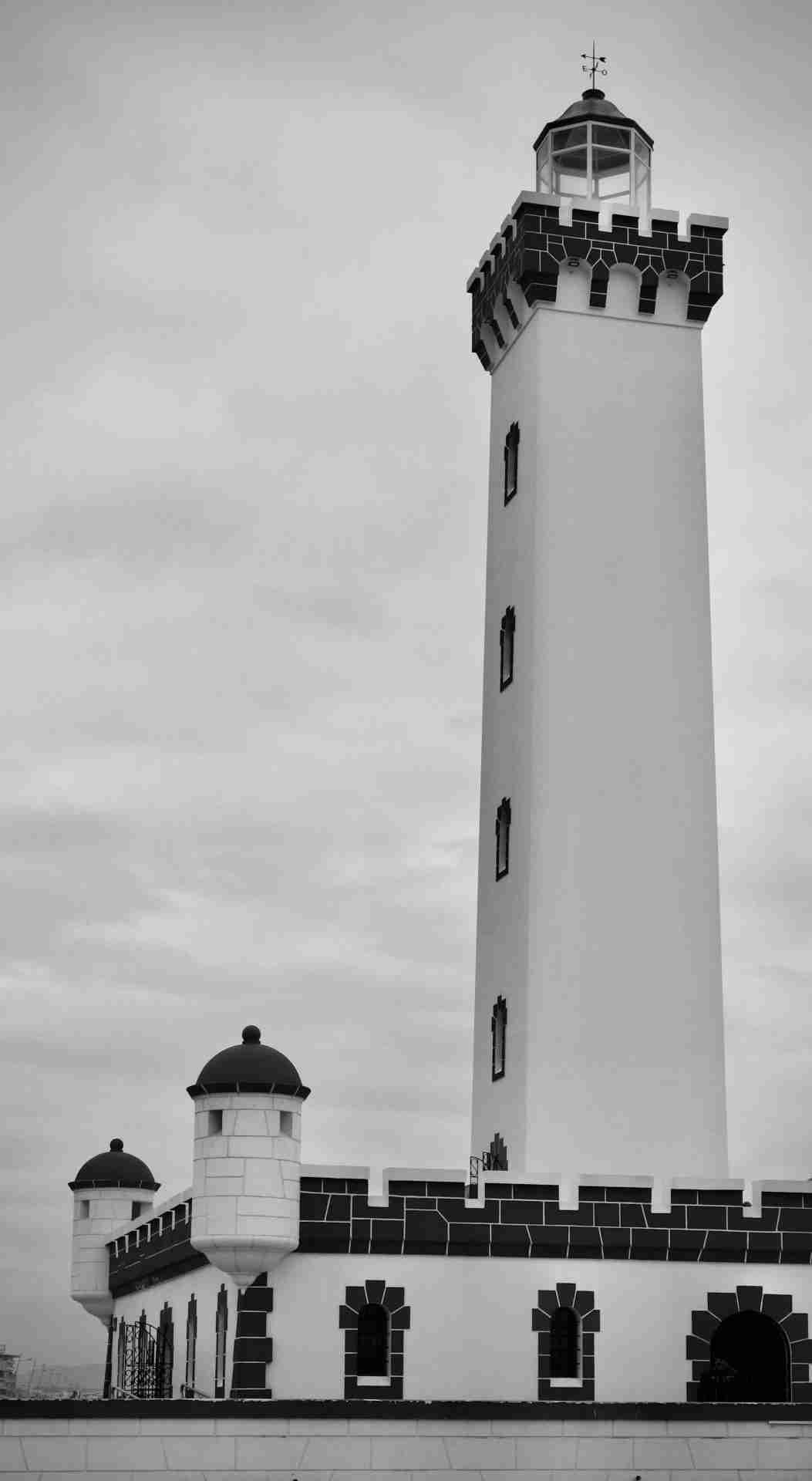
The Faro Monumental stands at the northern edge of Playa El Faro where the city of La Serena meets the Pacific Ocean. Rising above the sandy shoreline, the tall white tower with red stone accents has become one of the most recognizable landmarks along Chile's northern coast. The structure was built in the early twentieth century as both a lighthouse and a symbolic gateway marking the beginning of Avenida del Mar. Its bold architecture contrasts with the wide beach and open sky that surround it, creating a strong focal point for photographers working along the coast. Whether framed against storm clouds, warm sunset light, or the busy promenade nearby, the Faro Monumental offers a variety of compositions that combine architecture, ocean views, and the everyday rhythm of the shoreline.
Best Photography Opportunities
• Framing from the Beach – Photographing the lighthouse directly from the sandy shoreline provides one of the most balanced compositions of the structure. From the beach, the tall central tower rises clearly above the lower building and corner turrets, allowing the full shape of the monument to stand out against the sky. Moving slightly farther back on the sand helps include more foreground, which can give the lighthouse a stronger sense of scale within the coastal landscape. During cloudy conditions the sky often adds texture that contrasts nicely with the clean lines of the white tower. Photographers can also experiment with lower camera angles from the sand to emphasize the height of the structure against the open sky.
• Architectural Details of the Monument – The Faro Monumental features distinctive architectural elements that are worth photographing up close. Red stone patterns outline the windows, tower crown, and edges of the building, creating repeating shapes that work well for tighter compositions. The small corner towers and decorative trim provide additional subjects that highlight the craftsmanship of the structure. Photographers can walk around the base of the monument to find angles where the building's geometry becomes more prominent. Soft light during overcast weather helps reveal detail in the stonework while keeping contrast manageable.
• Above the Shoreline – Drone photography offers a perspective that reveals how the lighthouse sits between the city and the ocean. From above, the tower stands out clearly against the surrounding sand while Avenida del Mar stretches south along the coastline. Aerial images can capture the lighthouse with the beach extending in both directions, creating a strong sense of place within the larger coastal setting. Flying slightly offshore allows photographers to frame the monument with the ocean in the foreground and the city behind it. Always check local regulations and maintain safe flying practices when operating a drone near public areas and coastal winds.
• Sunset Silhouettes – The wide beach in front of the monument offers a strong location for photographing the lighthouse during sunset. As the sun lowers over the Pacific, warm light spreads across the sky and creates dramatic silhouettes of the tower and surrounding turrets. Photographers can position the lighthouse slightly off center in the frame to allow the sky and ocean to fill the remaining space. People walking along the beach sometimes pass through the scene and can add scale to the composition. Waiting a few minutes after the sun drops below the horizon often produces deeper colors that enrich the sky behind the lighthouse.
• Night Photography – After sunset the lighthouse becomes illuminated, transforming the scene into a completely different photographic subject. Artificial lighting highlights the tower and architectural details while the surrounding promenade begins to glow with streetlights and passing vehicles. Long exposure photography can capture the contrast between the illuminated structure and the darker ocean behind it. The surrounding beachfront walkway also creates opportunities for including light trails from cars along Avenida del Mar. Working with a tripod is essential here to maintain sharp images during longer exposures.
Best Time to Visit
Sunset is typically the most rewarding time to photograph the Faro Monumental because the monument faces the Pacific Ocean. As the sun lowers toward the horizon, warm light spreads across the sky and reflects across the water and beach. Even when the sun disappears behind clouds, the changing colors of the sky often provide dramatic backgrounds behind the lighthouse.
Spring and summer evenings tend to bring more activity along the beachfront promenade, which can add life and scale to photographs. Autumn and winter may offer quieter conditions and occasional dramatic cloud formations moving across the ocean. Overcast days can also work well for architectural photography since softer light helps preserve detail in the white surfaces of the tower. Early morning visits can provide calmer scenes along the beach before the area becomes busier later in the day.
How to Get There
The Faro Monumental is located at the northern end of Avenida del Mar in the city of La Serena in northern Chile. The lighthouse sits directly beside Playa El Faro and marks the beginning of the long coastal road that follows the shoreline south through the city. Visitors arriving by car can follow Avenida del Mar north until reaching the monument, where parking areas are available along nearby streets and beachfront lots. The site is easy to access on foot from the surrounding promenade, and several walking paths lead directly to the base of the structure. Because the lighthouse stands within a public beach area, photographers can move freely around the monument and along the sand to find different angles.
Access to the monument and beach is generally free. The area is well known among locals and visitors, so it can become busy during peak tourist seasons and summer evenings. Photographers who prefer quieter conditions often find early morning or weekday visits more comfortable for setting up equipment and exploring different compositions.
Recommended Photography Gear
Photographing the Faro Monumental benefits from a combination of lenses that allow both wide architectural views and tighter detail shots. A wide lens is useful for capturing the entire structure along with the surrounding beach and sky. A moderate zoom lens can help isolate architectural details such as the tower crown, windows, and decorative stonework.
A tripod is highly recommended for sunset and night photography when longer exposures help capture the changing light and illuminated structure. A circular polarizing filter can help reduce glare from the sand and deepen the color of the sky during daytime shooting. Neutral density filters may also be useful for photographers who want to smooth the motion of waves along the shoreline during brighter conditions. Because coastal winds and blowing sand are common along the beach, carrying a lens cloth and protective gear for equipment can help keep lenses clean during longer sessions.
Nearby Photography Locations
• Avenida del Mar Coastal Promenade runs along the coastline south of the lighthouse and provides continuous views of the Pacific Ocean. The long road and beachfront walkway offer opportunities to photograph the coastline with restaurants, palm trees, and ocean views stretching into the distance. Sunset often creates strong colors across the water that reflect along the shoreline.
is one of the most active beaches in La Serena and sits farther south along the coast. The beach offers wide sandy areas where photographers can capture waves, surfers, and changing sky conditions. The open shoreline provides plenty of room for experimenting with long exposure seascapes.
• La Serena Historic Center contains colonial era churches, stone streets, and traditional plazas. Photographers can explore architectural scenes that contrast with the coastal landscapes nearby. The area is particularly interesting in early evening when lights begin to illuminate the historic buildings.
lies inland from La Serena and offers a completely different landscape of mountains, vineyards, and small rural villages. The valley is also known for clear night skies that make it an excellent location for astrophotography. Photographers visiting during the evening can capture stars above the quiet mountain landscape.
• Coquimbo Harbor and La Cruz del Tercer Milenio offers a busy harbor with fishing boats, docks, and coastal views. Above the city rises the Cruz del Tercer Milenio, a massive hilltop cross that provides panoramic views across the coastline. The elevated viewpoint is especially appealing during sunset when the city and ocean begin to glow under changing light.
Comments
Loading comments…