
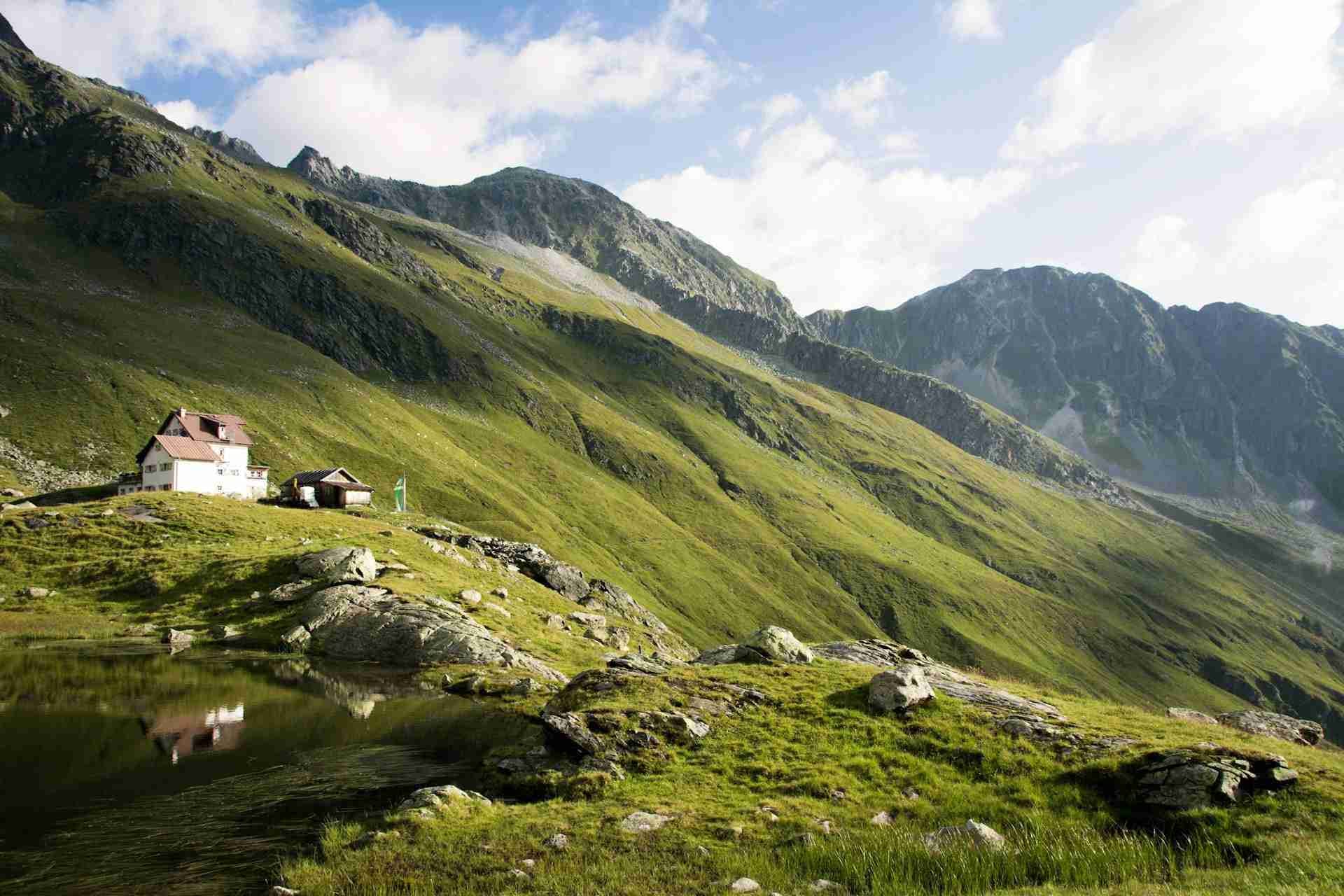
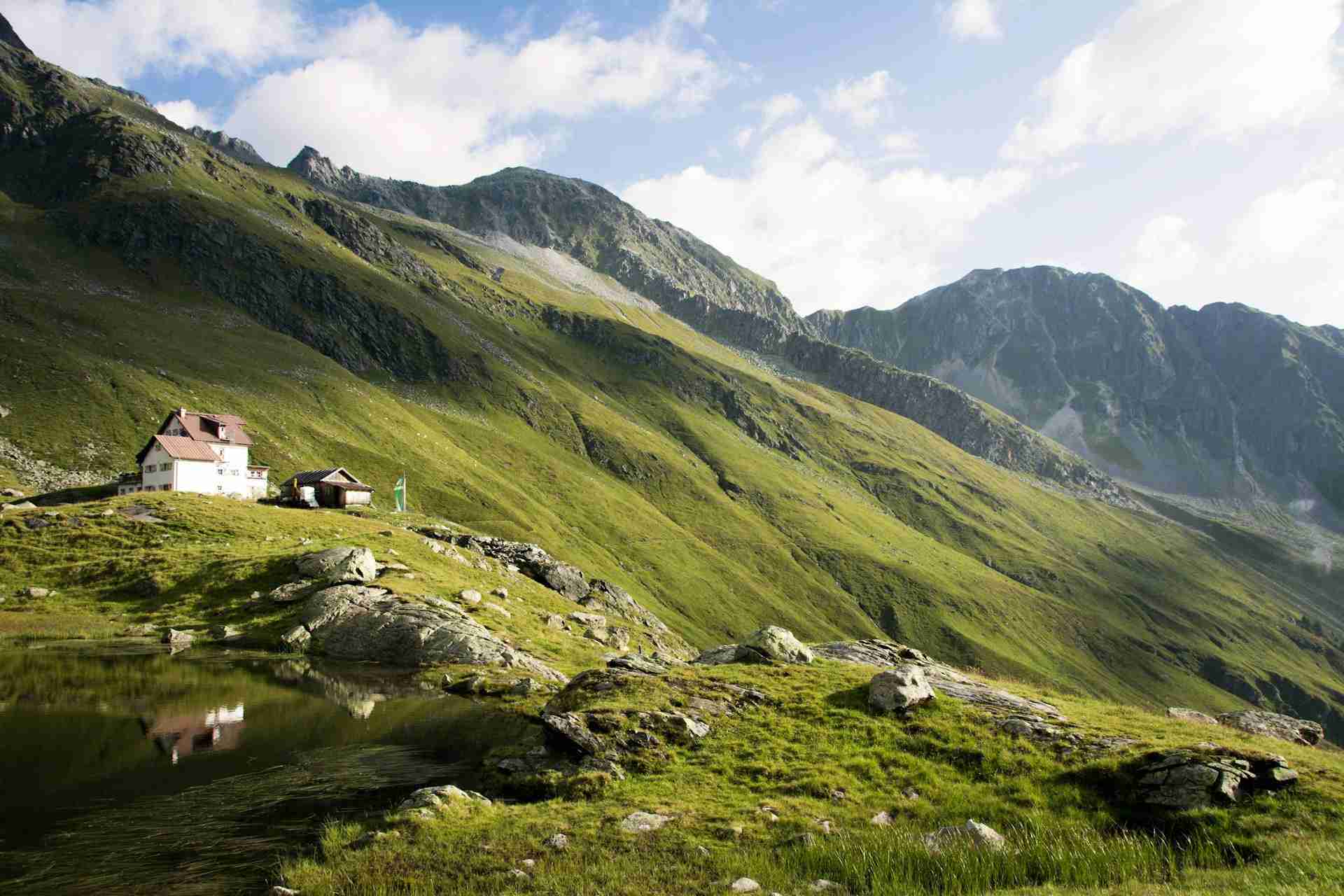
Perched at 2,286 meters in the heart of Austria's Stubai Alps, the Neue Regensburger Hütte offers a photogenic blend of high alpine terrain, glacial valleys, and human-scale mountain refuge. Located above the village of Neustift im Stubaital in Tyrol, this traditional Austrian hut serves as a waypoint for trekkers and mountaineers exploring the Stubai High Trail. Photographers will find the surrounding landscape remarkably open and varied, with wide rock-strewn meadows, cascading streams, steep flanks of granite, and jagged peaks forming a dramatic backdrop. The hut itself adds an inviting element of warmth and scale, positioned above the valley floor and surrounded by timeless mountain textures. Whether you're capturing first light on the cliffs or twilight settling over the basin, Neue Regensburger Hütte provides a powerful setting to explore mountain photography at both landscape and intimate levels.
Best Photography Opportunities
• Golden Hour at the Hut with Mountain Backdrop
The hut is beautifully situated with expansive views in every direction, but it shines most in early morning and late evening when warm light spills across the surrounding ridges. During golden hour, the granite peaks behind the hut take on rich orange and pink tones, contrasting with the cool greens and greys of the terrain below. Framing the hut within this scene creates a strong image of scale, where architecture meets wilderness. A wide-angle lens captures the full basin with the hut as the anchor, while a mid-range zoom helps isolate the light on individual peaks. Waiting for a lone hiker or animal to appear in the frame can introduce a dynamic human element without overpowering the landscape.
• Streamside Foregrounds and Motion in the Valley Basin
Several alpine streams wind through the valley just below the hut, cutting through grass, stone, and patches of wildflowers in the warmer months. These streams offer the perfect foreground for layered compositions that lead the eye from moving water toward the peaks beyond. Use a tripod and neutral density filter to blur the water into soft lines that contrast with the jagged rock and stillness of the mountain. Early morning often brings light mist and saturated color, making this area ideal for slow, intentional landscape work.
• High Ridge Views from the Trail Toward Grawagrubennieder
The trail ascending beyond the hut toward the Grawagrubennieder pass provides elevated vantage points looking back toward the hut and down the Stubai valley. From here, you can photograph the hut nestled in its bowl-like setting, surrounded by cliffs, boulders, and open sky. The scene is especially photogenic with side light or partial cloud cover that casts dappled shadows across the basin. Shooting from above offers perspective and context, showing how the structure sits within the terrain. This is an excellent location for wide panoramic frames or telephoto work that compresses the hut and peaks into layered compositions.
• Detail Studies in Rock, Lichen, and Light
The terrain surrounding the hut is rich in texture. Cracked boulders covered in lichen, stacked cairns, and alpine grass offer abundant material for abstract or intimate landscape photography. On cloudy days or during transitional light, these scenes work well for close-up shots with shallow depth of field. You can explore repeating patterns, subtle color shifts, or the interplay between living and non-living elements. These types of images offer visual variety and help tell a more complete story of the location beyond grand vistas.
• Night Photography Under Alpine Skies
With minimal light pollution and wide-open views, the area around Neue Regensburger Hütte is ideal for night photography. On clear nights, the Milky Way arcs over the peaks, and the hut's warm window light becomes a focal point in an otherwise still and shadowed landscape. A fast wide-angle lens and a sturdy tripod are essential here. Position yourself slightly above or beside the hut to capture both the structure and the stars above. Cold nights can lead to lens fog or frost, so use lens heaters or manual defogging techniques to keep your optics clear during long exposures.
Best Time to Visit
The primary photography season around Neue Regensburger Hütte runs from late June through late September, which coincides with the hut's official opening period. In early summer, snow patches still linger on the higher trails and meltwater feeds active streams and small pools. July and August bring the most stable weather and clear skies, though the midday light can be harsh and the trails busier. Sunrise and sunset remain the most rewarding windows during this time. September is particularly good for photography, with quieter trails, cooler air, and a gradual shift in the landscape's palette from summer greens to autumn browns and greys. Early mornings often bring valley fog and calm conditions perfect for reflection and low contrast scenes. Weather in the Stubai Alps changes quickly, so checking forecasts and being prepared for wind or sudden storms is essential. Photographers aiming for night or sunrise work should stay overnight at the hut and plan compositions in advance, as navigating the terrain in darkness requires care and familiarity with the location.
How to Get There
Neue Regensburger Hütte is accessible via a well-marked hiking trail starting from the Oberissalm car park, located at the end of the Oberbergtal, a side valley branching off from Neustift im Stubaital. From Innsbruck, the drive to Neustift takes about 45 minutes. Follow signs to Oberbergtal and continue to the designated parking area near Oberissalm. From there, the trail to the hut climbs approximately 800 meters in elevation over a distance of around 5.5 kilometers. The hike typically takes between two and a half and three hours, depending on fitness level and load. The route passes through forest, pastures, and scree fields, with several scenic spots along the way. There is no fee to hike the trail, though overnight stays at the hut require reservations and may involve a modest charge. Tripods are allowed both outside and on the terrace of the hut, and there are no restrictions on casual photography. The trail is accessible without special equipment during the summer season, but sturdy boots and layers are necessary for navigating both midday heat and chilly mornings or evenings. The area around the hut is open and easy to explore once you arrive, with plenty of space for setting up gear and waiting for the right light.
Recommended Photography Gear
Given the hut's elevation and remote setting, a compact but capable kit is the best approach for photography here. A wide-angle lens, such as a 16 to 35 millimeter, is critical for capturing the full alpine scene including sky, ridges, and foreground terrain. A mid-range zoom between 24 and 70 millimeters provides versatility for shooting the hut, surrounding trails, and layered peaks. A lightweight but sturdy tripod is essential for long exposures, night photography, and low-light moments around dawn and dusk. A full set of neutral density filters, especially a six-stop and ten-stop, is useful for slowing water or managing high contrast between light and shadow. Graduated filters or bracketing techniques help control exposure during high-contrast sunsets and sunrises. A circular polarizer can enhance clarity in the sky and reduce glare from wet rocks and stream surfaces. Lens wipes and a microfiber cloth are essential for maintaining optics in damp or misty conditions. Extra batteries and memory cards should be carried due to the remote location, and a headlamp is crucial for early morning or late evening work. Weather protection for both your gear and yourself is a must, as wind, cold, and sudden precipitation are common in alpine environments. For those interested in astrophotography, bring a fast wide lens, star tracker if desired, and a remote shutter release to maximize sharpness and exposure control.
Nearby Photography Locations
This high pass above the hut offers exceptional views of both the Regensburger basin and the neighboring glaciated peaks. The ridgeline is especially photogenic at sunrise, when side light reveals the texture of the rock and casts long shadows across the alpine landscape.
• Oberbergtal Valley
The approach valley below the hut is filled with streams, forest trails, and occasional farm buildings that provide excellent foregrounds for mountain compositions. Early morning fog often settles here, creating soft transitions between trees and ridgelines in wide or compressed scenes.
Located in the neighboring valley, these two alpine huts are surrounded by waterfalls, grassy basins, and glacier-fed lakes. The Sulzenau area is ideal for day trips from Neustift or as part of a longer multi-day trek. Reflections, side light, and cloud movement all work well here.
• Langental Ridge Viewpoints
A series of elevated overlooks accessed from nearby trails provides long views back toward the Stubaital and its surrounding peaks. These spots are ideal for sunset photography when the light falls across the valley and silhouettes the distant ridgelines in layered compositions.
• Innsbrucker Hütte Region
A longer extension from the Stubai High Trail, this area offers more rugged terrain and fewer visitors, making it suitable for photographers seeking isolation and dramatic terrain. The path to the hut passes through scree fields, tarns, and exposed rock that catch strong light late in the day.
Neue Regensburger Hütte is more than a waypoint in the Stubai Alps. It is a location where light, terrain, and silence converge in scenes that invite both wide landscape storytelling and quiet detail study. For photographers who are willing to climb, wait, and observe, this high alpine refuge offers deep rewards in every direction.
Comments
Loading comments…