Montreal rewards photographers like few cities in North America. Seventeenth-century streets sit beneath a modern skyline, a forested mountain rises from the city centre, and the leftover architecture of Expo 67 delivers subjects you simply will not find anywhere else. Architecture, street, cityscape, or nature, the island packs all of it into a compact and walkable core.
Here are our ten favourite photo spots in Montreal, most of which we have photographed ourselves, with practical tips on where to stand, when to go, and what gear earns its place in your bag. Every location below, along with hundreds more across the city, is mapped on the free PIXEO photo map.
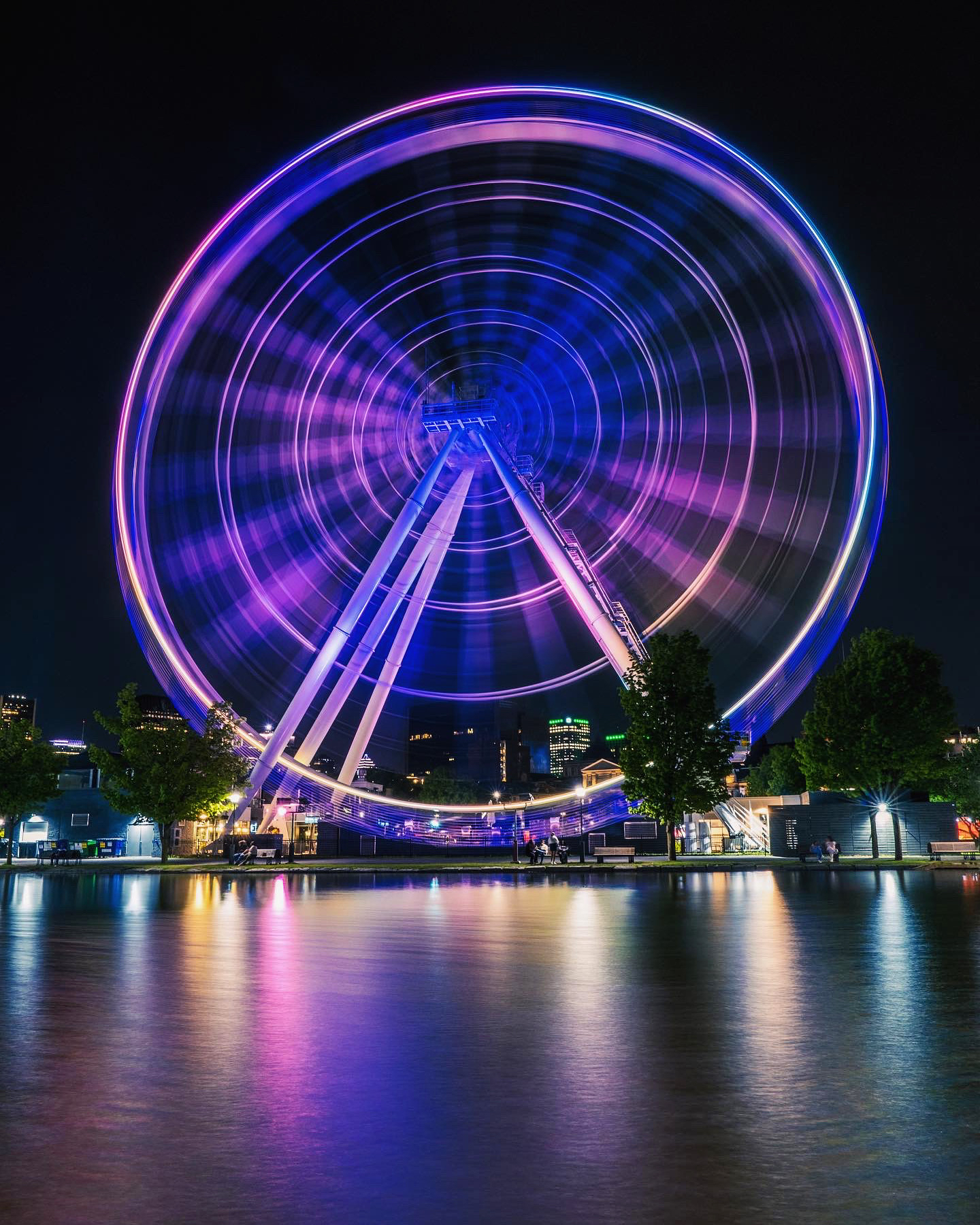
Canada's tallest Ferris wheel rises 60 metres over the Old Port, and it has earned its place on Montreal's skyline since opening in 2017. By day it frames views of the Saint Lawrence and the old city; after dark its LED lighting cycles through colour sequences that turn the whole Bonsecours Basin into a reflecting pool.
📷 Photo Tip
The classic shot is from across the Bonsecours Basin at blue hour, where the wheel and its reflection fill the frame together. A long exposure of 10 to 30 seconds blurs the cabins into clean rings of light while the water smooths to glass. In winter, ice in the basin breaks the reflection into fragments and adds texture the summer shot never has. Bring a tripod; railings around the basin work in a pinch, but the best angles need a low, stable setup.
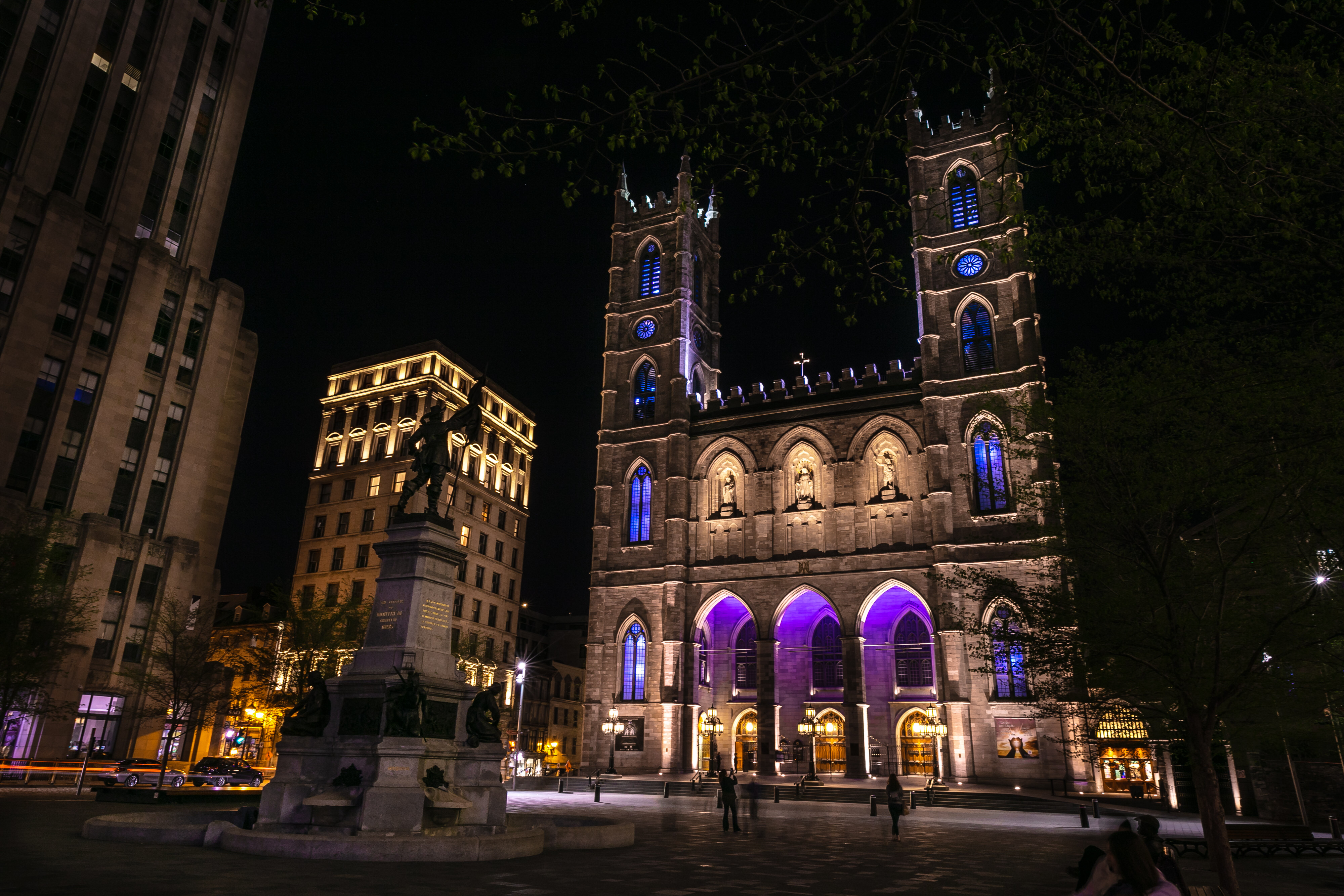
Place d'Armes is the rare square where you can photograph four centuries of architecture without moving your feet. The Gothic Revival towers of Notre-Dame Basilica anchor the south side, faced by the columned Bank of Montreal head office from 1847, the red sandstone New York Life Building (the city's first skyscraper), and the Art Deco Aldred Building, with the Maisonneuve Monument holding the centre of the frame. It is the heart of Old Montreal and the natural starting point for a shoot in the old city.
📷 Photo Tip
Come at first light, when the low sun rakes across the stone facades and the square is empty enough for clean compositions. A wide angle from the north side lets you set the monument against the basilica; a short telephoto isolates the Aldred's stepped crown against the sky. The square works again at night, when the basilica facade is lit, and the surrounding side streets hide smaller finds, so leave time to wander before the crowds arrive.
📍 Explore on PIXEO Map →
3. Notre-Dame Basilica
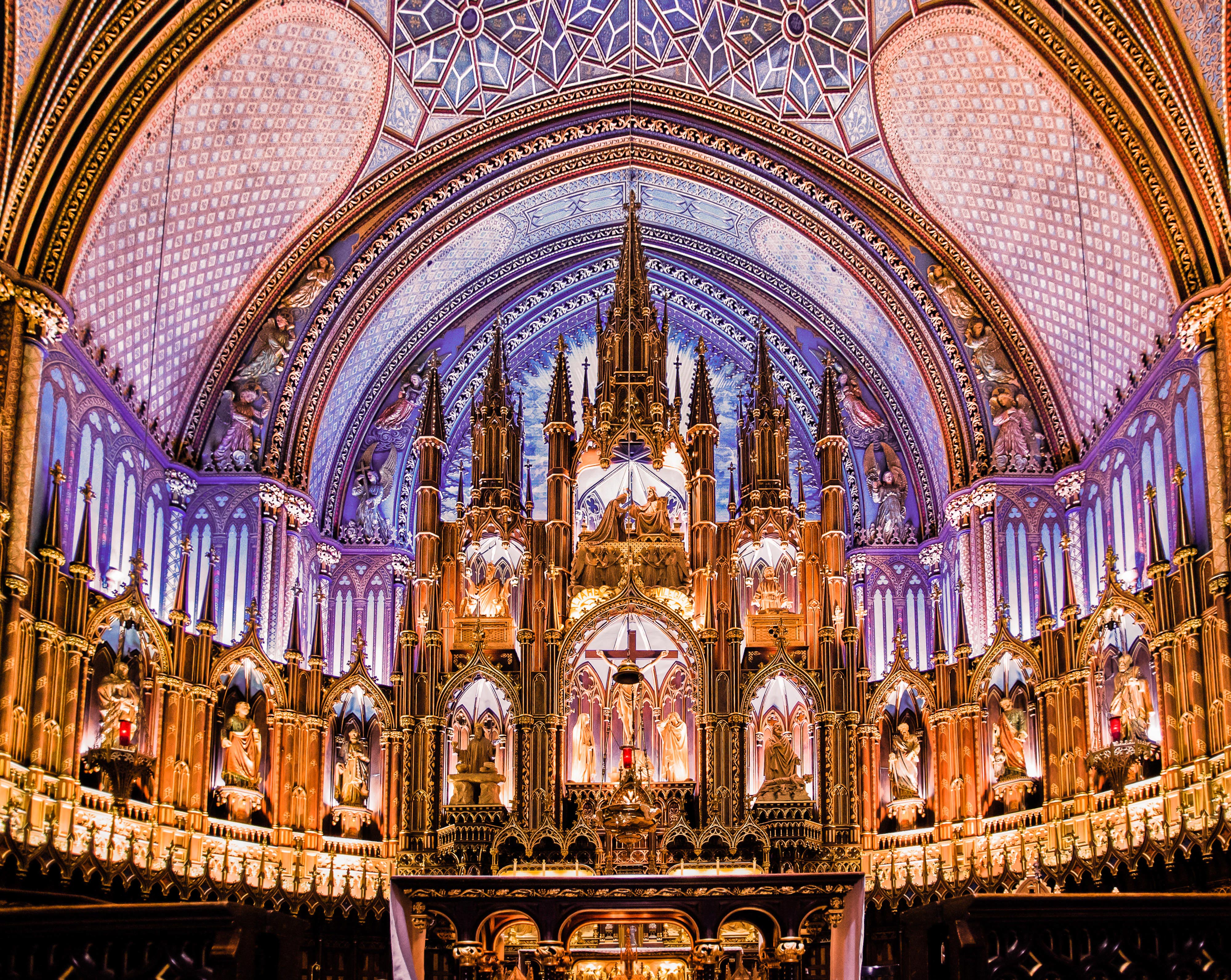
The stunning Interior of the Notre-Dame Basilica - Photo by Shawn M. Kent
Step inside Notre-Dame and the reason it anchors every Montreal photography list is immediate: a deep blue vaulted ceiling studded with gold stars, backlit altarpiece, and carved wood in every direction. The Gothic Revival interior is among the most photographed in North America, and it still surprises in person. Most evenings the AURA light show transforms the nave into something else entirely, projection-mapped colour washing over the entire sanctuary.
📷 Photo Tip
Interior shooting is handheld only, so bring your fastest wide lens and lean on modern high-ISO performance; brace against a pew for the ceiling shot. Mid-morning sun through the stained glass throws colour across the stone, and the blue ceiling reads best when you expose for the highlights and let the aisles fall dark. Outside, shoot the facade at dusk from Place d'Armes when the floodlights come on and the sky still holds colour. Check the basilica's rules before shooting during services, and note that entry is ticketed.
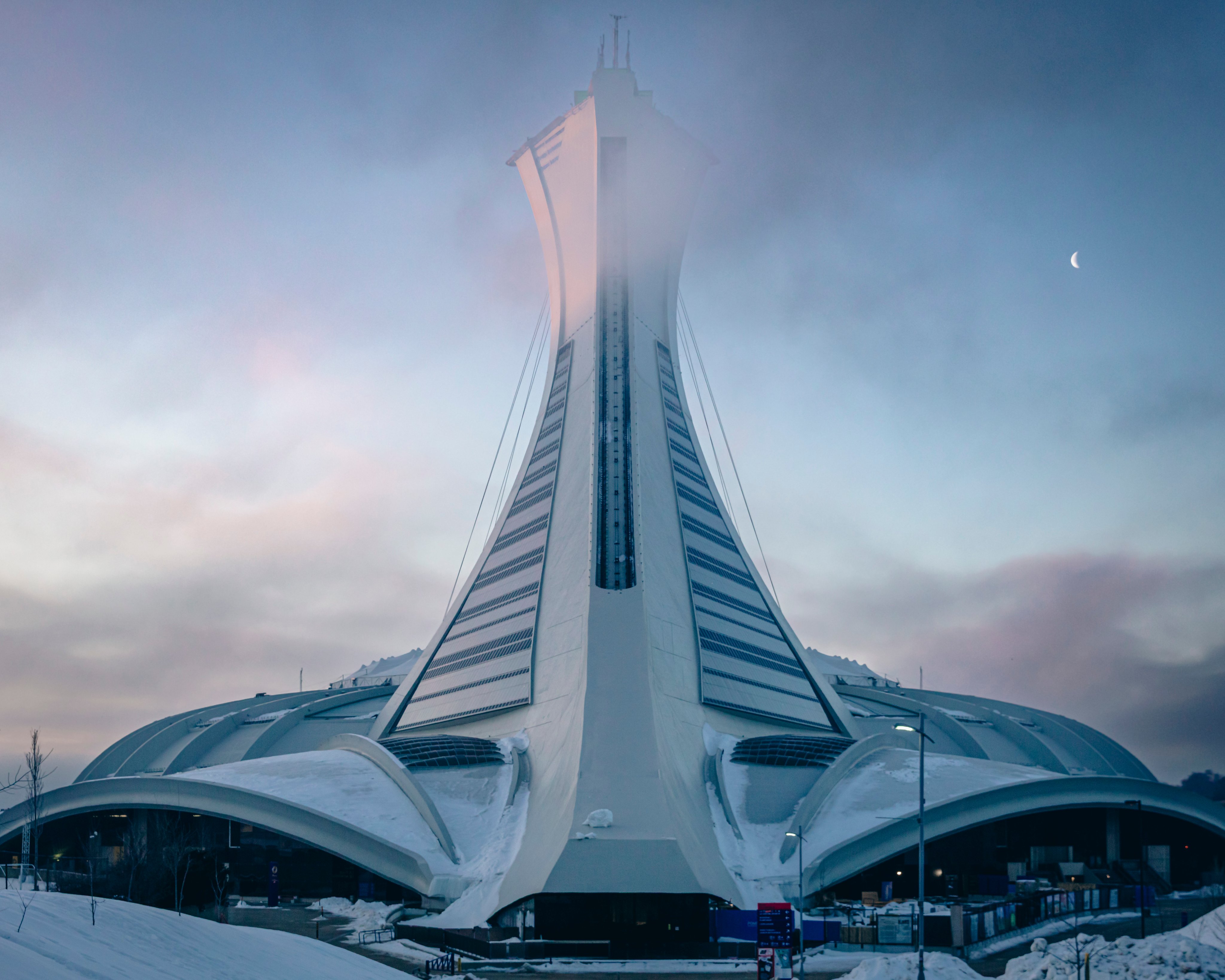
The Big O divides Montrealers, but photographers got the better end of the deal. Roger Taillibert's 1976 Olympic venue is all sweeping organic concrete, crowned by the Montreal Tower, the tallest inclined tower in the world at 165 metres and a 45-degree lean. Love it or not, there is nothing else like it on the continent, and its scale gives you compositions that feel more like science fiction than sports architecture.
📷 Photo Tip
Golden hour is the stadium's best light, when low sun rakes the concrete and pulls out texture the midday sun flattens. Work the esplanade for wide, symmetrical frames of the tower's curve, or cross into the Botanical Garden next door and use a telephoto to compress the tower against the treeline. At night the illuminated tower reads clean against a dark sky. Winter strips the scene to pure geometry, and the funicular up the tower buys you a high vantage over the east end and the river if you want to shoot outward instead.
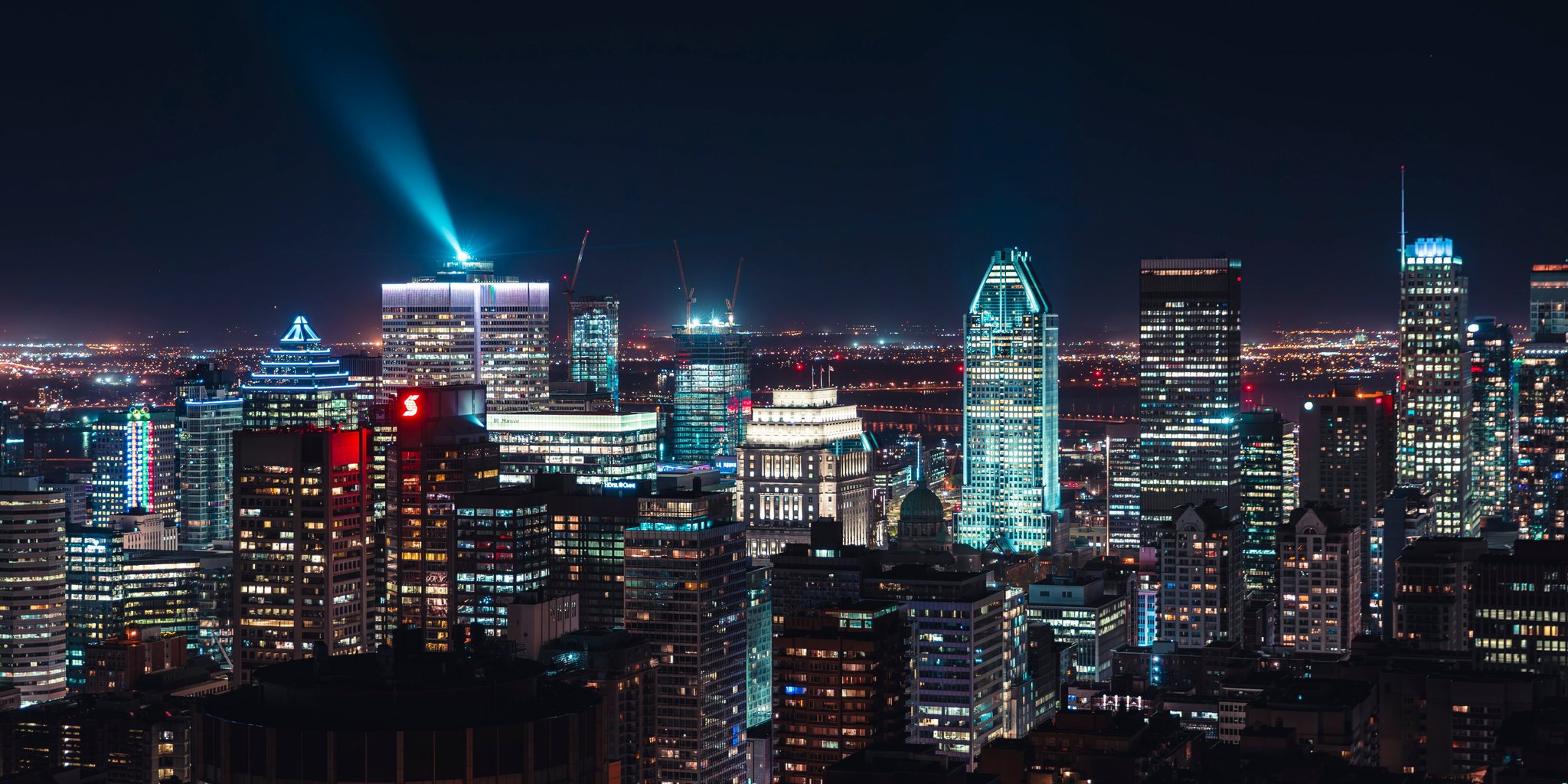
The Kondiaronk Belvedere, the broad terrace in front of the Mount Royal Chalet, owns the definitive view of Montreal: the downtown towers stacked against the Saint Lawrence, with the South Shore and, on clear days, distant hills beyond. It is named for the Wendat chief whose diplomacy shaped the Great Peace of 1701, and it has been the city's postcard vantage for a century. Every Montreal photographer ends up here eventually; the trick is timing it better than everyone else.
📷 Photo Tip
Blue hour is the belvedere's signature window, when office lights come on while the sky still holds colour behind the skyline. Sunrise gives you the same view in reverse light with a fraction of the crowd. Bring a telephoto as well as your wide zoom; picking out layered slices of the skyline often beats the full panorama. Fall is the location's second peak, when the foreground canopy ignites under the lookout. The walk up from the Peel Street stairs takes about 30 minutes; tripods are no problem on the terrace, but arrive early on summer evenings if you want railing position.
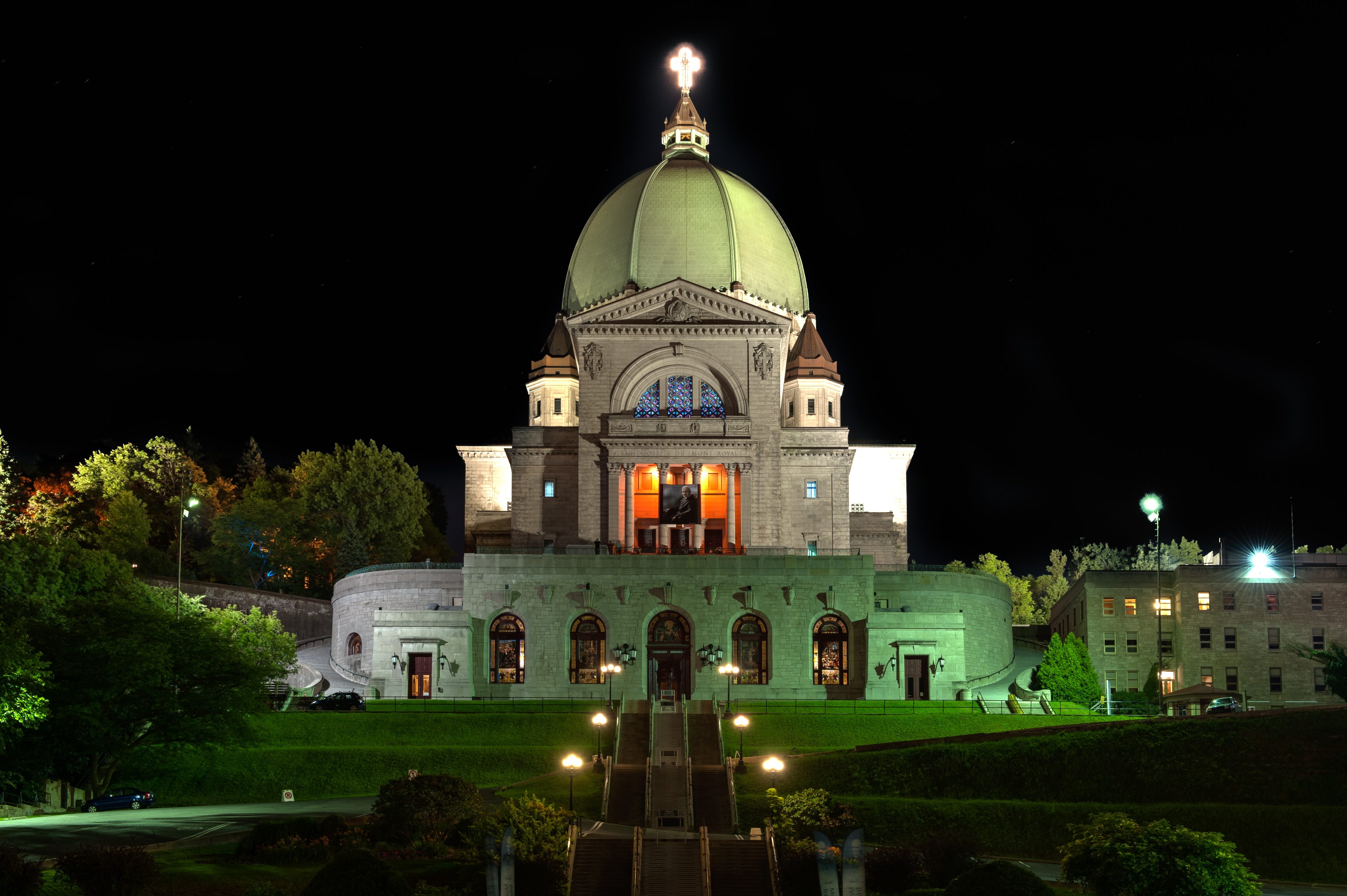
Canada's largest church rises from the north slope of Mount Royal, its dome visible from half the city. What began in 1904 as Brother André's tiny hillside chapel grew into a basilica completed in 1967, and the scale is the story: the dome is among the largest in the world, and the long climb of stairs from Queen Mary Road gives the building a drama few subjects in Montreal can match.
📷 Photo Tip
Shoot from the bottom of the grand staircase with a wide angle and let the steps run as leading lines to the dome; dawn and dusk put colour behind the silhouette. The terrace partway up returns the favour with a sweeping view over the west of the city, worth a frame of its own. Inside, the modernist main basilica is stark and vertical, a completely different mood from Notre-Dame, and the votive chapel below glows with candlelight that rewards a fast lens. The original 1904 chapel and the gardens round out a location you can comfortably work for half a day.
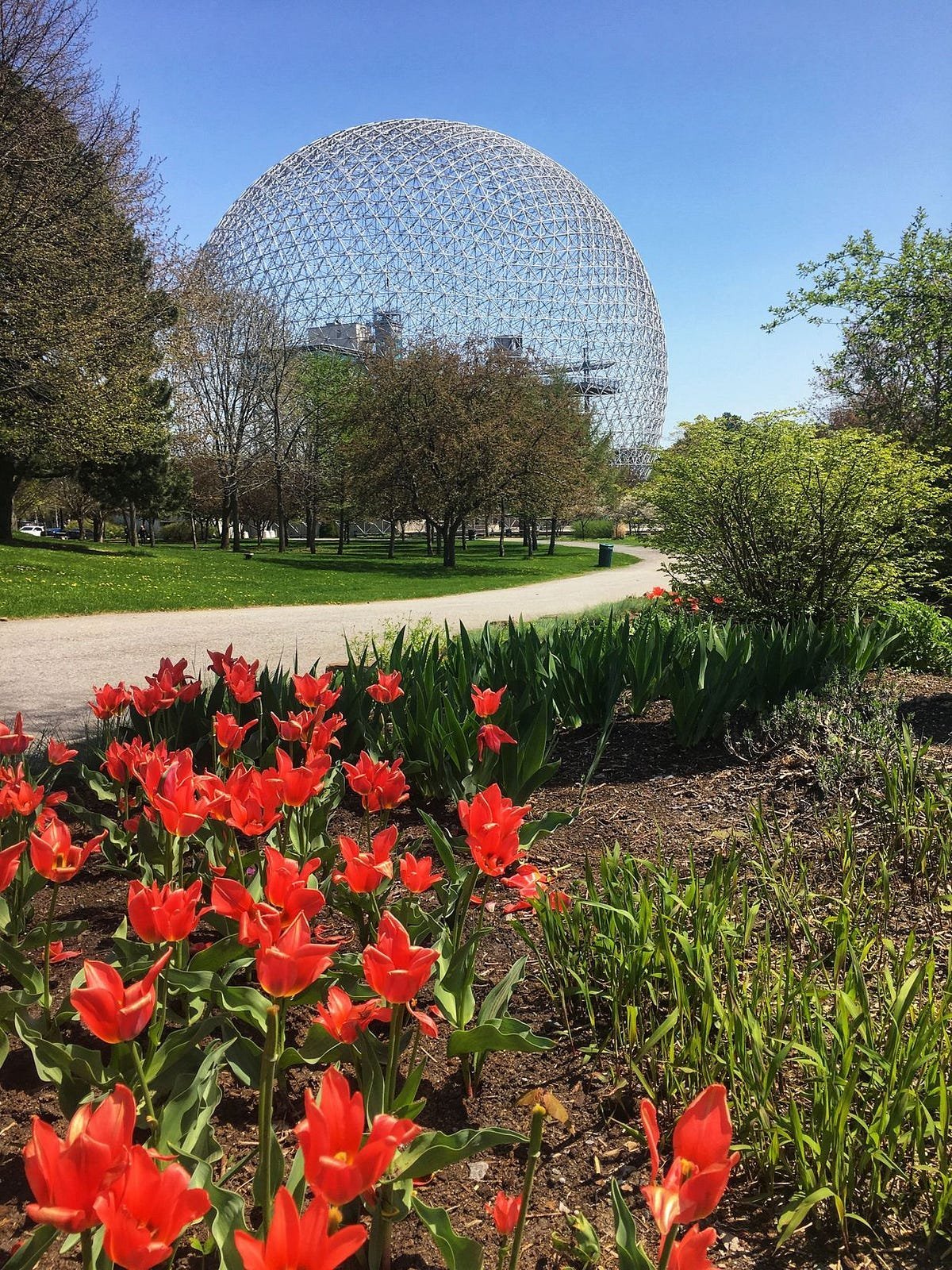
Buckminster Fuller's geodesic dome, built as the American pavilion for Expo 67, is the most photogenic leftover of Montreal's world's fair summer. Since the 1976 fire that burned away its acrylic skin, the Biosphere has stood as a bare 76-metre steel lattice on Saint Helen's Island, which is exactly what makes it special to shoot: it is a structure you photograph through as much as at, transparent against every sky the seasons throw at it. Get opening and hours and ticket info on their website here: https://espacepourlavie.ca/en/biosphere
📷 Photo Tip
Circle the dome on the park paths for the perfect composition. Winter gives you the dome floating over snow with nothing else in frame. It is a two-minute walk from Jean-Drapeau metro, and pairing it with our next spot, #8, makes a tidy Expo-era shooting day, with skyline views back across the river as a bonus.
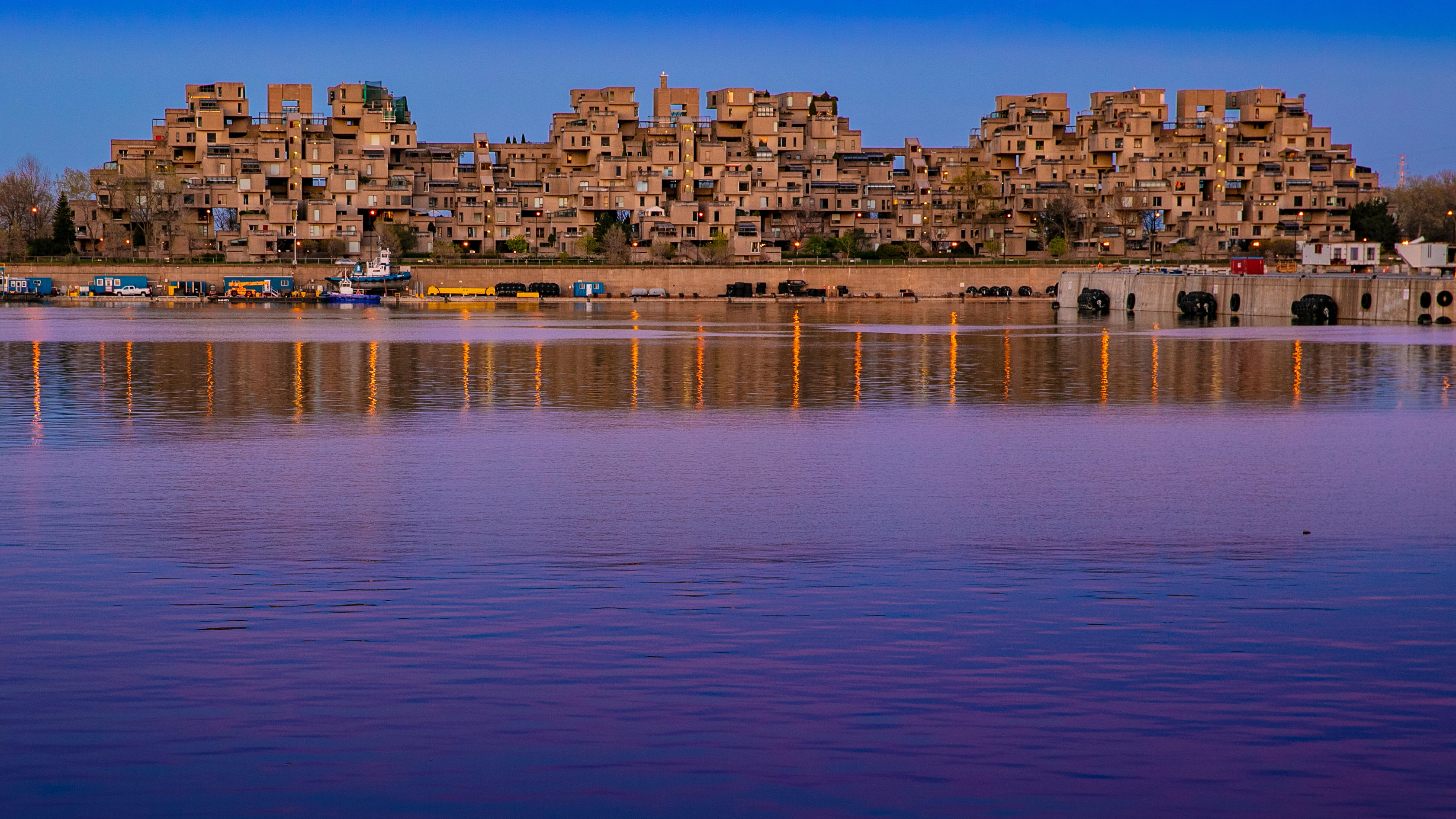
Moshe Safdie was still a McGill student when he designed Habitat 67, and Expo 67 built it: 354 prefabricated concrete boxes stacked into 146 homes on the Cité du Havre peninsula. Sixty years on it remains one of the most photographed pieces of Brutalist architecture in the world, a cubist hillside where no two angles repeat. It is also still a private residence, so all the shooting happens from public ground, which happily includes the best vantage points anyway.
📷 Photo Tip
The classic frame is from the Old Port boardwalk across the water, where the full stack reads in profile; a telephoto compresses the cubes into pure pattern. Up close along Avenue Pierre-Dupuy, a wide angle exaggerates the overhangs against the sky. Early morning light models the concrete best and puts the sun behind you from the boardwalk side. Summer greenery softens the terraces and winter turns the whole complex into a monochrome study; both work, they are just different photographs. Respect the residents and stay outside the private grounds.
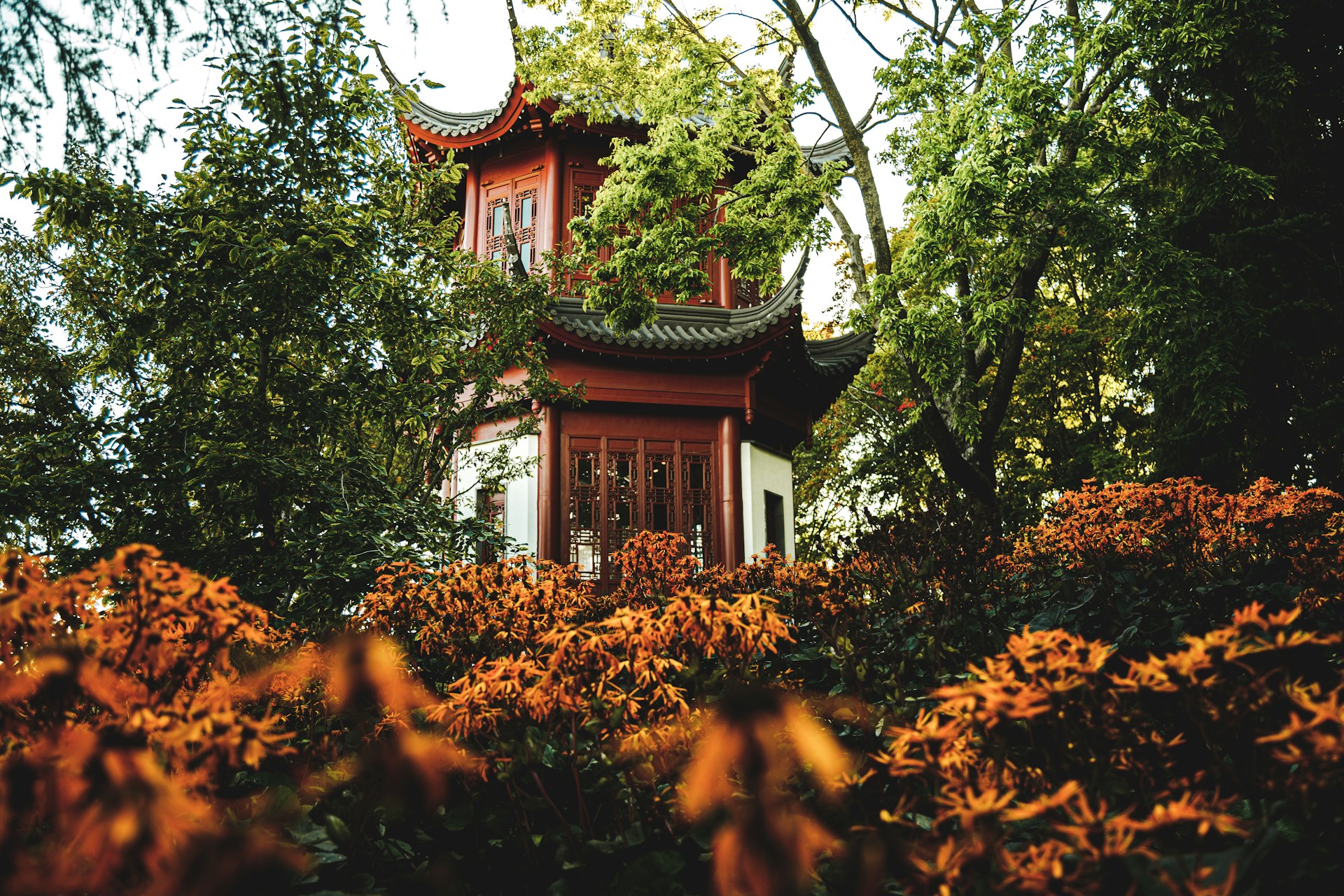
Seventy-five hectares across the street from the Olympic Stadium, the Botanical Garden has been the city's green centrepiece since 1931 and holds a full day of subjects on its own: the Chinese Garden's pavilions and lotus ponds, the restraint of the Japanese Garden, the First Nations Garden's forest paths, and ten greenhouses that keep macro photographers busy straight through a Montreal winter.
Arrive at opening, when the light is still low and the paths are empty; dew on the alpine and rose collections is a macro session in itself. Autumn is the headline act, both for the foliage and for the Gardens of Light lantern festival, when the Chinese Garden glows after dark and tripods earn their carry. Overcast days are a gift here, saturating the greens the way harsh sun never does. A macro lens and a mid-range zoom cover almost everything; hours and tickets are on the Espace pour la vie site, and the Pie-IX metro stop serves both the garden and the stadium next door.
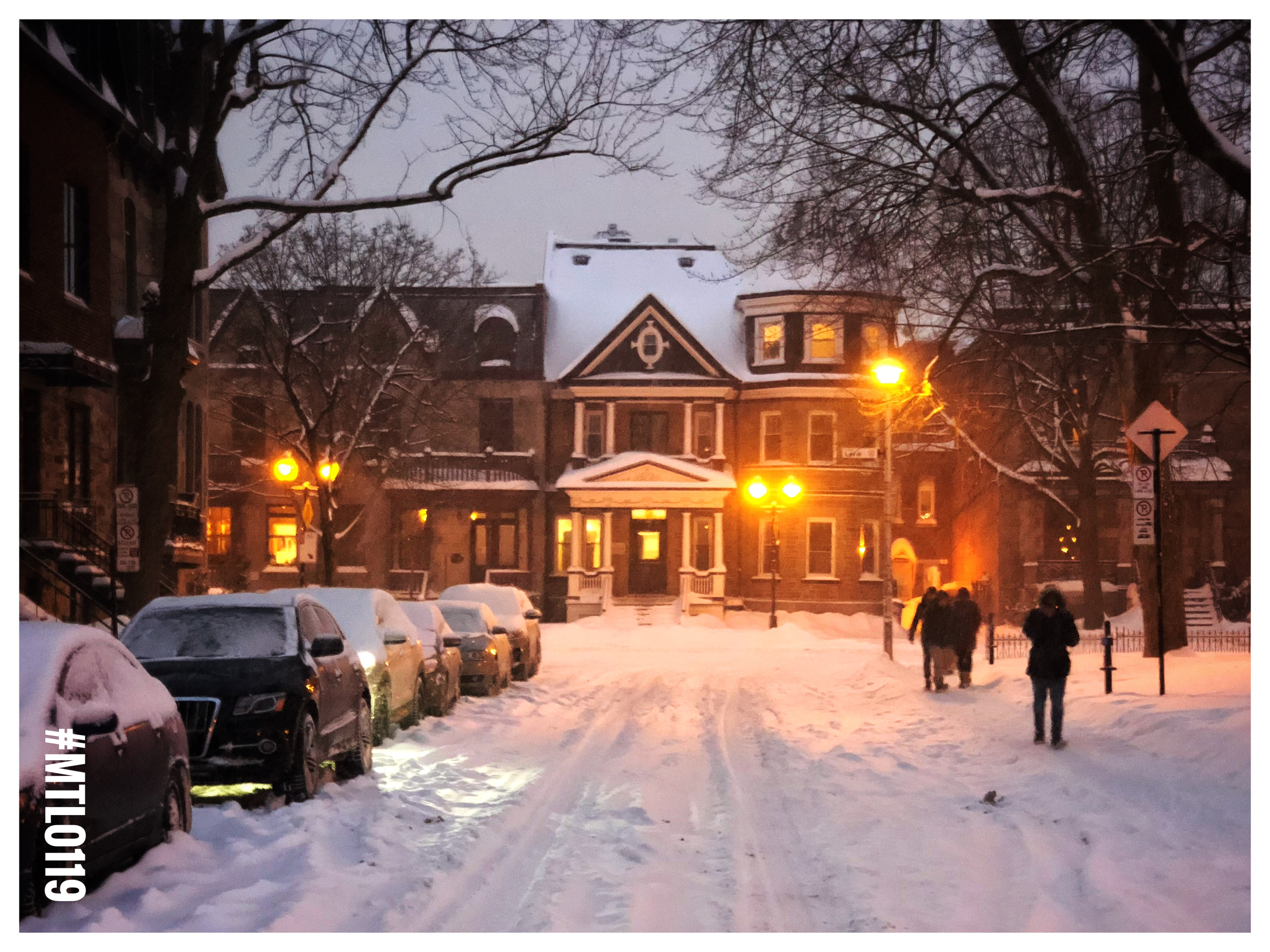
Skip the industrial neon and finish in the Plateau, where Montreal photographs like nowhere else in Canada. The borough's signature outdoor spiral staircases twist down from candy-coloured row houses on nearly every block, the Victorian mansions around Square Saint-Louis supply the grandeur, and Boulevard Saint-Laurent carries one of the best open-air mural collections in North America, refreshed every June when the MURAL Festival repaints the strip.
📷 Photo Tip
This is a walking location, so travel light: one camera, a 35mm or 50mm, and comfortable shoes. Work the side streets between Saint-Denis and Parc La Fontaine for staircase compositions, where mid-morning side light throws the ironwork into relief. The murals shoot best in open shade or overcast, which keeps the paint saturated and shadow-free. Fall adds fire-coloured foliage to the staircases; fresh snow turns the same streets into colour-on-white studies. Give it a full morning and let the neighbourhood hand you the shots.
📍 Explore on PIXEO Map →
Bonus: More Montreal Photo Spots
Ten is an arbitrary number, and Montreal doesn't stop there. Below is a gallery of locations that just missed the cut, from the Old Port's Clock Tower to the murals beyond Saint-Laurent, each one shot by our community and mapped for you. Tap any photo to open the full location page with directions, tips, and the best light. And when you've exhausted the gallery, the free PIXEO photo map holds hundreds more spots across the city.




Comments
Loading comments…